The success of failure

I am convinced as educational institutions we do not celebrate and nurture failure enough. Our days are so centered on highlighting success, and drilling into our students and faculty minds, that success is the measure which validates the time and effort we put into each of our days.

Life’s and the world problems are messy, inconsistent, unclear, and more importantly do not come with clear solutions. Sometimes there are no solutions! This is the reality many of us walked into once we left school.  Each of us has built capacity to learn and deal with this differently and the learning occurring in the motion of confronting the problems. Future generations of students will and are heading out of the school gates into this dynamic.

An acquaintance shared with me a perspective a few Venture Capitalist work with before investing into start ups. They look how many times a potential group/organization has failed in trying to start something, and the more failure they have experienced the more likely these Venture Capitalist will invest in them. The premise is that from each failure, there is significant learning that takes place, and as you build on this learning, and fail again, you increase your capacity to deal with the next set of problems. Through this process and engagement you as a group/organization are more likely to succeed with your idea. A key ingredient tied to this premise is the level of tenacity, passion, and belief you engage with as a group/organization in confronting multiple failures and what learning/lesson you build from this to then deal with the next challenge ahead.

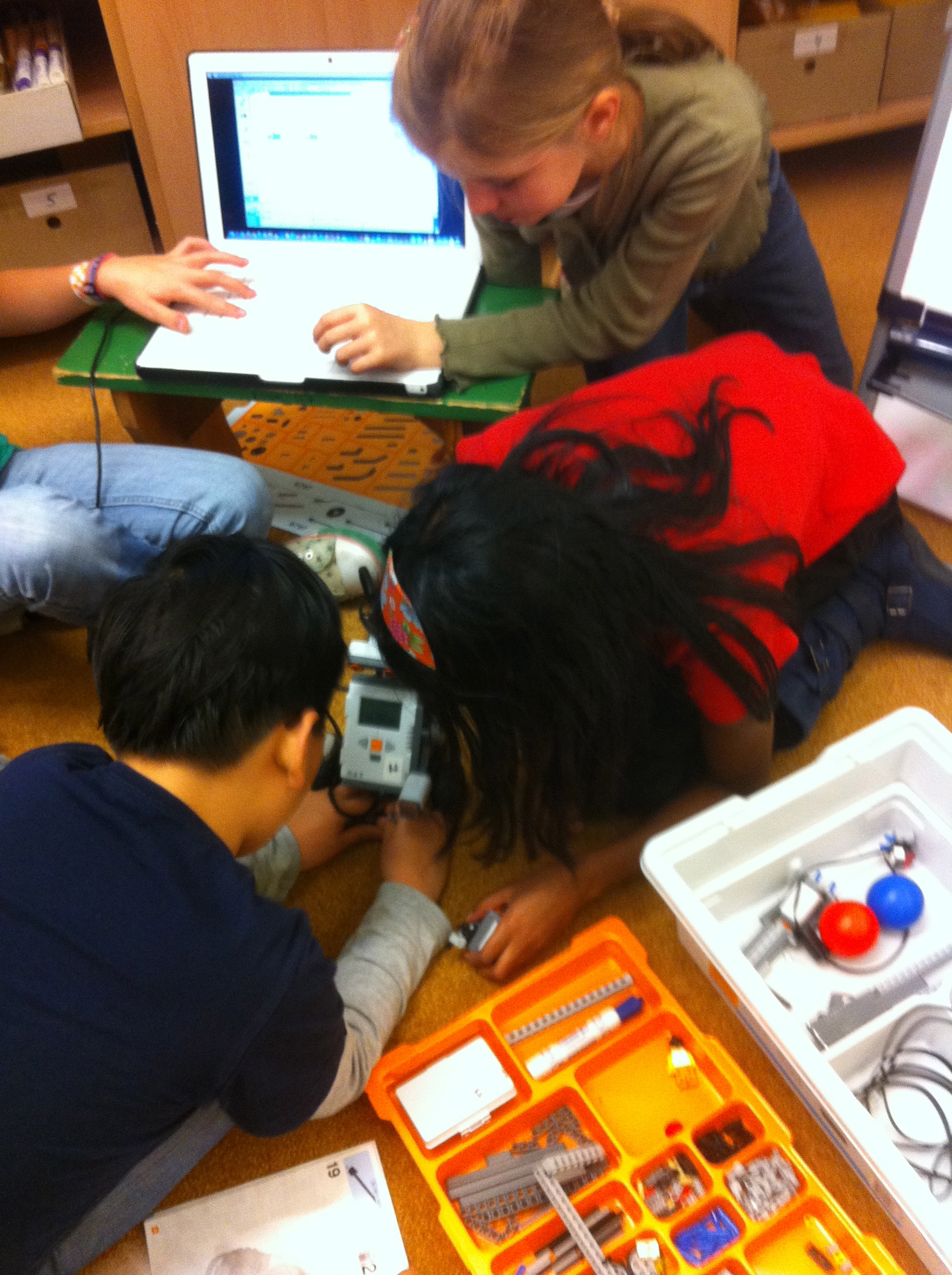
A group of students pictured above working with Lego Mindstorms, faced an issue with the version they had installed on their laptops. The Lego Mindstorms software was not fully compatible with the MacOS version running on the laptop.  Lego Mindstorms had not updated some of the drivers to work with more recent version of the Mac OS they where working with. The problem they faced was some functions required you to tap, click multiple times, sometimes it worked and sometime it did not. Their solution  just tap/clicked till it worked, and before long they understood how many taps/clicks they needed for the function to work. This they integrated  into their collective problem solving and moved on. They continued to come across glitches. They adapted each time a set of strategies to work around the failure with one goal in mind to have their robots do some movements and tricks. Even though things took longer, often requiring restarting the computer, or clicking non stop, it became part of their workflow and solution to a messy problem. The passion, tenacity, and collective energy had them, even thought failing quite a lot, over come the problems and learning a little more little by litte to program the Robots to move and do tricks. Their goal and measure of success.

A group of International School students taking part in the European Student Film Festival Challenge came to a roadblock. Partly to the fact that these 6 individuals had never worked together, some where from different schools, different countries and cultures. The dynamics in front of them was pretty much one problem after another, coupled with the pressure of being in a timed challenge. They gradually unpacked things slowly, each step faced with a level of failure, but giving them a better understanding of the other group members potential. The setting for their collaboration was around a set of chairs with a chess set in the middle, which often saw them fiddling with, as an outlet to their nervousness and stress. The only common ingredient they all brought to the group, was each was passionate about Film. Individually they knew they each had a set of skills that could contribute towards their challenge. Surrounded by the discomfort of hesitation, false starts, juggling opinions, different individual needs, unpacking the parameters of the challenge, translating it into something concrete they all could move forward with. 24 hours later below was the result.


Czechmate used with permission from Julien M.  A collaboration and joint production by Begum E., Ema E., Jerome B., Julien M., Lenny M., and Oliver Z winner of the European Student Film Festival Film Challenge Excellence Award.

We should stop and celebrate failure within our groups/organizations more often than we do. Make it part of every learning experience. Invite ourselves to focus on the unique learning which failure can bring to our reflections, ideas, and ability to overcome the messiness of problems we face and will face. If our respective communities spent more time taking apart the failures we experience, look at each moment, see what components are in play, give us opportunities to do things differently than before. This can be the celebration of our collective learning from which we build our successes.

John
http://beyonddigital.org

I did not know Steve Jobs, Dennis Ritchie, or Edgar M. Villchur

Tyne Cot Cemetery (Ypres)- Ieper Belgium

I did not know Steve Jobs, Dennis Ritchie or Edgar M. Villchur, or the 500,000 soldiers who died in Ypres (Ieper) Belgium in the trenches of  World War 1. Last week on holiday, reflecting on their respective work and passing away, then visiting the In Flanders Fields Museum and Tyne Cot Cemetery outside Ypres (Ieper) Belgium. I felt overwhelmed by the In Flanders Fields Museum and Tyne Cot Cemetery respective testimony. The shear numbers who died and  pointlessness of trench warfare, the leadership, story and narrative that lead to these deaths and suffering was mind boggling.

This visit marked me at many levels, and reminded me, that each of us are impacted by events, histories,relationships and connections, that give us a scaffold to build our own narrative and vision. To me Steve Jobs, Dennis Ritchie, Edgar M. Villchur, and the soldiers of Ypres (Ieper) Belgium put a mark in very different ways on my understanding of the world and contributed towards my own narrative.

Steve Jobs’ desktops, laptops, i devices, , and iTunes has always been part of my personal and professional media life, at work, home, … a fan, and appreciative user. Dennis Ritchie who brought to the digital world, we live and work in daily: C programming language and co-developed the Unix operating system. Edgar M. Villchur’s vision plays a big role in my adult life : the Loudspeaker. He invented an acoustic suspension woofer producing the loudspeaker as many of us have in our homes, car and ears:)

Each had a unique narrative tied to their ideas and vision. Their respective narratives transformed into concrete outcomes that changed the way we function in our world. The narrative built on a passion and a clear belief in the outcome where they wanted to go. Maybe not always clearly defined to others or all planned out in their own heads but this narrative drove the conversations, work,  time, creativity, thoughts, and collaboration that made their ideas a reality.

As for many of us who have a passion for what we do, our narrative and story is constructed through events relationships, collaborations and belief based on experiences. The key to the success of Steve Jobs, Dennis Ritchie or Edgar M. Villchur,  narratives was they each transformed it into some thing concrete that was operationalized to significantly impact people and change the way we do things.

This transition from idea to reality is the most complicated and challenging aspect of building ones own narrative and ensuring it becomes reality. Ideas can be generated, conceptualized, discussed, debated, and dreamed up.  The delicate process of making an organizational narrative engaging to others so they adopt it as part of their own narrative is in my opinion the true art of visioning.  The key is that there needs to be a strong buy in by all players associated or connected to the narrative even if translated or interpreted through a different lens. To often I witness rich and engaging visions, but so often the operationalization piece is missing. This is due to the  narrative being lost in the translation before it becomes others own narrative in any organization. Without people in an organization internalizing the visionaries narrative within their framework of understanding little will become concrete and have an impact on others . Once you have this common narrative throughout an organization the stage is set for the intricate collaborative mechanism of choreographing and operationalizing a shift that creates change with ever lasting impact. Each of these men did!  Do you have an i in one of your devices, using Unix and listening to it through a set of speakers………..What is your narrative?

John@beyonddigital.org

Where is the “off” switch?

Can we really disconnect from devices, email, social networks, the internet and digital life in general? Being caught up in a cycling trip for me is the easiest way to disconnect from all the rings, tasks, needs, wants, musts and maybe’s we get caught up in our digital life. An element of isolation and the tempo provide a good way to unwind and coach myself to be okay with the disconnection. The daily cycling, in an isolated environment, provides often limited cell reception, rare internet and few digital devices. This experience on the bicycle gives me the opportunity to create head space and day dreaming hours to clear out the mind and fall into a different time span and a grounded feeling. You generate in your head space for nothing.

Yes it is okay, and it feels good. Today it is getting harder and harder to disconnect…or find space for nothing. As we integrate our digital devices and social medias into every aspect of our work and home life we have developed a dependence, which is becoming invisible to our lives.  As new generations adopt this digital world as part of their social fabric, and consciousness, a collective dependency on seamless connectivity is embedded to our day. This level of subconscious dependency creates a new social bargain for the way we connect, disconnect and live our lives online and offline.

For my generation and others prior to the explosion of the internet, we experienced an environment of  limited connectedness, tied to a land line, payphone, letters, fax, face to face, newsgroups, bulletin boards, and then email. Our privacy was shaped within a connection of a friend or two, or small circle of friends/acquaintances. The norms based on word of mouth, hearsay, rumors, reputations forged live in front of  friends/acquaintances or through mediums limited to a small groups of folks for viewing or to interact with. Often it became an issue of our word vs their word. There was no digital footprint and it was harder accessing a paper trail.  This experience has equipped my generation and others with a counter-balance and point of reference of another option to our current non stop connectivity and diminishing privacy.

Today with non stop connectivity and diminishing privacy there is a different reference point for a new generation. A world of online social circles with friends and acquaintances in the hundreds, images, videos, wall updates, tweets, online hangouts all available 24/7 to potential huge audience not only our perceived friends/acquaintances but search engines, companies, governments, and a digital footprint not in our control.

The perception and understanding of privacy and non stop connectivity has changed. For many of today’s online users, there is no point of reference or experience of not having a digital footprint, not being connected 24/7 or understanding privacy in the context of the pre-internet world. A social media openness is the norm of privacy today for a whole set of children and young adults.

This shift can be uncomfortable for some, but is here. This has happened in the background of our awareness to certain degree.  My generations concept of privacy, balance and connectivity is framed with a memory and life experiences without these. Today children and young adults are framing their understanding and experiences based on a new social bargain where connectivity is a non negotiable ingredient to socialization both professional and personal. Connectivity is a must: cell phones to keep Mom and Dad in touch with your whereabouts, educations demands for mobile technology as a mandatory learning platform, commerce, entertainment, goverment and information delivered only online.

As with any changes in life you gain things and you loose things  Privacy and connectivity have changed and will continue to evolve in ways which will be be viewed by some as a paradigm shift, others the norm and for others a necessary evolution of our digital life.

Today the off switch is no more available! Even while we sleep or disconnect for a moment, emails, images, wall postings, and our digital footprints are active, being viewed, shared, forwarded, cataloged, and leaving a permanent digital trail. As individuals and a society we will need to carve and find the spaces to disconnect on our own. This ability to disconnect, find balance, and space for nothing will need to become a learned skill and behavior. For many of our students, with no point of reference to a unconnected world, their is no previous learning or points of reference to build upon.

As a society what does it mean when our digital footprints are available to anyone online, anytime, with any type of devices 24/7? This conversation needs to becoming part of our educators fabric and curriculum in schools. Even if a new generation has not experienced a disconnected world, it is part of our collective historical heritage the many moments when philosophers, artists, musicians, and thinkers  sat with space for nothing so they could create marvels. It is fine by me that there is no more an off switch, but it is not okay to let our students and young adults not have a skill set to be able to disconnect and create a space for nothing. A balance in life is a key, everyone should be exposed to this learning and have the opportunity to be mentored on how to develop this capacity: space for nothing.

John@beyonddigital.org

while I was waking up…

This post is dedicated in memory of Gil Scott-Heron.

Connectivity, seamless integration, multiple digital devices all connected to my habits and likes. The seamless options to integrate my blogs with my social media accounts…..all provide wonderful opportunities. They simplify many tasks and interactions I deal with on a day to day basis. At times these can get messy and I understand that many of these integrations between the digital devices I use and social media platforms I interact with are still trying to evolve. I believe the future of this convergence of digital devices and communication platforms will only get more seamless and effective, that is exciting. For users the potential is huge in leveraging  these tools and opportunities into our social and professional lives.

and now……

I am noticing something, and it seems in the last few months all this seamless integration of digital devices and social networking media is generating some caution by a few. For me the first odd event was when Facebook suddenly decided without asking me (actually they never asking me anything especially if there are changes) that it would only feature in my news feeds the friends I interact with on a regular basis and not the  friends who I just interact with rarely or periodically…. my news feed narrowed in its diversity of people I could see. Good news you can change this, and I did. The issue is who should make the decisions for us?

I also am noticing with my search results (Google/Bing/Yahoo) that they tend to be little different when I search the same topic as my wife and kids….. the search algorithms seem to learn my likes and dislikes and then provide me with information which falls into my previous search patterns and within my opinion and interest range. Diversity of opinions or information which I do not agree with seems slowly to be pushed away from me, I am reading only what I want to believe .  This seems to be a growing trend as explained in an excellent: TedTalk Eli Pariser: Beware online “filter bubbles”

The Apple Developers conference again showed how our devices, operating systems and virtual worlds are now taking on more tasks without us having to be involved, as a way to increase our efficiencies. Now you do not need to save in OS Lion, if you have iCloud there is sinking of content between different devices automatically without you being involved. Your digital devices in the Apple environment now can be independent of your desktop or laptop, giving these devices the ability to do all the necessary tasks right there and now. These are exciting changes and definitely provide the user with more seamless tasks which we do not need to be involved with. This in someways is pushed even further with the IOS5 function that if you have list or tasks to do there is a geographic locater embedded so when say you drive by a grocery store and in your IOS5 device you have a shopping list it will pop up and remind you of the list and the option of doing this now as it has located a grocery store.

The list goes on…. our technology tools and environments are being equipped with algorithms and (spiders and robots) automated tasks which are becoming more intelligent, and at a level are given more independence to make executive decisions to enhance tasks in reaction to our online behaviors and habits. This is a huge shift, and with this a whole set of philosophical questions and dilemmas arise which delve into privacy, who has ownership, who gets to decide what these tools and algorithms do, and how much independence should they have? I am reading and seeing more evidence of this change, where we are asking our technology tools and systems to think for us and help make decisions. At this stage it all seems useful, helpful and harmless. Who minds having something save everything without you having to remember. Who minds having their devices do in the background of our awareness, updates, sinking, and analysis ? At this time it is useful and a time saver….and to be honest this has been going on for a while with a variety of technology tools. An example is commercial aviation which has been relying on automatic pilot controls for a large percentage of tasks related to flying. There are definitely huge advantages, and at many levels these make the processes we rely on more efficient and seamless .

As we move forward with our digital evolution:  our tools, operating systems and devices are given greater independence to manage our lives. The question I currently struggle with is at what point do we feel comfortable giving up control and let many of these devices  have complete autonomy of certain tasks, decisions, and information we get to have access too. To what point do we let convenience and efficiency erode potentially our own independence to make decision ourselves with these digital environments. There is no doubt that for the companies behind these tools, devices and operating systems, this control and information is becoming a critical commodity to generate information databases which leverage a greater capacity to target products, habits and behaviors effectively to the user. This then generating profits for the companies behind these devices, software and operating systems.

I am like many, I love the seamless integration, the fact that more mundane tasks are being taken over, and me not having to think about them. But when is too much, and when will we suddenly wake up and realize so much has fallen over to algorithms and (spiders and robots) automated tasks that we have lost control and now are having many of our decisions and tasks dictated by others who we have little input with.

As Gil Scott Heron says so aptly ” the revolution will not be televised

John@https://beyonddigital.org

organizational shrapnel

This post is dedicated to Joshua R. and Andrew H., thank you for your conversations and mentorings…

…as with any end to a international school year there comes moments of reflection and looking back that generate ideas and new perspectives. This year has been a challenging one on many levels due to a host of odd circumstances and situations in my department and school that effected us all in the IT Department, and required the team to face up to serious challenges. We all pulled together, and hats of to the team for their outstanding capacity to deal with everything that came to us. This has had me thinking about something I like to call “organizational shrapnel” things that fly in your face unannounced from corners you would not expect things to come from. Sometimes I even refer to these as “drive by shootings” were suddenly you are confronted with a situation unexpected and most often you are not prepared to deal with, but react and deal with in the best of your own ability.

Organizational Shrapnel is a state which generates a lot of inefficiencies, frustrations, errors, in-competencies, and slowdowns in accomplishing tasks in an organization. It is the event, moment, action or process where people look around with some confusion and try to point fingers and there is no clear evidence or concrete event that you can associate to the inefficiencies, frustrations, errors, in-competencies, and slowdowns.

Why should this be an issue? I believe that organizational shrapnel and the level of it in an organization can make or break a good team, group or organization. I believe that when groups/organization engage in a task or project, for the objective to be met you need to be able to trust and know that the different players are all going to accomplish their respective tasks, and that the framework of resources supports accomplishing the task, project or action.

This process of teams collaborating and accomplishing a task together in any institution is complicated and quite complex, we all experience this and it is no surprise to most of us. I feel if organizations, and teams can better understand the causes of organizational shrapnel and address the road blocks this tends to set  the stage for a more effective and smooth collaboration of a groups within any organization.

So what are examples of organizational shrapnel? These are broad in scope, and come in all shapes and shades.

  • A team works together and defines group agreements, but a member continually does not abide by these.
  • A decision is made and agreed upon, but there is no clear implementation plan, or process for feedback and evaluation.
  • A process or procedure is implemented within the organization, some stakeholder decide to follow it, others decide to not use it and use an alternative in isolation of the rest of the organization.
  • A collaborative group works together, but all the actions and follow through are continually done by a few, and others play lip service to the work but are not participating actively and tend to block movement in the meeting setting
  • An event, or task is organized and one of the stakeholders makes an error but does not report it, or share this out so others can support in correcting this.
  • Not following through on things
  • Looking at a situation within one perspective, and expecting others to follow through

…and many more, generally the pattern is that organizational shrapnel are small things which fall through, not completed tasks/steps, ignored agreements, tasks done inadequately, or where there is a lack motivation, drive by the players involved in completing the collaboration or task.

The frustration if organizational shrapnel becomes a habit and people accommodate to it, it can quickly become part of the organization’s culture and norms. The reality is all organization have a level of this, and the challenge is what environments and understandings can be shared to decrease it’s presence in any group or organization.

Organization, groups and teams who have a high capacity to understand and concretely deal with their organizational shrapnel create an environment where there is a greater motivation by the stakeholders of the organization which results in a sharp increase in creative flow generating innovation in moving forward.

John@beyonddigital.org

the conversation we are not having maybe…

at the airport in Frankfurt on my way to Rome for a days work with Marymount International School and their faculty on 1 to 1 Laptops. Time to reflect in the waiting lounge about the ECIS IT Conference in Frankfurt last week, a wonderful reminder that it is not about IT but learning. The conference days a good blend of keynotes: Jamie McKenzie, David Warlick and Scott Klosoky, workshops, and informal sidebar conversations. The event and conversations have spiked some good reflections for me. It has been very hectic and intense year, and the last week were at times my tech support team was down to one person from the original 5 due to illness, injury and recuperation from hospital. It is maybe when you are down to one technician that suddenly you are reminded again how critical the systems, and services we set up, monitor, maintain and develop as an IT Department have become to the day functioning of an international school. Information Technology and its associated services that support the day to day functioning of most international schools, have now become mandatory.  Then this sudden shift to an unwritten expectation of 24/7 services and connectivity. Many International Schools have so many of their day to day tasks/work flows tied to IT systems that the non stop functioning becomes a non-negotiable. This topic came back in many of the conversations I had with fellow IT Directors from the ECIS region attending the conference. One thing which is becoming quite clear to me as I have these conversations IT Directors and IT Staff are being stretched more and more as new systems become a non negotiable critical part of the school day. With this a growing cultural expectation of the users and school of  access: anywhere, anytime. There is a developing cost to this for IT Directors and their teams. One is that you start juggling more and more tasks, your team which in many schools tend to be quite small, has to be able to deal with a wider variety of complex issues and integrated systems. A common case especially here in European International Schools, as systems get added, new programs or hardware, no extra people are brought in. So the task lists gets longer, the job description for many of the Technical Support team changes by the minute and somehow extra resources in humans and money tend to be elusive. This too often not by fault but by necessity were International Schools work with small budgets and have often little flexibility to add people. There is a danger that can develop that you start having over stretched IT Departments providing 24/7 services but no organizational structure to support this growth, and then all your eggs are in one basket, hoping the IT Department small as it maybe can sustain and support the pressures and demands long term. Is there a breaking point? Is it sustainable?

I have no clear answer but what I am realizing and in conversations with others, IT Directors are starting to feel the stretch and strain. This comes in a mix of pressures that I personally feel has a cost to the health and well being of the person. As new systems get added, expectations become greater, connectivity and seamless availability of services 24/7 all add up to an intense mix of tasks and workload to sustain. This then becomes the responsibility of the IT Teams and the task of IT Director’s leadership to manage and facilitate these pressures. The IT Director who has to provide guidance, rally the tech. support folks (often under paid and under valued), creatively deliver solutions with tight budgets, and juggle the emotions, personalities and tensions often associated with the change process of integrating or introducing of new systems. procedures or hardware to different stakeholders.

The solution? Each international school has such unique dynamics that I do not think there is one simple solution and answer. The start is maybe having honest and candid conversations with the schools leadership teams and clearly articulating the expectations of services and up keep of systems that support the school day. Thinking strategically what support systems can be developed to ensure if new systems, hardware and 24/7 connectivity and delivery of services are expected how this plays out with your current set up and staffing. Looking for creative solutions to shift services to the cloud, or put more responsibility on the users to independently manage the devices and services they use to support their work day. This of course then becomes an important conversations regarding what professional development support will be provided, expectations of skills and managing a significant cultural expectation of who is responsible for what.

At some point the IT Team and IT Director need to also unplug and regroup, which for many of us is a challenge and near to impossible. Even when we are off campus or away the systems have to be managed, maintained and serviced, and we need to be connected to the various stakeholder groups we support, there is this growing expectation.

…as with any challenge engaging in a conversation, defining the expectations explicitly to all, and being willing to think beyond our own walls and perspectives can be the first step. This then tied to a long term strategic understanding that however essential and critical our schools services are, connected to this is a group of people trying to juggle a more and more complex set of dynamics and expectations.  We need to engage in an awareness that over stretching folks can have a negative impact on sustaining your own systems and anywhere anytime connectivity. I believe there is a potential for a better balance for all.

Let us have this conversation…………..

unlearning learning

Years ago I had the opportunity to work with Jamie McKenzie and we were chatting about change, and how in institutions change agents within the organization often have the most challenging time. He said “There are no prophets in your own backyard.” to this day, as I myself have been involved in facilitating and leading change in schools and organizations, this phrase has stuck to my mind, and often I have found solace with these words. A couple weeks ago our school hosted John Davitt, writer, teacher, software developer and mentor. He spent a few days working with my IT Team, our faculty, students, parents and administrators.  John at many levels surprised our community, even though a software designer, information technology advocate, and gadget user, his focus, interactions, conversations, and emphasis over the three days was always on learning. For many who expected someone so closely involved with information technology and software development to be very IT focused.  His pace, lens, perspectives and conversations he facilitated continually revolved on what environments do organizations need to leverage with adults and students that makes learning both engaging and meaningful. With any change this process is critical, and to focus on the tool or mediums is an error. John provided us with the opportunity to re-frame our own evolving understanding of integrating information technology in schools. We  had been trying as an IT Team to engage our faculty to this understanding but we are not sure folks are always hearing us. It is only about learning! John from the outside of our backyard provided the push and shift for others to understand this.  Engaging with this understanding is what will provide the meaningful change for any organization. The tools and mediums will come and go, but learning is timeless and in whatever context or environment you live in, without this key “verb=learning” nothing changes or evolves.

I think we as schools and organizations are at different levels coming to terms with these dynamics and structures that facilitate engaging and meaningful learning. I am not convinced we have yet come to terms with, as schools and organizations,  the unlearning required  before we can relearn or learn new concepts and essential understandings that our digital world and economy are now requiring us to engage with.

I know for myself I am much better at learning something new, than trying to unlearn something, and then have to from scratch re-learn or learn. Today with the volatility of our world and the realities that surround us all, many of the learning we have adopted and been carefully groomed with will not sustain us long term. For a significant change to occur and allow us to re-frame our understandings of learning, we will be more successful if we equip our schools and organizations with environments which support unlearning in a compassionate and meaningful way.

Okay I am not saying everything I have learned is useless, no!  I believe when trying to re-learn or learn, to often my previous learning pigeon holes me into a mindset that prevents me from engaging with fresh, uncluttered perspectives and an open mind to all learning possibilities.

The days ahead of us, will be different, very different, whatever we may hope and believe. For schools and organizations to ensure that we are equipped to engage with these challenges, we need to develop a clear set of structures and pedagogy that provide us with meaningful and engaging environments to unlearn….. because through this process all of us will be better learners.

John@beyonddigital.org

shadows..

Three years ago my department’s Network Manager was killed in a tragic car accident with his child. The event was traumatic for his family, friends, everyone in my department and the larger school community. He had worked at the school for 10 years, and had created a robust network, and daily supported many innovations and changes I was facilitating. He was an integral part of the day and  a true leader with the long term IT vision. Life’s bitter realities can be overwhelming and a challenge to synthesis. The coldness of life in many ways.  The event marked me as an IT Director and friend profoundly, and to this day still is a reminder of the frailty of life.

From this event, I came to realize how vulnerable my department was (at that time 1 Network Manager, 1 technician, myself and a Database/Web Coordinator for 500+ machines). The structure we had was normal:  everyone had specific jobs, responsibilities, tasks and goals closely tied to their role and title. We collaborated as a team, used each other expertise to fill in the gaps, and had point people with our team who managed specific tasks associated with their title. It worked well, and we had a close team spirit and dynamic which complemented each member in a positive way.

Suddenly we had this huge hole in our knowledge and team expertise which vanished over night. We had been working on writing all procedures and systems down, and actually had done a pretty good job of having a paper trail. This to be honest was okay but when suddenly a key player with 10 years of institutional knowledge disappears you suddenly come to realize the huge gaps. The bitter reality is however tragic his death was, combined with the impact and emotion associated with the event to my team, I came to realize (a cold realization and something that took time to digest) that the school, systems, servers and support needed to continue. We as a school had transitioned quite quickly to 24/7 services, and expectations by all. Peoples memories are short.

By coincidence and good fortune, my technician who had worked closely with the Network Manager had gained a fair amount of expertise, and with the manual of procedures and systems,  under immense stress, we were able to continue to run things. We got additional support with the help of an outside contractor to get things to a place where we could run, maintain and troubleshoot things. My technician was promoted to being a Network Manager. We then hired two other technicians (we now had almost 650 + machines) and thanking the stars and good karma where able to continue and then engage in new developments and innovations.

A story that ends well….. unfortunately not, today this Network Manager is in the hospital after an appendix operation which developed huge complications and is at this stage indefinitely out. Positive vibrations to him daily.

We as a team again feel stressed and somewhat bewildered at our luck.  Again I am faced with a abnormal situation (par for the course maybe in someways being a school administrator and  IT Director)  and now even more of an expectation of 24/7 services, a one to one laptop program Grade 6-12, a 2-1 one laptop cart program in Grades PreK-5 plus a million, web based services, plus the other things which just eat up all your days in an IT Department.

As a result of my first experience I had started developing a full program with my two technicians, database/web coordinator and Network Manager of shadowing. The goal was and is for the team to have enough expertise with each others roles to be able to stand in for the other in case of an emergency. This process has taken a good solid year. The first step was to clearly define each person’s current role, revisit the job descriptions (how often do we read these 🙂 ) and then pair the team up to shadow each other. My Network Manager was and will continue to be shadowed by one of our technicians, my Database/Web coordinator is being shadowed by the other technician. We have been tying this new responsibility to each person’s job descriptions, and then having weekly meetings in tandem with each persons smart goals. It has been a slow process with plenty of challenges but has generated new conversations about team collaboration at  a level we had not had time to do.

Some of the players

  • Control: the challenge has been for the folks with the key knowledge to share, open up and be able to present information in a way the shadow understands it and can actually act upon it.
  • Ego: As the gate keeper of all knowledge for your role, how to give this up, and still feel the key player when you are sharing your skills to another. This closely tied to culture, expectations and comfort.
  • Time: finding a downtime when two people can actually sit down, isolate themselves and learn together.
  • Learning: Understanding and supporting different learning styles.
  • Support: Critical to this dynamic is the PD, time, motivation and guidance that is provided.
  • Is it working: The evaluation and assessment of the process by all involved
  • What is important: Defining the essentials pieces of knowledge, and then ensuring they are worked on in the shadowing relationship.

It is a work in progress, somewhat on hold temporarily, but now more than ever a realization how important it is to have a sustainable shadowing system within your department to ensure continuity of services. One thing that has come to the forefront is that having a clear paper trail in a format and venue which allows someone to step in is not enough . The reality is that today our international schools expect and work with a 24/7 connectivity and if these services are down, then at some levels international schools do not function. A reality of the working world.

to be continued……….

….can we do all

this is a cross post from the following blog I manage and facilitate  http://ecisitcommittee.edublogs.org/
…in the last week there has been an enormous amount of traffic regarding the effects related to multitasking and student learning. The issue and variables associated with this topic are huge, and pending who you read it seems to go from the world is about to end attitude to hey it is no problem and live with it. I think the reality is that with the new technologies and internet access we all have access to we are somewhere in the middle in our understanding of the impact of multitasking on our own lives. I believe our students are not learning better or worse but differently. This as a result of the 24/7 access each user has at their finger tips and in tandem the incredible power to be content creators. Naturally with so many choices come many decision to be made and this I think is where we as educators can support, facilitate and mentor many of our students in being mindful of the implications, impact and importance of taking a balanced approach to the idea of multitasking and interacting with so many different powerful tools. Here I share three of the articles which come with different perspective on the topic:

In tandem with this topic comes the bigger issue, the fact that there needs to be significant paradigm shift in education. For educators, parents and students to be able to engage with the rapidly changing world some significant changes are due. I think collectively we understand this but how do we move forward is the bigger challenge. No better person to share this topic than Sir Ken Robinson with the follow wonderful animation and potential conversation for us all.