a letter to COVID

Dear COVID,

It has been over 14 months since you first came to visit. Since then, you have single-handedly forced us into a global pandemic. As I sit here writing this letter, I think about how uncomfortable and complex you have made our lives.  Without warning, you’ve challenged me and others to juggle unfamiliar levels of uncertainty. Challenging me and others with ambiguity and disquiet with no warnings. 

You have no regard for who each one of us is. The intensity of your presence is felt by me, family, friends,colleagues, everyone. What scares me is your silence. Your unpredictability.  That tenacious, invisible presence. I hear so much about you daily. I try to make sense of the absurd, and the fear: conspiracies, manipulations, divisions.  I’m not sure what is what anymore. 

Photo John Mikton

You have left me confused and I am doing my best to navigate your presence.  With hesitation, I keep looking at my social media feeds to help me understand the latest post about you. But the curated content makes me unsure of what is true, and what is a lie. Apparently the lie is true, but then I am told the truth is a lie. It’s so hard to wrap my head around it 

I have shed many tears -more than I care to admit.  It is the death, the pain, the  relentless suffering you cause that hurts most.  As you continue to show up unabated,I am humbled by all who care day and night, unselfishly, for those who have succumbed to you. The numbers are an uncomfortable, exponential statistic. Our arrogance with time and the little remorse you share in the limbo of the day. You are harsh!

You came right into my school without asking. You fell on us all, in the city, in the country, and you scared us into a lock down. My class and I avoided you the best we could with social distancing, disinfectants and curfews. My class flipped to emergency learning, tried working online, then moved to a hybrid. I looked up and suddenly we were all in each others’ homes, living rooms, and kitchens. I spent hours, coffee mug in hand, late at night, adjusting, redesigning my lessons. I would get memos from the building Principal saying it wasn’t enough, her expectations constantly changing as a disgruntled Board Member breathed down her inbox. I taught my class about “Zoom Fatigue” synchronously and asynchronously, and still a parent emailed me in ALL CAPS about learning loss. 

Even though you kept coming back in waves, I did find a sliver of time to pause. It was a minute. I looked around. I could hear the sighs of my colleagues,and suddenly the invisible became visible. Why do we have 16 tests for this grade? Should I even do this online? Flipgrid or padlet? I recognized that  well being is about more than a bottle of wine with Netflix. I saw friends anxious, alone, and sad trying to connect to something real, something tangible. . My credit card spent more time online than in my wallet. Constant change, in all shapes and forms, is the new normal. Everyday, I got creative and convinced myself to be positive and hopeful.  I threw away my old box of lessons and leaned on my PLN for inspiration in breakout rooms. I took another pause, found more time to listen and learn. My class raised their hands and whispered through their masks  “voice and choice.” I played with the idea, it felt right – why would I go back to the past?

I’m not sure what your plans are now, or how much longer you’ll be around. But I will turn the page, because I know looking back makes little sense. I will start at zero and forget the past as much as I can. So much I have learned, so much I can do better at, so much is far more important than I ever imagined. You gave me a moment to think about balance, respect, dignity, community. Okay I get it, this is not your last visit. I will not ignore things anymore: the hurricanes, the droughts, and floods. I am not going to ask you for details, or even predict the best next step. I realise where we are, and where I need to go. 

I am not sure why I am even writing all this to you, but in the unexpected manner your visit fell on us all, I realise now we cannot continue the way we have been. This is clear to me and I understand this.We don’t have a choice. So now, as I finish this letter, it is up to me to step up and reimagine tomorrow anew.

Your sincerely,

a conversation “Well-being in the time of COVID.”

Well-being has been an important part of our respective experience living and juggling the uncertainty of managing the Global Pandemic COVID19. The pandemic has for many created new stresses as part of the day, that are ambiguous, at times volatile with uncertainty. Carlos Davidovich and I explore the creative challenges of living during the COVID pandemic and how we each manage the challenges of the pandemic differently. Carlos shares his expertise on Neuro-management on known understandings of how the brain works and how we might consider understanding Well-being in this context. This recording is with video as we both prepare for a live session April 1, 2021 to support colleague and friend Nancy Lhoest-Squicciarini who hosts monthly the International School of Luxembourg Virtual Learning Lofts (#ISLLoft) which I have the privileged to co-facilitate with Nancy sometimes.

Dr. Carlos Davidovich Executive & Performance Coach – Neuromanagement Expert – Speaker


Online Learning – What Does The Research Say?

Every month as the Head of Education and Media Technology @ ISL, the IT Library team hosts virtual digital life series focused on an aspect of digital life that we all juggle at work and home. These digital life series facilitated by the librarians, digital learning coaches or myself. In this session I unpack some of the research regarding online learning and how schools are engaging with this.

Beyond Screens: Managing the Screen Time Dilemma

I am here sharing from a series by the IT Library Department colleagues called Digital Life a series for parents. This a concept managed and hosted by colleague Nancy and the Communications team. This session we explore and focus on screen time and some of the dilemmas we all juggle both parents, student and staff. All credit, resources, and inspiration goes to https://tacticaltech.org/#/ and https://datadetoxkit.org/en/home who over the last couple years have been an outstanding resource, and guide for a lot of the work I get to facilitate with colleagues at school. In this session I share what are the different types of screen times and some ideas on exploring strategies to consider.

A summer reflection: Harnessing Digital Literacy

With the unprecedented experience of COVID19 that we all have juggled over the last months, and the complexities we all are living with today, our days have been intense. As part of the Pearl of Wisdom protocol of the Principal Training Center, I, as a trainer at the PTC reflected on my own experience as an education leader working and facilitating with digital literacy and fluency in an international school setting and navigating the dynamics of the COVID19 pandemic. A 20 minute share out.

Privacy: General Data Protection Regulation and European International Schools

Jökulsárlón, Eastern Iceland

On May 25th 2018 the General Data Protection Regulation (GDPR)  will come into full swing in the European Union as law, focused on individual privacy and access/use of personal information of European Union citizens. The General Data Protection Regulation (GDPR) is a new set of rules governing the privacy and security of personal data laid down by the European Commission which impacts all European Union’s (EU) organization both commercial and non commercial (non-profit) and foreign companies and organizations which handle European Union citizens personal data. The objective of bringing this regulation into law across the EU is in reaction to significant changes with the digitization of information and the growing power of algorithms used by large corporations in analysing and using personal data for commercial use. The General Data Protection Regulation has been designed to give a greater level of control to EU citizens over how their data is processed and used by companies and organizations.

For European International Schools GDPR is an important regulation that schools are working to become complaint. The GDPR  requires European International Schools to ensure that all schoolwide processes, producers, and policies with personal data of staff, faculty, parents and students are complaint with the GDPR regulation.

Local government authorities enforcing the GDPR could potentially give out fines if organization do not  comply to the GDPR.

There are three areas that European International Schools have to focus on for the GDPR :Governance ⅓, Data Protection ⅓ and Cyber Security ⅓.  Schools need to show that they are working toward compliance in all three areas and ensure that any personal data they process is handled and stored securely. The focus is on mitigating the risk of personal data not being properly safeguarded. The GDPR extends to those organizations, companies, and services which European International Schools use for different services or resources in and outside of school  Under the GDPR schools will be responsible to ensure these organization which might be accessing community members personal data are complaint with GDPR.

There is no doubt this new regulation brings about a lot work forEuropean International Schools as they review, and analysis their current status and enhance procedures, process and policies to be compliant with the GDPR.

This summer as many European International Schools realized the importance of this new regulation and in tandem understanding the extensive work needed to be done the International School of Brussels created a GDPR International Schools working group in an effort to share expertise and resource.  In this GDPR working group over 45+ European International Schools are currently sharing and collaborating both virtually and in person. There have been two meetings hosted by the International School of Brussels on their campus in Brussels this fall and spring. 45+ European International Schools came together with representatives from school Leadership teams,  IT Departments, and Administrators to work to support each other. In tandem the Brussels GDPR International Schools working group has been supported by 9ine consulting https://www.9ine.uk.com/ who are working with quite a few European International schools as consultants/experts on GDPR compliance in a school setting.

It is evident that working towards General Data Protection Regulation (GDPR) is very time consuming workflow, and the process requires whole school communities to consider enhancing or implementing new process, procedures and policies related to personal data used on and off campus. This workflow is requiring schools to look at all the daily process and procedures we often take for granted where personal data is being used, access and shared. One actually does not realize the magnitude of ways we work with school community members personal data in and out of school. This process is bringing this to light for many schools.

Below are good resources to support a further understanding of the GDPR

GDPR International  Schools work group (a Google group started by the International School of Brussels)

https://groups.google.com/a/isb.be/forum/?utm_source=digest&utm_medium=email#!forum/gdpr-international-2016-17/topics or email to request to join <gdpr-international-2016-17@isb.be>

Official EU Home page of the GDPR: https://www.eugdpr.org/

Preparing for GDPR in schools:

https://www.gdpr.school/wp-content/uploads/2017/06/Preparing-for-GDPR-in-schools.pdf

9ine Consulting Blog: http://www.9ine.uk.com/newsblog/topic/gdpr

Introduction to General Data Protection Regulation(GDPR): https://www.youtube.com/watch?v=n5WJOncaHt4

A Summary of EU General Data Protection: https://www.dataiq.co.uk/blog/summary-eu-general-data-protection-regulation


Bibliography

Burgess, Matt. “What Is GDPR? WIRED Explains What You Need to Know.” WIRED, WIRED UK, 6 Feb. 2018, http://www.wired.co.uk/article/what-is-gdpr-uk-eu-legislation-compliance-summary-fines-2018.

Consulting, 9ine. “9ine Consulting | Blog – 9ine Consulting | GDPR.” 9ine, http://www.9ine.uk.com/newsblog/topic/gdpr.

“Home Page of EU GDPR.” EU GDPR Portal, http://www.eugdpr.org/.

“Introduction to General Data Protection Regulation(GDPR).” YouTube, YouTube, 22 Apr. 2017, http://www.youtube.com/watch?v=n5WJOncaHt4.

https://www.5874.co.uk, 5874 Design -. “Preparing for the General Data Protection Regulation (GDPR) – 10 Steps for Schools.” Harrison Clark Rickerbys, http://www.hcrlaw.com/preparing-general-data-protection-regulation-gdpr-10-steps-schools/.

2018

Photo John Mikton
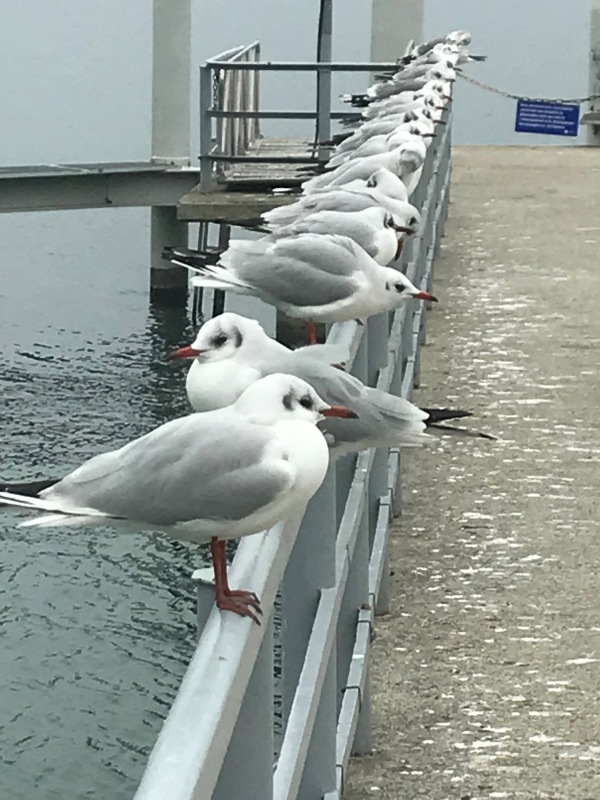
Waiting seagulls, Nyon, Vaud, Switzerland.

As the first days of 2018 arrive, any reflections on last year seem to contain an uncomfortable rawness because of the events continuously populating our devices – the immediacy, brutality and complexity of a world fueled by- “FakeNews?”, each one of us trying to construct a context in the “Filter Bubble” choreographed by algorithms from which we build a sense of the world we live in.

As International School educators, we straddle between the walled garden of “school” and the outside “world”.  The reality is that we are surrounded by constant change and ambiguity. But there is a gap between the accelerated rate of change and our capacity to adapt to it. For some, the gap is wide. For others, the gap stays the same, and for a few, the gap is narrowing. How we interpret and engage with the gap and our own capacity to keep up influences many of our feelings and emotions. These in turn fuel the perceptions, opinions and behaviors with which we express ourselves.

International Schools have to juggle the fine line between ensuring students and parents are pleased and ensuring that they feel safe, challenged and cared for. In the unique world of International Schools, a percentage of parents come from a comfortable socio- economic environment. Often times, their education is a contributing factor to their current positions. This education provided the opportunities for their successes and their economic prosperity.  Living with this becomes a strong marker in what International School parents believe their children should get from an education and an International School.  This pedagogic reference point in many cases 25+ years old. The world was a very very different place then. However we try as schools to innovate, change and adapt, we do this with a level of caution and reservation. At the end of the day, the invisible mandate between parents and international schools, is “provide my child with stability, continuity, what I remember from my school days and more certainty then I have in my life today“.

As educators, we fall into a similar narrative. We have a desire for of stability, continuity, and more certainty than in the outside world we interact with. We do innovate and change in our schools, but the presence of the invisible mandate between our parents and schools influences the level by which we break the status quo.

Today the level of stability, continuity, and certainty that we were once used to has eroded. Uncertainty, ambiguity and volatility are an unavoidable part of the day. The complexity of this change permeates into everyone’s lives, and often not by choice.

2018, is an opportunity to embrace the world’s uncertainty, ambiguity and volatility, not as something eroding our past and challenging our present, but as an opportunity to re-frame the possibilities in front of us as a unique and rich learning journey. We have a responsibility to take this on in our roles as mentors, facilitators and educators. We bring a wisdom, resilience and care that has served us well and can continue to serve us today. Many of our students will one day be International School parents or educators who look back at their education as a point of reference for their own success. The measures will be different.  We live in a world where uncertainty, ambiguity and volatility are part of our lives.  We should not depend on reference points from our past to give us stability, continuity and certainty. The gap for many will still get bigger and more uncomfortable. But hopefully, in 2018, we can work to bridge that gap as well.

John @beyonddigital.org

Puppets on a string

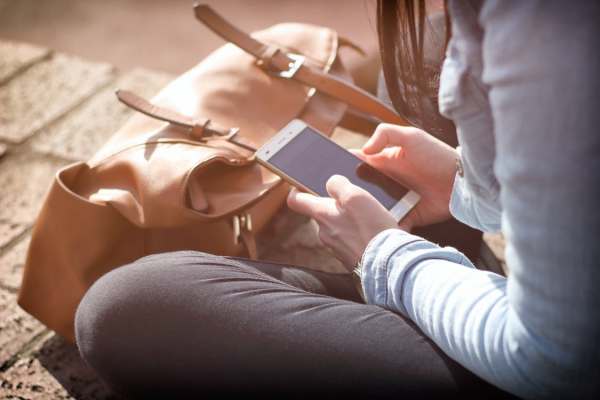
CC0 License: https://www.pexels.com/photo/bag-electronics-girl-hands-359757/

 The post is inspired by a L2talk I did at the Learning2 Europe conference in Warsaw.

“every storyteller has a bias – and so does every platform”-  Andrew Postman  “My Dad Predicted Trump in 1985 – It’s Not Orwell, He Warned, It’s Brave New World.” The Guardian. Guardian News and Media, 02 Feb. 2017

I am an addict. Are you too? Don’t you hate it when you can’t find your phone, and a friend has to call it.  Maybe the first thing you did this morning was check your phone and the last thing you did today was check your phone.  Think of it, we walk and text, and even drive and text. Have you had this happen,  you are in a social situation and you go the bathroom  to check an update. You are standing on a street corner and suddenly realize you are on your phone swiping at it, unconsciously. Then there is the feeling you get when you post a picture on a social media feed. The “likes” start coming in. It feels good, really good,  and then you check back and back. You post an update and there no “likes”.  You start wondering to yourself what is going on?

(CC BY 2.0) Photo taken by Angus MacAskill “Rat” https://www.flickr.com/photos/19951543@N00/3908678004/

I am sure you’ve heard about B.J Skinner’s rat experiment. The first rat had a lever in its cage, and every time it hit the lever food would come out. The second rat in the same set-up, hit the lever and nothing came out, no food. The third rat, same set-up, when it hit the lever a little food came out, then nothing, and then a lot, and then nothing again. The third rat developed an addiction. It quickly realized as long as it hit the lever it had a chance of getting some food.  This is called the principal of variable rewards. That feel good feeling, the dopamine rush. Behavior design as explained in this article (Scientist who make our apps addictive by Ian Leslie 1843 Economist October.November 2016) is a critical part of every app development. Tech companies employ behavior economist, psychologist, and psychiatrists in the creation, design and curation of our apps ecosystems to ensure we keep coming back.

So many of our interactions with devices are subconscious.  In Eric Pickersgill thought provoking photos series “Removed” (do spend some time on the link) he highlights the idea of being alone together as Sherry Turkle so aptly describes in her book Alone Together. We are often physically together with another person in a space sometimes even intimately but our mind’s burrowed in a phone.

As adults, we are quick t0 point the finger at kids for not being able to manage their screen-time. Think of this, the first time an infant will interact with a digital device is watching a parent using one. What does it feel like for a child in a pram looking up at their parent to only see a blank expression immersed in their smartphone.  The dinner table conversation interrupted by parents checking work emails. Mary Aiken in her book “ The Cyber Effect” states we are asking the wrong question.  Mary Aiken writes “We should not be asking at what age is it appropriate to give a digital device to an infant, but be asking the question when is it appropriate for an adult to interact with a digital device in front of an infant.”

A good example of behavior design is Snapchat and the new feature “streaks“.  The idea of streaks if you have a dialogue with a friend over 24 hours and you continue this over days, a flame emoji shows up.  In tandem a number counting your interactions keeps tally. Should one of you stop posting, an hour glass shows up giving you a heads up that the streak will disappear if you do not stay on. For adolescent’s social media relationships can be a gauge of their social capital.  Streaks adds a layer of complexity to the interactions.

I am not against digital devices. I have been working in Education Technology as a coach, coordinator, IT Director and Director of eLearning for over 20 years. I love the seamless and frictionless experience of our digital environments.

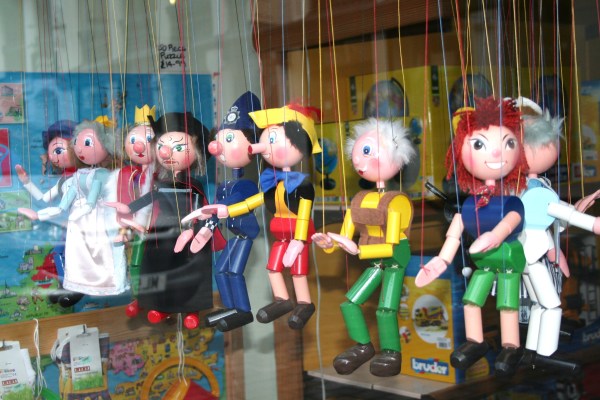
By Jim McDougall from Glasgow, Scotland (Puppets on a String Uploaded by Snowmanradio) [CC BY 2.0], via Wikimedia Commons
It is a fact that our online data  (health apps, social media, travel, online games, GPS, shopping, search etc…) is collected, analyzed, and then sold to third parties,  or curated to give us a personalized online experiences with a clear goal to manipulate our behaviors. We as educators have an ethical responsibility to be skeptical of behavior design’s narrative. Let us challenge our learning communities to question the complexity and consequences of behavior design in our lives. Stuffing a digital citizenship lesson for 15 minutes during a Friday morning advisory is not enough. We need to make this narrative an integral part of the living curriculum.

Do we want to end up being puppets pulled by the strings of choreographed digital ecosystems which we do not control?

I think it is important to understand schools are most likely the last place where children interact with digital devices with balance and pedagogic purpose. We cannot take this for granted.

If we ignore behavior design we will loose something. Free will. I and you do not want to lose this.

John @ http://beyonddigital.org

=

If we forget to look out of the window.

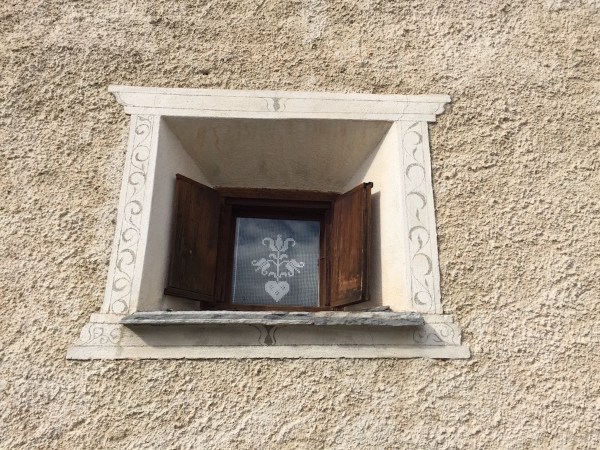
Photo by John M
A window out

Every year has its moments, and 2016 was no exception. Various significant shifts occurred, including changes in the political landscape in the United States, United Kingdom, and other countries around the globe. And the horrors of war, civil strife, terrorism and an underlying global tension have been constantly fed into our digital lives from the comfort of our screens.

As we consume the aggregated algorithmic social network feeds, each customized to ensure we get what we want to digest, we are choreographed into a more divisive world.

Information is power. This year, the pollsters, news agencies, and pundits got caught out with two big votes, and so many predictions seemed off.

Our landscape of information has entered a level of Orwellian curation, and what is news, fact, or reality seems dictated by emotion and perspectives constructed from our own curated news feeds. They are rarely factual. “Post Truth” – Oxford English Dictionary Names ‘Post-Truth’ Word of the Year by Jon Blistein is the word that defines these moments and a shift to a new narrative.

For many of us, this Orwellian curation has us struggling to distinguish fact from fiction. The level of sophistication of not only the algorithms but how these are manipulated to shift thinking is the new power. In schools, we are being told by various studies that our students capacity for media and information literacy is weak. (Students Have ‘Dismaying’ Inability To Tell Fake News From Real, Study Finds by Camila Domonoske ). When you consider we as adults struggle with this landscape, it is no surprise that our students struggle too.

In a world of algorithms where the sophisticated digital curation of social media, news, blogs, and video feeds can be manipulated to match an individual’s perspective, the challenges we face as educators are immense. This manipulation, shared in this sobering article “ Google, democracy and the truth about internet search by Carole Cadwalladr“, highlights the complexity of being truly media literate.  The prevalence of third party curation in social media feeds during elections highlighted in this article “Macedonia’s fake news industry sets sights on Europe by: Andrew Byrne” emphasis the challenges we all face in understanding what is “real” news.

To be complacent is short-sighted in a school setting.  There is a tendency with school professional development to not explicitly address the digital reality that engulfs our lives as an essential part of our professional learning. Information and Media literacy are what frame our own democratic values: choice, perspective, empathy, resilience, and critical thinking. If we as educators are going to assign students critical thinking tasks and ask them to engage with media and information while juggling screen time in a complex digital landscape, we cannot be passive bystanders.

As school leaders, we need to re-frame our engagement with the role of digital life in professional development. Together, we need to understand the complexity and impact of algorithmic information flows on our devices.

We also need dedicated spaces for this professional learning. We must learn how to mentor information flows, authenticate media, source perspectives, and understand the pedagogic impact of a curated news. We must approach this with patience and empathy, and allow everyone to build an understanding of the digital flows we live by, tapping into the talent of our librarians and digital coaches as guides. We must take advantage of the frameworks available to us (e.g: #1 or #2) and use them ourselves, as a point of reference for a pedagogic consensus on how to mentor our school community.

The paradigm shift asks us to look at Digital Intelligence as a core intelligence. As defined by http://www.projectdq.org: “- the sum of social, emotional, and cognitive abilities essential to digital life.” and shared out in the World Economic Forum  article: “8 digital life skills all children need – and a plan for teaching them“.

Digital Intelligence needs to be woven into the curriculum. We do this on a daily basis with all other aspects of the curriculum. Let us do it with Digital Intelligence. Re-structure the focus and content to explicitly encompass screen-time management, privacy management, cyber security management, digital footprints, and digital identity; use these to make authentic connections based on our experiences. Then, reflect on our digital habits, likes, tensions, questions and understandings to create activities to share. In this process, we should hope to find comfort in being honest with our own vulnerabilities.  We can then use this life-learning to support our students’ understanding of digital intelligence.

Being explicit about implementing Digital Intelligence in faculty professional learning ensures this is an essential part of our educators professional growth.  Working together, as adults learners, we need to harness the complexity of the choreographed digital world. By ensuring this is in our professional learning landscape, we are then empowered to share our digital intelligence to students. It is the only way to counter an Orwellian curation of information in a “post truth” world.

a wonderful resource by Joyce Valenza : Truth, truthiness, triangulation: A news literacy toolkit for a “post-truth” world

John @ beyonddigital.org