Recalibration of Truth

Photo John Mikton

In our rapidly changing digital age, the idea of truth is undergoing a significant change. In the past, truth was often taken from shared experiences and clear agreements. Today, truth often is manipulated by social media, algorithmic biases, polarization, organizations, companies, and in more instances governments,  fueling the algorithms that influence what we see, hear, and believe.

I refer to this as a recalibration of truth. This new landscape requires us to navigate the complexities of deep fakes: video and voice, misinformation, and the algorithmically curated digital environments that condition our understanding of what is real and true.

Aldous Huxley’s “Brave New World” reminds us, ” Each one of us, of course, is now being trained, deliberately, not to act independently.”  Written in 1932, this quote resonates for me, in a world where we are tethered to our devices, influencing and amplifying our wishes and perceptions, often unconsciously. The world we live in has become a digital ecosystem that curates 24/7 our understanding of the world around us, guiding not just our hopes and dreams but also our understanding of truth.

Throughout history, the concept of truth has always been complex, with each era having its own unique ways of curating information. There was a time, not too long ago when agreements and truths were often established through a handshake or verbal agreement. Nowadays, our point of reference is formal contracts and notarized documents. This in many ways is a natural shift of our time in how we understand and evaluate truth. The digital age has only accelerated this shift, flooding us with a constant stream of feeds and push notifications. The overabundance of information and our ability to process it has led to what Maryanne Wolf, author of Reader Come Home: The Reading Brain in the Digital Age, calls ‘skim reading.’ The act of ‘skim reading” dilutes our attention span and reduces our capacity to fully engage with information, affecting our ability to pause, analyze, and read critically and deeply.

The recalibration of truth today involves more than just the weakening of the traditional concept of truth; it involves understanding truth’s new tools and architecture. The accelerated presence of artificial intelligence and the widespread influence of algorithmic curation challenge us to engage with information in entirely new ways. The emergence of synthetic media, such as deep fakes, further complicates our ability to trust what we see, hear, and feel, causing us to question the reliability of our senses.

Schools and educators play a critical role in addressing this recalibration of truth. The abundance of information available to us and our students is seamless and frictionless, yet its accuracy is often questionable, highlighting the vital importance of teaching digital and information literacy. These skills are and will continue to be, essential for evaluating information, cross-referencing sources, and understanding the mechanics and algorithms of the digital content we interact with.

As we navigate this new landscape, we need to be open to reevaluating our priorities, focusing on the development of critical thinking, ethics, and empathy. It’s about being willing to break away from the past and being comfortable to explore new resources, professional learning, and dispositions to navigate the challenges brought about by a recalibrated notion of truth. This underlines the importance of developing learning pathways focused on digital and information literacy, ensuring that our students have the skills and critical thinking agility to live in a world where truths are continually recalibrated.

I believe that as educators and schools, we have a responsibility to ensure our students are not merely passive consumers of edutainment but rather critical thinkers skilled at navigating the complexities of this recalibrated truth in the digital age

“But I don’t want comfort. I want God, I want poetry, I want real danger, I want freedom, I want goodness. I want sin.”  Aldous Huxley’s “Brave New World”

Sources and Resources to further explore: 

“Brave New World by Aldous Huxley.” Goodreads, https://www.goodreads.com/book/show/5129.Brave_New_World

Wolf, Maryanne. “Reader, Come Home – HarperCollins.” HarperCollins Publishers, https://www.harpercollins.com/products/reader-come-home-maryanne-wolf?variant=32128334594082

Reading behavior in the digital environment: Changes in reading behavior over the past ten years: https://litmedmod.ca/sites/default/files/pdf/liu_2005_lecture_numerique_competences_comportements.pdf

Updates ‹ AI + Ethics Curriculum for Middle School — MIT Media Lab
https://www.media.mit.edu/projects/ai-ethics-for-middle-school/updates 

Carlsson, Ulla. “Understanding Media and Information Literacy (MIL) in the Digital Age.” UNESCO, https://en.unesco.org/sites/default/files/gmw2019_understanding_mil_ulla_carlsson.pdf

How deep fakes may shape the future
https://theglassroom.org/en/misinformation-edition/exhibits/how-deepfake-may-shape-the-future

FAKE or REAL? Misinformation Edition
https://fake-or-real.theglassroom.org/#/ 

John Spencer: Rethinking Information Literacy in an Age of AI. https://spencerauthor.com/ai-infoliteracy/.

AI Digital Literacy: Strategies for Educators in the Age of Artificial Intelligence https://blog.profjim.com/ai-digital-literacy-citizenship-best-practices/ 

If we forget to look out of the window.

Photo by John M
A window out

Every year has its moments, and 2016 was no exception. Various significant shifts occurred, including changes in the political landscape in the United States, United Kingdom, and other countries around the globe. And the horrors of war, civil strife, terrorism and an underlying global tension have been constantly fed into our digital lives from the comfort of our screens.

As we consume the aggregated algorithmic social network feeds, each customized to ensure we get what we want to digest, we are choreographed into a more divisive world.

Information is power. This year, the pollsters, news agencies, and pundits got caught out with two big votes, and so many predictions seemed off.

Our landscape of information has entered a level of Orwellian curation, and what is news, fact, or reality seems dictated by emotion and perspectives constructed from our own curated news feeds. They are rarely factual. “Post Truth” – Oxford English Dictionary Names ‘Post-Truth’ Word of the Year by Jon Blistein is the word that defines these moments and a shift to a new narrative.

For many of us, this Orwellian curation has us struggling to distinguish fact from fiction. The level of sophistication of not only the algorithms but how these are manipulated to shift thinking is the new power. In schools, we are being told by various studies that our students capacity for media and information literacy is weak. (Students Have ‘Dismaying’ Inability To Tell Fake News From Real, Study Finds by Camila Domonoske ). When you consider we as adults struggle with this landscape, it is no surprise that our students struggle too.

In a world of algorithms where the sophisticated digital curation of social media, news, blogs, and video feeds can be manipulated to match an individual’s perspective, the challenges we face as educators are immense. This manipulation, shared in this sobering article “ Google, democracy and the truth about internet search by Carole Cadwalladr“, highlights the complexity of being truly media literate.  The prevalence of third party curation in social media feeds during elections highlighted in this article “Macedonia’s fake news industry sets sights on Europe by: Andrew Byrne” emphasis the challenges we all face in understanding what is “real” news.

To be complacent is short-sighted in a school setting.  There is a tendency with school professional development to not explicitly address the digital reality that engulfs our lives as an essential part of our professional learning. Information and Media literacy are what frame our own democratic values: choice, perspective, empathy, resilience, and critical thinking. If we as educators are going to assign students critical thinking tasks and ask them to engage with media and information while juggling screen time in a complex digital landscape, we cannot be passive bystanders.

As school leaders, we need to re-frame our engagement with the role of digital life in professional development. Together, we need to understand the complexity and impact of algorithmic information flows on our devices.

We also need dedicated spaces for this professional learning. We must learn how to mentor information flows, authenticate media, source perspectives, and understand the pedagogic impact of a curated news. We must approach this with patience and empathy, and allow everyone to build an understanding of the digital flows we live by, tapping into the talent of our librarians and digital coaches as guides. We must take advantage of the frameworks available to us (e.g: #1 or #2) and use them ourselves, as a point of reference for a pedagogic consensus on how to mentor our school community.

The paradigm shift asks us to look at Digital Intelligence as a core intelligence. As defined by http://www.projectdq.org: “- the sum of social, emotional, and cognitive abilities essential to digital life.” and shared out in the World Economic Forum  article: “8 digital life skills all children need – and a plan for teaching them“.

Digital Intelligence needs to be woven into the curriculum. We do this on a daily basis with all other aspects of the curriculum. Let us do it with Digital Intelligence. Re-structure the focus and content to explicitly encompass screen-time management, privacy management, cyber security management, digital footprints, and digital identity; use these to make authentic connections based on our experiences. Then, reflect on our digital habits, likes, tensions, questions and understandings to create activities to share. In this process, we should hope to find comfort in being honest with our own vulnerabilities.  We can then use this life-learning to support our students’ understanding of digital intelligence.

Being explicit about implementing Digital Intelligence in faculty professional learning ensures this is an essential part of our educators professional growth.  Working together, as adults learners, we need to harness the complexity of the choreographed digital world. By ensuring this is in our professional learning landscape, we are then empowered to share our digital intelligence to students. It is the only way to counter an Orwellian curation of information in a “post truth” world.

a wonderful resource by Joyce Valenza : Truth, truthiness, triangulation: A news literacy toolkit for a “post-truth” world

John @ beyonddigital.org

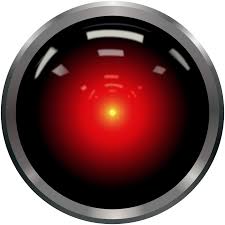
Hal, is in the house.

Harvest
Fall Harvest Photo jmikton

A colleague of mine and her Kindergartners were busy exploring where an egg comes from. “Was it born like a baby? Does it grow on its own? Where do they come from? Different perspectives and ideas were shared enthusiastically. The children discussed and challenged each other with their theories. At the end of the activity, one child turned to her partner and said, “when I get home, I’ll ask Siri for the answer.” A routine response in our classrooms? Or an important moment to understand that artificial intelligence (AI)  has embedded itself in our day to day lives? For a generation of children who have been raised on iPads and Siri,  AI – with a name and voice like a human – is as ubiquitous as any other technology.

AI is a tool that learns, anticipates and predicts. It provides us with instantaneous information or completes routine tasks remotely. The Amazon Echo and Google Home, two new devices that have recently gained traction, have begun to enter the home as personal assistants. The Echo and Home are two of many voice-activated AI assistants that tap into vast artificial intelligence networks. They aggregate information based on our digital footprints and predict our habits based on a learning algorithm that engages continuously with the data we share on our digital devices.

A shift has occurred in our relationship with AI and the impact is profound. It is the seamless adaptation of AI into our lives – a frictionless experience that is slowly making us dependent on this predictive technology. This new relationship meets our unique taste and needs, and only gets better the more it knows about us. Over time, this is changing the way our brain functions when interacting in the digital world. This short video by AcademicEarth.org -“ Cognitive Offloading,” is a reminder of the neurological changes AI is having on our learning.  We collectively feel more and more comfortable subcontracting out tasks to AI. The term ” let me google this” is an example.

For educators, this shift is showing up in our classrooms informally and in some instances invisibly.  Artificial intelligences are important elements of the devices which exist in our school tool kits. These include mobile devices, apps, browsers, search engines, smartwatches, and more. Writer and professor Jason Ohler asks an important question in his article “Bio-Hacked Students On the Outer Edge of Digital Citizenship”. How should we, as educators, shift the curation of a scholastic experience when students come to the classroom with embedded or wearable artificial intelligences? This alters the value of the commodity of knowledge in the classroom and highlights a potentially new hierarchy where AI supplements a user’s expertise. Suddenly, we have 24/7 access to predictive and anticipatory information which has the potential to disrupt the independent learning experience of a typical classroom. In his article “Artificial intelligence is the next giant leap in education“, Alex Wood reflects on the role AI could play in education.

 <https://upload.wikimedia.org/wikipedia/commons/thumb/f/f6/HAL9000.svg/2000px-HAL9000.svg.png>
source: <https://upload.wikimedia.org/wikipedia/commons/thumb/f/f6/HAL9000.svg/2000px-HAL9000.svg.png&gt;

Coming to terms with these exponential changes takes time to digest. As educators, we need to understand that engagement and critical thinking are vital components of education, especially as AI shifts the classroom narrative. The ethical issues which surround these exponential changes are here now. The complacency that schools engage with in the discourse of what it means to be in a world dominated by AI is a tension we cannot ignore.

What will a world look like when companies can remotely delete pictures and videos which do not fit a predefined perspective fueled by an AI?  Danny Yadron questions this in his article “Apple gets patent for remotely disabling iPhone cameras.” What will a world look like when you scan a person’s image on the street and instantly receive their aggregated digital profile? In Shawn Walker”s  “Face recognition app taking Russia by storm may bring end to public anonymity  ” he shares the dynamics of the “FindFace” application, reminding us of the reality at our doorstep.

As educators, we have a unique opportunity to design curriculums around the narrative of artificial intelligence. We need to be encouraging our students to not only be good digital citizens but proactive digital leaders who understand the complexity of a world fueled by artificial AI. Schools should promote the skills and inquiry mindsets which provide students with the capacity to harness the power and opportunities of AI and not become complacent with the technology. Ultimately, we want our students to be active leaders and architects of AI’s continued growth. As educators, we have a responsibility to ensure our students have a working understanding of how to navigate a complex and changing world fueled by artificial intelligence for the good of future generations.

John@beyonddigital.org


Living in a “GAFA” world.

Think of what Google, Apple, Facebook and Amazon services and products you use daily. How much are they a vehicle for communications, work, social life, purchases and tasks? How often do you connect to them? Count the number. How many? Surprised? Now, out of the 4 companies, how many do you use? Or do you not. The reality is that you probably use at least one, if not all of the four, very frequently.

Lac Leman, Rolle Switzerland -photo J.Mikton

Welcome to the “GAFA” (Google, Apple, Facebook, Amazon) world. The”GAFA” world is where most of humanity’s internet users and consumers work, communicate, socialize, learn, entertain themselves, and share, in services provided by one, two, three or all four of these companies: the “GAFA” grids.

We have become comfortable with “GAFA’” being part of our lives in multiple venues, and as a result, schools, educators, students and parents are investing significant amounts of monies into “GAFA”. It is an essential component of our ability to function at school and at home, and the collective convenience and seamless experience of “GAFA” intoxicates us.

In Terry Heick’s (@TeachThought) thoughtful article “How Google Impacts The Way Students Think”,  he highlights how learners working in a Google ecosystem develop an appetite for a black and white information age.  The expectation? Immediate answers, 24/7. The convenience of this immediacy creates an illusion of thinking, but actually disengages the user from deep critical thinking. It does this by simplifying the process of gathering information and giving the impression it is all connected.

In order to have a constant infusion of innovation and creativity, “GAFA” also hungers for start-up companies. By absorbing these companies, they are able to facilitate the pollination of ideas, products and services and enrich their ability to generate more seamless methods of connectivity. In this way “GAFA’s” largeness and versatility is engrained in all aspects of our lives

This innovation also provides “GAFA” with opportunities to tie our lives closer together with multiple platforms and venues in a frictionless environment. Examples of this reach are Amazon’s cloud service, which hosts large architectures of company websites, services, and databases, including the CIA’s; Google moving into the home with Nest and pursuing the development of artificial intelligence (Dark Blue Labs and Vision Factory); Apple’s acquisition of Affectiva, a company that specializes in emotion recognition, and investments in health apps and services; and Facebook’s expansion into virtual reality.  Making its services ubiquitous, as with the “free wi-fi-with-check-in ”in hotels and small businesses. Its purchase of “Whatsapp” is another example of how a “GAFA” company spent billions on an innovative service.

The algorithms provide a treasure trove of information with which to understand our behavior, habits, aspirations and desires.  In Raffi Khatchadourian’s  article “We Know How You Feel”, we are reminded that the hunger for data is tied to a hunger for emotional interactions. In Shelley Podolyn’s New York Times article, “If an Algorithm Wrote This, How Would You Even Know?”,  she highlights the level of sophistication of writing algorithms generating news articles and books. In tandem, the growth of “The Internet of Eyes“ in objects we interact with, as part of the “ Internet of Things.” brings about a new dynamic to data mining. It is a reminder that many of these algorithms being designed within “GAFA” play an almost non-negotiable role in our lives.

Many schools believe that their curriculum’s should allow for authentic connections to the world around them. What about “GAFA”?  Should we as learners, guides, mentors, and facilitators highlight “GAFA”? Is this important? Should its presence be considered in our learning outcomes?  To ignore “GAFA” is to create a disconnect with present changes that are reshaping all of our lives. It sidelines a reality that is the future. What does “GAFA” mean, to us, our schools, community and educational institutions? Schools have a responsibility to ensure this is part of the curricular discourse.  We need to construct learning moments and scaffold time to pause, reflect, understand, explain and critically think about what it is to live in a “GAFA” world.

If personal privacy, independent thought, critical thinking, differentiation, balanced perspectives, mindfulness and our capacity to be unique are in our school’s mission, we need to address what it means to be curated by “GAFA”.  Will we not lose an important aspect of humanity, if we continue to ignore “GAFA”?

John@beyonddigital

P.S: Next time you are at a Starbucks drinking your coffee remember that the free wifi is a “GAFA” gift!

…leave the kids alone?

Views Czech SwitzerlandThere is a belief that children nowadays are natural, “Digital Natives”, and that we adults on the sidelines are “Digital Immigrants”.  The dexterity and comfort many children demonstrate when interacting with digital devices and social media tools generates this image of them being “naturals”. This in turn contributes to the sense of disconnect between the so called “Digital Natives” and “Digital Immigrants”.

In reaction to this sense of disconnect and divide, educators often restrict access to technology, keep the screens out of the classroom, or tightly dictate the parameters of its use on their own terms. This is often done in an effort to dampen the disconnect we feel when trying to understand the students’ perspectives.

Often, parents and teachers express a sense of having to “catch up” or “keep up” with children’s adeptness at using digital tools and environments. There is a feeling that a race is on, and somehow as adults we have the odds stacked against us.

Children are not born digital natives, they are born digital consumers. A child’s first encounter with digital devices and environments will be framed by their parent’s digital use: a mom walking with the stroller whilst talking on her phone, listening to her music player, or checking a social media post; a father texting while giving his child a bath; parents watching a video on their tablet, searching on their phones as they feed their child, checking email or wall posts while their kid watches from the stroller at a restaurant. These daily routines are part of our growing fractured attention – being here but actually somewhere else. This behaviour quickly frames the context and role of the devices in our relationships, as well as their role in communication and day to day actions. Children from a very early age are the audience to our digital behaviors. Children start constructing their own understanding of digital devices and their role in response to our actions. They use this experience as a guide, most often subconsciously at a young age, and ultimately frame their own interactions based on what they have seen.

As children start interacting with the digital devices, be it on their own or with ones shared by a sibling or parent, they are in consumption mode. This consumption often becomes the source of their relationship with these digital devices and ecosystems – playing a game, watching a video, chatting, posting, and searching. Often the experience can be a solitary one, disconnected from physical reality. The device becomes a babysitter, a tool to give parents a break, or an opportunity to allow us to have a split attention.

Yes, so-called digital natives are very adept at using devices and quickly working out the tools they provide. The strategy is one of press, try, press, click, try again. They have a sandbox mentality when it comes to exploring technology. Anything is okay, as long as the child is making progress. It is this blind capacity to forge ahead, try, and try again with a fail forward philosophy that throws us off as adults. For many of us, the point of reference is a more linear approach to problem solving, working sequentially and sometimes with more hesitation than blind confidence.

This difference should not be our exit card from the need to engage with children and digital device use. We as adults have a responsibility to be active participants in the digital device journey of children, both at home and at school. We have a responsibility to choreograph concrete strategies where we become active participants and guides. This starts with us understanding and being mindful of our own use, and how digital devices are tethered to our day to day workflows. We need to consciously reflect on how our own behaviors frame the context of digital device usage for our children.

The social media and digital ecosystems we have are the environment of our age. Throughout time there have been repeated instances where new technologies come into play, and a generation gravitates to these. This divide between the current generation of users and adults is one that has occurred time and time again – with the telephone, the radio, and television, just to name a few. The process of learning and adapting to these new cognitive interactions is part of being human. We frame our use of technology on human emotions, understandings and aspirations. Our role as mentors, educators and parents is to nurture these human emotions, as well as the aspirations of our children, as active partners.

As adults, being a proactive partner in learning with a child creates a rich opportunity for both to understand the shared experience. The partnership provides language development through the conversations between the adult and child.  Unpacking the context together and developing an ability for questions and comprehension is part of the process we use to construct new understanding. For adults these are precious moments. With our own development of this relationship, we scaffold a vital critical thinking experience for the child. This gives us a unique opportunity to understand the child’s experience. Throughout the ages, the sharing of knowledge and experience between adult and child has been an essential part of the building blocks of relationships between different generations.

Moving kids away from a consumer model with digital devices requires guidance and inspiration. What they are doing and how is more important than what digital device they are using. As adults, we can curate these experiences and provide inspiration by modeling less of a swipe and point consumption philosophy. By doing so, we would encourage children to engage with critical thinking skills through creative content and inspire them to get excited about creative problem solving.

With our society’s nearly ubiquitous access to digital devices, why have we as adults disengaged with the changes? Is our own digital consumption numbing our ability to find inspiration? Parenting is still parenting, be it in an online or offline environment. Children are still children. It boils down to our willingness to carve out the time. The world does not need a growing population of digital devices consumers. The world we live in is hungry for critical thinkers who are engaged in creative problem solving and in leveraging digital devices and ecosystems in a way that might create a more connected society.

John@beyonddigital

Our Connected Data

unlearning learning
.

Over the last few weeks, an outstanding series produced by ARTE called “Do Not Track Me” has become available and is getting quite a bit of social media attention.

The different episodes explore and highlight the technologies, algorithms, data mining and aggregation of our online information through digital devices, tools, ecosystems and environments. Each of the episodes breaks down the architecture and rationales of companies, organizations and governments tracking in an interactive manner and examines how this impacts our privacy and digital footprint.

For many of the pre-internet generation, privacy both online and offline is an important right. Having full control of our privacy and being able to independently curate and choreograph where our information is and goes is an expectation. Naturally, there has always been an aspect of our information which we have not controlled, but in general, the collective expectation in most democratic countries has contained a certain level of privacy.

A paradigm shift has occurred in the last decade initiated by many companies realizing that instead of generating income from only paid advertising (remember pop ups?), they can also keep track and personalize their users’ internet experiences to generate far more valuable information, which can then be leveraged into an income. The incomes generated from a personalized web (where you get search results, ads, and information that is tailored to your tastes and based on a saved history of where you have been) are impressive. This interactive live stream shares the incomes generated by internet companies in real time.

We each are generating information that contributes to Big Data: large sets of aggregated information which we each create as we interact, live and work in the Internet’s ecosystem. Every click,”like,” scroll, connection, purchase, browse, download and action generates a footprint. This tracking and aggregation of our data is done on all of our devices connected to the internet and/or cellular networks. (A video that unpacks the technology behind tracking information)

There is no doubt that some of the tracking taking place is positive and provides us with certain efficiencies including a more tailored online experience. On the other hand, there is also a large amount of information that is collected without our knowledge which does not add to our browsing experience.

For many of us the convenience of a frictionless experience with our digital devices, tools, and environments is a huge plus. For this frictionless experience, many of us are willing to give up a level of our privacy to third parties. After all, a convenient and seamless experience is the key for users. Nowadays many of the actions, processes and uses we engage with on digital devices, tools, and environments are almost subconscious actions. Our usage is so embedded in our daily routine, both social and professional, it becomes a non-negotiable part of our life.

With this precedent, we have entered a world where personal information aggregated over time is combined, analyzed and then generated into a longitudinal profile of us. This rich set of information is then sold, traded, and curated by organizations, governments and companies. It is from these information landscapes that services and products we might need can be accommodated or altered based on our profile.

The question of course, is what our world will look like as every single digital device, tool and environment is consolidated, monitored, aggregated, and analyzed over time. Yes, maybe you could try to opt out, but it is unfortunately becoming harder and harder to do so as the internet becomes more integrated with our culture. Commerce, social media, communication, socialization and work have all moved to an online environment 24/7 in most parts of the world.

Does it matter? Are our online profiles and habits a true reflection of who we are? Does this aggregated information sold, traded, and curated by companies and organizations provide us with services and experiences that supersede the erosion of privacy? Either way, the discourse is clearly an integral component of our connected data experience.

“Most human beings have an almost infinite capacity for taking things for granted.”

― Aldous Huxley, Brave New World

John@beyonddigital


What is your digital grid?

As consumers of digital technology do you not get the sense that the pace of change is increasing and impacting us with little time to sit back, watch, take things in, and try to make sense of it all.  Nowadays digital devices and digital environments tend to suddenly show up almost invisible to our awareness and quickly become an integral part of our digital landscape. The consumer acting, to often, as a passive bystander and paying little attention on how this impacts our lives.

Recently I was invited to set up Google Drive and realized this was one more service that I work and live by tied to one flavor of a digital grid. We as consumers of the internet navigate within a variety of digital grids which are the framework of our digital ecosystems. A digital grid is the interface we log into with a username and password that in return provides us with tools, information and services all within the confines of one brand, organization or company.  These digital grids have become essential to our communication, collaboration, creative output, and ability to share information in our professional and personal lives. A digital ecosystem are all the connections, hardware, switches, wires, boxes and components which tie us to the services and tools these digital grids provide. Common digital grids are for example Google, Apple, Facebook, Microsoft to name a few. Some dominate our digital ecosystems more than others. This market dominance is critical to these organizations and companies managing our digital grids.  This dominance translates into power and control over large groups of users’ information which generates huge incomes and profits for these companies and organizations. The price of this convenience, seamless integration, and menu of powerful tools and services at ones fingertips is being locked into a single organization’s/companies’ digital grid.  Millions if not billions of users like you and me live in these digital grids and cannot function without them.

There is immense motivation for the organizations and companies delivering these services to make the experience more unified, seamless and a one stop shop for all our needs.  In developing these architectures as digital grids the companies and organizations are provided with limitless information, access and control of personal/professional habits, relationships and behaviors of their users. The more diversity of mediums, tools and services delivered, the more users they get, the more information they generate resulting in income and profits. As our digital lives evolve in interacting within a limited number of digital grids out of convenience, ease and habit what is the long term impact to us as individuals?

Looking at the different privacy policies (here paraphrased on this link) of cloud data storage services for individuals for Google Drive, Microsoft Skydrive and Dropbox  provides us with significant evidence of the change in ownership of personal/professional intellectual property and information. As our off line lives blend more and more with our online lives, all within a limited digital grid, organizations and companies suddenly have access to all the aspects of our lives.

For many of us the convenience of the digital grid out weighs the reality of having a third party, organizations, and/or companies access, track and own all our personal/professional online information. Unfortunately if one chooses not to work within certain digital grids ones options to interact with other users both professionally and personally becomes quite limited and in some cases even impossible.  Try to disconnect for a week, and not use  your most commonly used digital grid. What would your work week look like, what would your socializing look like, what would your personal and professional communication look like? Yes it is still possible at some level to live outside of the larger digital grids and try to use a mix of different tools unconnected to each other.  For most of us the effort, time, knowledge and logistics would require an immense amount of patience and skill to pull this off. At the end of the day the sheer convenience, seamlessness and variety of services the common digital grids provide us make opting out an impossible task for most of us. This reality has re-framed what personal and professional privacy is in our lives.

So, what digital grid do you live in?

John@https://beyonddigital.org/

No privacy, please.

We are in a world were our communication, information , search, entertainment, creation, and content are done with some form of digital device with access to the internet. This dynamic intricately tied to our personal and professional lives : privacy both online and offline is being transformed.  Some of this is within our control and some out of our control. This combination generates discomfort when people have time to sit back and reflect on this change we all are witnessing on the sidelines passively. Can we do anything about this? Do we need to?

There is nothing like the convenience to work and live with digital devices that provide you everything at your finger tips seamlessly 24/7. Google’s integration of mail, documents, sites, video, blogs, maps, online shopping, music storage etc…. is an example how the integration of a digital platform with one username and password provide users with powerful consumption and creation tools for free! Google is not alone, other examples: Apple iTunes, iCloud, and its growing selection of products via its own digital devices, Facebook and its growing menu of services and tools all available to you whenever you wish with any device that has an internet connection.

The pay-off is that the services and companies facilitating seamless connectivity and convenience 24/7 get unlimited access to all your online information. Our online information, habits and behaviors are available to them.  This is the hidden cost of using these environments, often without our specific consent or knowledge. Let us be honest, how many of us spent the time reading the information Google shared out once it changed its privacy philosophy with users of its suite of products. Does it matter? This is a matter of personal choice. Living without these services makes functioning in a digital world quite challenging.

The meaning of the word “privacy” has changed. The days of being anonymous, and having no digital footprint, are gone. We have adopted these conveniences in our eagerness to keep up with the changing world, and partly by the success of digital environment and device companies marketing. We have been convinced that we need these digital environments and devices to function in today’s world. The reality is that there are few alternatives.

What next? The dependency for 24/7 seamless connectivity is only increasing with the proliferation of digital environments and devices for communication, information gathering/sharing and content production. The algorithms digital companies are currently using to track, analyses, synthesis and control our personal online information will only get more sophisticated and intricate. Our own control of how much gets tracked and analyzed will diminish as the connectivity becomes more invisible.

The concept of privacy as we might have understood it in the past has changed. Our online lives are attached to an intricate digital trail on everything we do. This trail available to governments, companies and organizations controlling/managing our digital environments and devices. We as individuals need to re-frame what privacy means to us.

As an educator I am already witnessing some concrete evidence of students and adults coming to terms with this, as they manage their own online environments. There are students who are deleting their Facebook as they get ready to apply to Universities. They understand the timeline of events, and photos which often where started when they where in middle school are maybe not what they wish to showcase or allow folks to have access. With this a growing appreciation of having a clear division between your professional digital footprint and your personal footprint. Google (ing) your name on a regular basis, and trying to manage/control what is available to search engines by better managing your privacy settings. Developing a deeper understanding of what the different privacy controls mean, and how to best manage your online digital footprint with these controls.

We can no more expect to work in a world where privacy is something we control or have options to function under the radar. We live in a connected world, where everything we do, leaves a digital narrative. This digital narrative used, shared, and built upon by third parties often without our knowledge.

It is through an understanding of these new frameworks, tools and environments that we can to a certain level choreograph our own digital footprint. I believe that the literacy of online privacy needs to be part of our curriculum and learning for both adults and students. No privacy is the new privacy.

John@ http://beyonddigital.org

Where is the “off” switch?

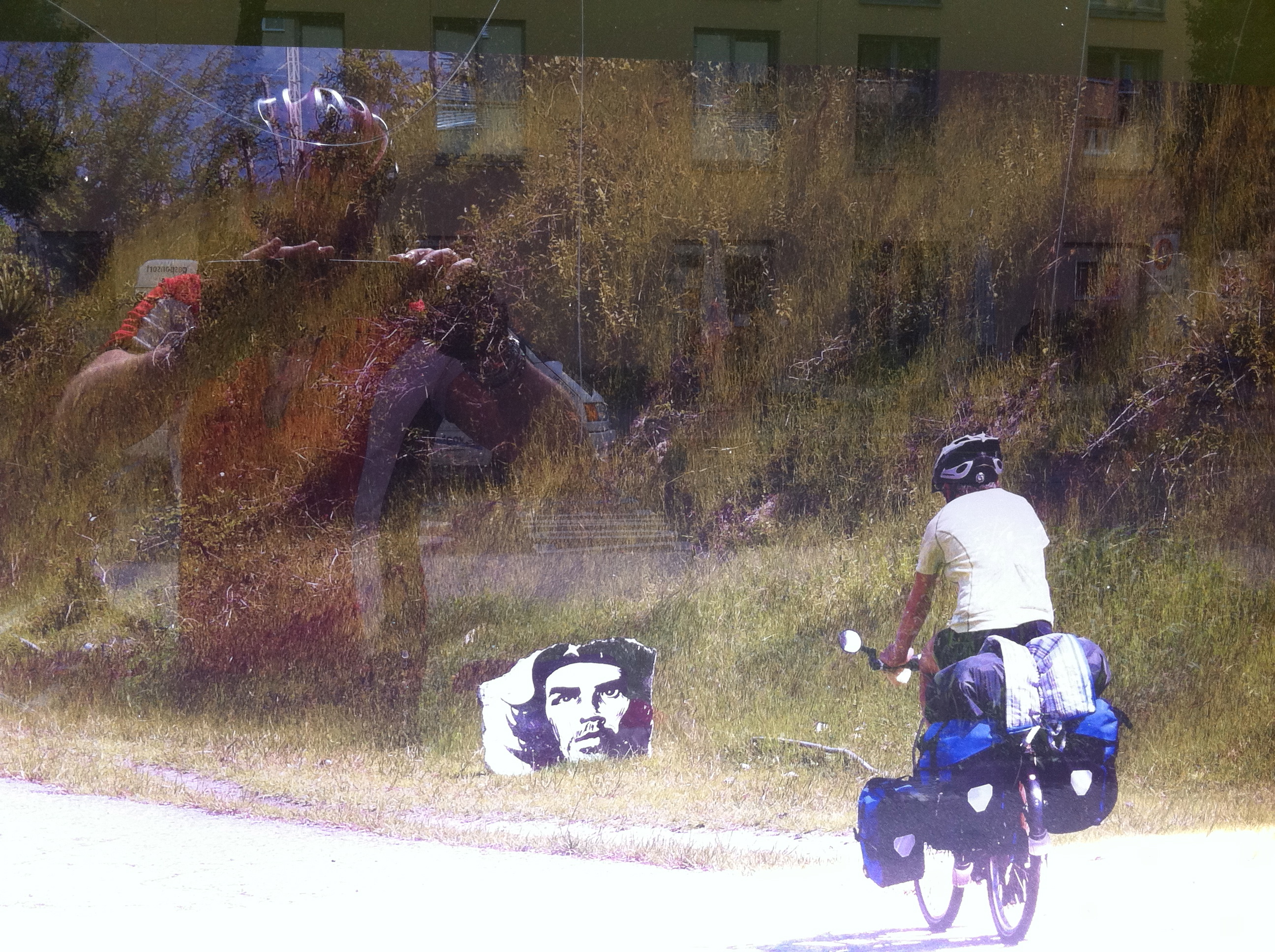
Can we really disconnect from devices, email, social networks, the internet and digital life in general? Being caught up in a cycling trip for me is the easiest way to disconnect from all the rings, tasks, needs, wants, musts and maybe’s we get caught up in our digital life. An element of isolation and the tempo provide a good way to unwind and coach myself to be okay with the disconnection. The daily cycling, in an isolated environment, provides often limited cell reception, rare internet and few digital devices. This experience on the bicycle gives me the opportunity to create head space and day dreaming hours to clear out the mind and fall into a different time span and a grounded feeling. You generate in your head space for nothing.

Yes it is okay, and it feels good. Today it is getting harder and harder to disconnect…or find space for nothing. As we integrate our digital devices and social medias into every aspect of our work and home life we have developed a dependence, which is becoming invisible to our lives.  As new generations adopt this digital world as part of their social fabric, and consciousness, a collective dependency on seamless connectivity is embedded to our day. This level of subconscious dependency creates a new social bargain for the way we connect, disconnect and live our lives online and offline.

For my generation and others prior to the explosion of the internet, we experienced an environment of  limited connectedness, tied to a land line, payphone, letters, fax, face to face, newsgroups, bulletin boards, and then email. Our privacy was shaped within a connection of a friend or two, or small circle of friends/acquaintances. The norms based on word of mouth, hearsay, rumors, reputations forged live in front of  friends/acquaintances or through mediums limited to a small groups of folks for viewing or to interact with. Often it became an issue of our word vs their word. There was no digital footprint and it was harder accessing a paper trail.  This experience has equipped my generation and others with a counter-balance and point of reference of another option to our current non stop connectivity and diminishing privacy.

Today with non stop connectivity and diminishing privacy there is a different reference point for a new generation. A world of online social circles with friends and acquaintances in the hundreds, images, videos, wall updates, tweets, online hangouts all available 24/7 to potential huge audience not only our perceived friends/acquaintances but search engines, companies, governments, and a digital footprint not in our control.

The perception and understanding of privacy and non stop connectivity has changed. For many of today’s online users, there is no point of reference or experience of not having a digital footprint, not being connected 24/7 or understanding privacy in the context of the pre-internet world. A social media openness is the norm of privacy today for a whole set of children and young adults.

This shift can be uncomfortable for some, but is here. This has happened in the background of our awareness to certain degree.  My generations concept of privacy, balance and connectivity is framed with a memory and life experiences without these. Today children and young adults are framing their understanding and experiences based on a new social bargain where connectivity is a non negotiable ingredient to socialization both professional and personal. Connectivity is a must: cell phones to keep Mom and Dad in touch with your whereabouts, educations demands for mobile technology as a mandatory learning platform, commerce, entertainment, goverment and information delivered only online.

As with any changes in life you gain things and you loose things  Privacy and connectivity have changed and will continue to evolve in ways which will be be viewed by some as a paradigm shift, others the norm and for others a necessary evolution of our digital life.

Today the off switch is no more available! Even while we sleep or disconnect for a moment, emails, images, wall postings, and our digital footprints are active, being viewed, shared, forwarded, cataloged, and leaving a permanent digital trail. As individuals and a society we will need to carve and find the spaces to disconnect on our own. This ability to disconnect, find balance, and space for nothing will need to become a learned skill and behavior. For many of our students, with no point of reference to a unconnected world, their is no previous learning or points of reference to build upon.

As a society what does it mean when our digital footprints are available to anyone online, anytime, with any type of devices 24/7? This conversation needs to becoming part of our educators fabric and curriculum in schools. Even if a new generation has not experienced a disconnected world, it is part of our collective historical heritage the many moments when philosophers, artists, musicians, and thinkers  sat with space for nothing so they could create marvels. It is fine by me that there is no more an off switch, but it is not okay to let our students and young adults not have a skill set to be able to disconnect and create a space for nothing. A balance in life is a key, everyone should be exposed to this learning and have the opportunity to be mentored on how to develop this capacity: space for nothing.

John@beyonddigital.org

….can we do all

this is a cross post from the following blog I manage and facilitate  http://ecisitcommittee.edublogs.org/
…in the last week there has been an enormous amount of traffic regarding the effects related to multitasking and student learning. The issue and variables associated with this topic are huge, and pending who you read it seems to go from the world is about to end attitude to hey it is no problem and live with it. I think the reality is that with the new technologies and internet access we all have access to we are somewhere in the middle in our understanding of the impact of multitasking on our own lives. I believe our students are not learning better or worse but differently. This as a result of the 24/7 access each user has at their finger tips and in tandem the incredible power to be content creators. Naturally with so many choices come many decision to be made and this I think is where we as educators can support, facilitate and mentor many of our students in being mindful of the implications, impact and importance of taking a balanced approach to the idea of multitasking and interacting with so many different powerful tools. Here I share three of the articles which come with different perspective on the topic:

In tandem with this topic comes the bigger issue, the fact that there needs to be significant paradigm shift in education. For educators, parents and students to be able to engage with the rapidly changing world some significant changes are due. I think collectively we understand this but how do we move forward is the bigger challenge. No better person to share this topic than Sir Ken Robinson with the follow wonderful animation and potential conversation for us all.