Hal, is in the house.

Harvest
Fall Harvest Photo jmikton

A colleague of mine and her Kindergartners were busy exploring where an egg comes from. “Was it born like a baby? Does it grow on its own? Where do they come from? Different perspectives and ideas were shared enthusiastically. The children discussed and challenged each other with their theories. At the end of the activity, one child turned to her partner and said, “when I get home, I’ll ask Siri for the answer.” A routine response in our classrooms? Or an important moment to understand that artificial intelligence (AI)  has embedded itself in our day to day lives? For a generation of children who have been raised on iPads and Siri,  AI – with a name and voice like a human – is as ubiquitous as any other technology.

AI is a tool that learns, anticipates and predicts. It provides us with instantaneous information or completes routine tasks remotely. The Amazon Echo and Google Home, two new devices that have recently gained traction, have begun to enter the home as personal assistants. The Echo and Home are two of many voice-activated AI assistants that tap into vast artificial intelligence networks. They aggregate information based on our digital footprints and predict our habits based on a learning algorithm that engages continuously with the data we share on our digital devices.

A shift has occurred in our relationship with AI and the impact is profound. It is the seamless adaptation of AI into our lives – a frictionless experience that is slowly making us dependent on this predictive technology. This new relationship meets our unique taste and needs, and only gets better the more it knows about us. Over time, this is changing the way our brain functions when interacting in the digital world. This short video by AcademicEarth.org -“ Cognitive Offloading,” is a reminder of the neurological changes AI is having on our learning.  We collectively feel more and more comfortable subcontracting out tasks to AI. The term ” let me google this” is an example.

For educators, this shift is showing up in our classrooms informally and in some instances invisibly.  Artificial intelligences are important elements of the devices which exist in our school tool kits. These include mobile devices, apps, browsers, search engines, smartwatches, and more. Writer and professor Jason Ohler asks an important question in his article “Bio-Hacked Students On the Outer Edge of Digital Citizenship”. How should we, as educators, shift the curation of a scholastic experience when students come to the classroom with embedded or wearable artificial intelligences? This alters the value of the commodity of knowledge in the classroom and highlights a potentially new hierarchy where AI supplements a user’s expertise. Suddenly, we have 24/7 access to predictive and anticipatory information which has the potential to disrupt the independent learning experience of a typical classroom. In his article “Artificial intelligence is the next giant leap in education“, Alex Wood reflects on the role AI could play in education.

 <https://upload.wikimedia.org/wikipedia/commons/thumb/f/f6/HAL9000.svg/2000px-HAL9000.svg.png>
source: <https://upload.wikimedia.org/wikipedia/commons/thumb/f/f6/HAL9000.svg/2000px-HAL9000.svg.png&gt;

Coming to terms with these exponential changes takes time to digest. As educators, we need to understand that engagement and critical thinking are vital components of education, especially as AI shifts the classroom narrative. The ethical issues which surround these exponential changes are here now. The complacency that schools engage with in the discourse of what it means to be in a world dominated by AI is a tension we cannot ignore.

What will a world look like when companies can remotely delete pictures and videos which do not fit a predefined perspective fueled by an AI?  Danny Yadron questions this in his article “Apple gets patent for remotely disabling iPhone cameras.” What will a world look like when you scan a person’s image on the street and instantly receive their aggregated digital profile? In Shawn Walker”s  “Face recognition app taking Russia by storm may bring end to public anonymity  ” he shares the dynamics of the “FindFace” application, reminding us of the reality at our doorstep.

As educators, we have a unique opportunity to design curriculums around the narrative of artificial intelligence. We need to be encouraging our students to not only be good digital citizens but proactive digital leaders who understand the complexity of a world fueled by artificial AI. Schools should promote the skills and inquiry mindsets which provide students with the capacity to harness the power and opportunities of AI and not become complacent with the technology. Ultimately, we want our students to be active leaders and architects of AI’s continued growth. As educators, we have a responsibility to ensure our students have a working understanding of how to navigate a complex and changing world fueled by artificial intelligence for the good of future generations.

John@beyonddigital.org


Stop Pretending in Education

In education, we have to stop pretending that

  • there is a separation between the digital world and the real world
  • all students have an excellent understanding of digital tools and ethics
  • technology is a learning outcome and not a tool
  • failure and open ended outcomes are bad
  • we are not in a state of constant accelerated change

Scott McLeod challenged others to participate in a conversation on how to #makeschooldifferent with the prompt “… we have to stop pretending”. In this challenge, I’d like to invite @pgreensoup  @jasonohler @arniebieber  @russiazurfluh

Control Room

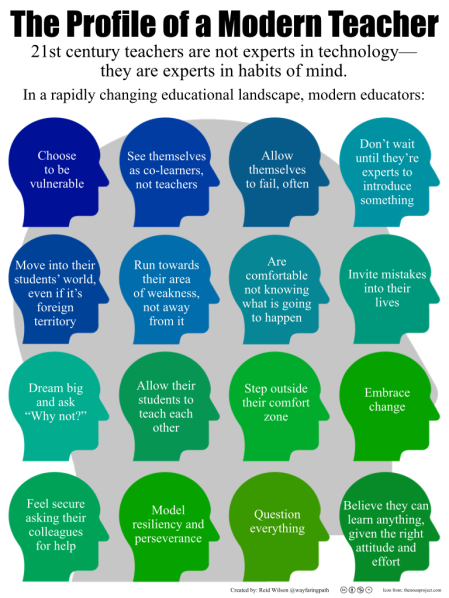
=The-Profile-of-a-Modern-Teacher
Used with permission from Reid Wilson: http://www.coetail.com/wayfaringpath/

I caught a tweet about Reid Wilson’s post with this infographic and it simply jumped out at me. It got me thinking about my own learning. The idea of letting go, being open, okay to mess up, explore, tinker and celebrate being vulnerable and taking advantage of  my failures as a learning opportunity. The habits of mind Reid shared resonated with me. The powerful infographic highlights how in today’s rapidly changing world habits of mind are critical in engaging with these changes. Reid Wilson‘s  infographic does a wonderful job of challenging educators thinking and push one to reconsider the pedagogic discourse of learning in schools.

The important premise is that these new habits of mind are about educators cognitive capacity to build new frameworks with a significantly different set of behaviors and beliefs connected to a world that is in a constant state of accelerated change.

There are some concrete outside forces which come into play challenging our learning communities. The shifts caused by these outside forces are significant and only highlight the importance of seriously engaging with Reid Wilson‘s premise.

One of the biggest shifts is how the work place, employment and jobs are radically changing due to the adoption of new technologies and more importantly a break from traditional business models.  Examples like Air B and B, Uber, the apps market and the rash of start ups fueled by the E-economy are re-framing employment rules in the work place. The dynamics of this shift are nicely broken down in this article: Workers on tap @Economist. A whole generation of students in schools today, are entering a new work place being choreographed by these changes.  The social contract of employment we have lived with is being turned upside down.

If tools can be emailed at a click of a button (Nasa emails spanner to space station @BBC) and constructed in the confines of our homes with a 3D printer. How does that shift the dynamic of manufacturing and in tandem the role of design, location, innovation and production. As this develops we are seeing a re-framing of manufacturing, and it will not be about location but innovation, creativity, flexibility and adaptability.

The growing field of machine intelligence and the complex dynamics of the ethical implications are starting to challenge our own moral construct and the relationship between machines and humans. Shivon Zilis shares out an interesting graphic on her blog (the Current State of Machine Intelligence.) that delineates the companies and organizations involved in machine intelligence and the accelerated growth of areas unheard off a few years back. The growing investment tied to the development of machine intelligence coupled with the field of “learning machines” as described by  Jeremy Howard’s Tedtalk  are ushering a science fiction like future which actually is being constructed today!

These are just a few of the many new shifts changing our world, and being unpacked before our eyes. A term which encapsulates these forces well, is VUCA, an acronym for “volatility, uncertainty, complexity and ambiguity” initially coined as a military term in the 1990’s and now often shared in the context of companies and organization engaging with a variety of  leadership frameworks.

Schools and education leaders are in a unique position to engage, lead and model Reid Wilson‘s  construct of the 21 century habits of mind in response to the forces of accelerated change. Education leaders must be risk takers themselves and engage with the responsibility to scaffold, curate and facilitate this new construct that prepares not only our students for a world  of “ volatility, uncertainty, complexity and ambiguity” but the educators that are in the control room of learning.

John@ http://beyonddigital.org

Special thank you to Reid Wilson for sharing the graphic. Do make a point of checking out his blog:  http://www.wayfaringpath.com/

The Death of ” Digital”.

Santa Cruz California

Words are a powerful vehicle for meaning and understanding,  connected to individual or group perspectives, interpretations,  and connections. The word “Digital” has been part of our vocabulary landscape for a long time.  It was only after reading Nicholas Negroponte’s  book, “Being Digital” in 1995, that I began to be aware of the term and its impact on the world to come, but in 2014, the word “digital”  has now blended itself into the daily fabric of our lives. When we think of the word “digital”, it creates a sense of disconnect from our world and implies that the digital world is a separate part of our reality. However, this is no longer true. Our lives are so embedded within this digital realm that the two have become inseparable. So, I invite us to use a new set of vocabularies to frame this paradigm:  Appliances, Utilities, Information Flows, Ethics and Algorithms.

Appliances are the consumables that we connect and interact with (laptops, phones, tablets, GPS, and other hardware). These tools have become the default to our connectedness; disposable and with each new version more seamless, simple and integrated.

Utilities frame our day to day interactions. These social medias, networks, email, RSS, professional learning networks and Web 2.0/ 3.0 tools have become the architectural  framework of communication and information for our connected world.

Information flows are the 150,000,000 Blogs posted a year, 5 million tweets per day, 200,000 videos uploaded on YouTube daily, and the petabytes of information created, aggregated, shared, and circulated daily around the earth.

Ethics is the why, how, when, where and who of our digital footprint in today’s world. It is the wide ranging issues from Killer Robots to the impact of a Filter Bubble (where search, news, and information algorithms choreograph what information types we get based on our personal browsing habits). The curation of our online and offline privacy as governments, corporations, and organizations juggle a treasure trove of information created by our respective digital footprints, is the new ethical dilemma we all deal with, as individuals, groups and as societies at large.

Algorithms are the backbone to the intelligent softwares that inhabit the engine of the internet. These are predictive, anticipatory, intelligent and analytical. The are the lifeblood of the internet ecosystems for individuals, governments, corporations, and organizations which then create, develop, build, facilitate, monitor, analyze, synthesize and evaluate our day to day interactions. The algorithms have become the life line to the information flows, ethics, utilities and appliances.

These words are not the definitive list, but reflect a vocabulary we use both from our past and present. They highlight how the “digital” world is ingrained in our daily lives, to the point we often are not even conscious of its presence. This connectedness fueled by our devices and ecosystems now are part of the fabric of our lives, often out of our control, and a non negotiable aspect of our own participation with the day.

A critical understanding of these words and their respective dynamics should be an essential ingredient in School and Organizational curricula. We can no longer think of them as separate entities. We have inherited this reality which now has us connected in ways where opting out becomes the abnormality . These Appliances, Utilities, Information Flows, Ethics and Algorithms are part of the fabric of our world and impact us as humans both consciously and unconsciously.

This discourse needs be given equal time in all educational settings; imbedded as seamlessly in the curriculum as they are in our lives. A responsibility to highlight the power, richness and cautions that come with tying ourselves to a set of appliances, utilities, information flows, ethics and algorithms that have and will continue to change the fabric of our interactions as humans and organizations.

So how do we do this? The key is that these terms and their meanings are introduced as part of the learning landscape in all units of study. Creating authentic connections between these words and the learning environment will then scaffold a clearer understanding of their real world applications. In our school ecosystems most subjects and curricular areas are using technology, often as a separate tool, or as a side show, but, if it is so seamless and embedded in our day to day lives, then we need to translate this into our learning. One of the first steps is to give ourselves permission to change the way we work with this vocabulary. As we change the vocabulary, and with it the meaning and role of these words, we are engaging in an active learning process connected to the changing world.

To ignore this vocabulary is to short change future generations of their awareness of a world that has become more invisible, seamless and blended both in our conscious and unconscious day.  The death of “digital” is here.

John @beyonddigital.org


When we stop being human.


Change is a constant, and however we might  forget or passively ignore the fact, it is happening behind our backs, in front of our eyes, above our heads, and at a corner we have not bothered hearing about. For me, the change we have let slide passively with little input apart from buying and always upgrading, is the hunger for digital devices. In the last few years digital devices have  become an integral part of our individual ecosystems, and without them we struggle.

A wonderful piece by the Economist It’s a smart world, explores this concept in the world of smart softwares, and in this years’ World 2013 shares out an important milestone:  “The number of connected devices to the Internet will exceed the number of people on the planet by a factor of 2 in 2013  according to Cisco, By 2020 some 27 billion unique objects will be connected wirelessly to the Internet- Economist  The World 2013

If we currently have more digital devices than human by 2 =  14 billion of these devices are part of our lives.  So if out of the 7 billion humans 2.45 billion have access to the Internet in 2011.  -“The World in 2011: ITC Facts and Figures”, International Telecommunications Unions (ITU), Geneva, 2011.”  How did 2.45 billion + humans suddenly find themselves needing 14 billion devices? Making an unscientific assumption that most digital devices need an Internet connection, but then again it is still a ridiculous amount of devices 2 per human.

The seductive commercialization of the device, and the relentless addictive capacity of its features, available, on: whenever, wherever, whatever!  2.45 billion of us have developed a need for more than one. Try this:  count how many digital devices you have at home. ( Think microwave, digital TV, laptops, tablets, phones, sat-nav, digital radio, game consoles, digital heating system, digital alarm…. and we go on) do give yours a count. Now do you see how many of us are part of the 2.45 billion needing more than one device?

To be honest is it a big deal that we have more digital devices than humans by a factor of 2. On first thought very likely not, but then if we differ, consult, communicate, access, share, update, inform, search, pay, track, publish and connect as part of a daily routine, to the point we are often not aware of it… seamlessly blended within our ecosystems fabric with which we interact, work and live by. Is it, should it be our current norm?

The digital devices are here, embedded in our lives. Have we sat back and collectively, as a conversation piece, wondered how this happened, how did suddenly we need to sleep with a smart-phone by our bed, check email during dinner, while waiting for a bus, on the toilet…. what kind of reflective process have we engaged with colleagues friends and family.  This propensity for the digital device is it a non negotiable of our own ecosystem?Snow Nebusice

Do not get me wrong, I love my digital devices, the convenience, versatility, connectedness, and ease of use, are a huge benefit to my own day.

As Terence McKenna states in the video above as the rate of change accelerates over time, the modalities, ecosystems we live by will change to a point we will not be equipped to synthesis, analysis, engage, understand control, and manage these…. it does sound like science fiction…. “By 2020 some 27 billion unique objects will be connected wirelessly to the Internet- Economist  The World 2013“, but the science fiction is becoming part of our current narrative, and somehow we have let it slip by or have we?

John@ http://beyonddigital.org

No privacy, please.

We are in a world were our communication, information , search, entertainment, creation, and content are done with some form of digital device with access to the internet. This dynamic intricately tied to our personal and professional lives : privacy both online and offline is being transformed.  Some of this is within our control and some out of our control. This combination generates discomfort when people have time to sit back and reflect on this change we all are witnessing on the sidelines passively. Can we do anything about this? Do we need to?

There is nothing like the convenience to work and live with digital devices that provide you everything at your finger tips seamlessly 24/7. Google’s integration of mail, documents, sites, video, blogs, maps, online shopping, music storage etc…. is an example how the integration of a digital platform with one username and password provide users with powerful consumption and creation tools for free! Google is not alone, other examples: Apple iTunes, iCloud, and its growing selection of products via its own digital devices, Facebook and its growing menu of services and tools all available to you whenever you wish with any device that has an internet connection.

The pay-off is that the services and companies facilitating seamless connectivity and convenience 24/7 get unlimited access to all your online information. Our online information, habits and behaviors are available to them.  This is the hidden cost of using these environments, often without our specific consent or knowledge. Let us be honest, how many of us spent the time reading the information Google shared out once it changed its privacy philosophy with users of its suite of products. Does it matter? This is a matter of personal choice. Living without these services makes functioning in a digital world quite challenging.

The meaning of the word “privacy” has changed. The days of being anonymous, and having no digital footprint, are gone. We have adopted these conveniences in our eagerness to keep up with the changing world, and partly by the success of digital environment and device companies marketing. We have been convinced that we need these digital environments and devices to function in today’s world. The reality is that there are few alternatives.

What next? The dependency for 24/7 seamless connectivity is only increasing with the proliferation of digital environments and devices for communication, information gathering/sharing and content production. The algorithms digital companies are currently using to track, analyses, synthesis and control our personal online information will only get more sophisticated and intricate. Our own control of how much gets tracked and analyzed will diminish as the connectivity becomes more invisible.

The concept of privacy as we might have understood it in the past has changed. Our online lives are attached to an intricate digital trail on everything we do. This trail available to governments, companies and organizations controlling/managing our digital environments and devices. We as individuals need to re-frame what privacy means to us.

As an educator I am already witnessing some concrete evidence of students and adults coming to terms with this, as they manage their own online environments. There are students who are deleting their Facebook as they get ready to apply to Universities. They understand the timeline of events, and photos which often where started when they where in middle school are maybe not what they wish to showcase or allow folks to have access. With this a growing appreciation of having a clear division between your professional digital footprint and your personal footprint. Google (ing) your name on a regular basis, and trying to manage/control what is available to search engines by better managing your privacy settings. Developing a deeper understanding of what the different privacy controls mean, and how to best manage your online digital footprint with these controls.

We can no more expect to work in a world where privacy is something we control or have options to function under the radar. We live in a connected world, where everything we do, leaves a digital narrative. This digital narrative used, shared, and built upon by third parties often without our knowledge.

It is through an understanding of these new frameworks, tools and environments that we can to a certain level choreograph our own digital footprint. I believe that the literacy of online privacy needs to be part of our curriculum and learning for both adults and students. No privacy is the new privacy.

John@ http://beyonddigital.org

Forget the box!

Walking around our school, one thing that always grabs my attention is the capacity of our learners to engage independently in the process of creative innovation to generate something quite unique and original. Unfortunately this often happens outside of the classroom setting, or in an elective classes, after school activity as the structure and expectations tend to be more open ended. Granted this is not always the case. This capacity for autonomous innovation often conflicts with the more regimented curriculum and learning that students engage with in the context of their classes. This is also the case for adults in our own work environments. There is no doubt that the rigid structures of school and work have served their purpose well, but today I am not convinced these are as helpful as in the past.

Today with the acceleration of change in technology and our lives I believe there is a growing need for autonomous creative innovation to become an integral part of the day to day fabric of our schools and work places. In a world where the acceleration of change only increases there is evidence that this is impacting our day to day capacity to work and live effectively. Our to do list becomes bigger, we are multitasking to manage an ever increasing information flow and somehow things do not seem to slow down.

We are dealing with a situation that is relatively new, change at an ever increasing pace, desperately trying to manage this with tools and structures that simply do not seem to work for us.

Schools and work places need to engage actively to create environments where the unstructured opportunities to innovate, create, explore and try out new ideas autonomously are part of the day to day schedule, structure and learning. So often you hear the term let us think “out of the box” but as long as we start from a box and then go out of it to think, we still are tied to certain structures and habits connected to the initial box. There is no doubt that a set of standard skills, a clear scope and sequence, and learning capacity needs to be formally introduced and nurtured for each learner to develop a strong skill set to be then able to effectively innovate and problem solve.

There are company’s that have developed a structure into their work flows  “creative time” (Google calls it 20%). This is being done by many other companies and even some schools currently. The results of this dedicated time to explore autonomously has generated extremely innovative products or learning which have been integrated into the companies markets or schools learning.

For our respective community of learners who are exposed to continual accelerated change, we will need new solutions to be able to deal with this effectively. Creating in our learning environments (schools and workplace) time, capacity, structures and a cultural expectation were innovation becomes part of the day to day fabric will generate in my opinion a greater capacity for us to deal with this accelerated change.

Do not think out of the box, simpley get rid of the box, and let us think without a box.

John @ https://beyonddigital.org

The success of failure

I am convinced as educational institutions we do not celebrate and nurture failure enough. Our days are so centered on highlighting success, and drilling into our students and faculty minds, that success is the measure which validates the time and effort we put into each of our days.

Life’s and the world problems are messy, inconsistent, unclear, and more importantly do not come with clear solutions. Sometimes there are no solutions! This is the reality many of us walked into once we left school.  Each of us has built capacity to learn and deal with this differently and the learning occurring in the motion of confronting the problems. Future generations of students will and are heading out of the school gates into this dynamic.

An acquaintance shared with me a perspective a few Venture Capitalist work with before investing into start ups. They look how many times a potential group/organization has failed in trying to start something, and the more failure they have experienced the more likely these Venture Capitalist will invest in them. The premise is that from each failure, there is significant learning that takes place, and as you build on this learning, and fail again, you increase your capacity to deal with the next set of problems. Through this process and engagement you as a group/organization are more likely to succeed with your idea. A key ingredient tied to this premise is the level of tenacity, passion, and belief you engage with as a group/organization in confronting multiple failures and what learning/lesson you build from this to then deal with the next challenge ahead.

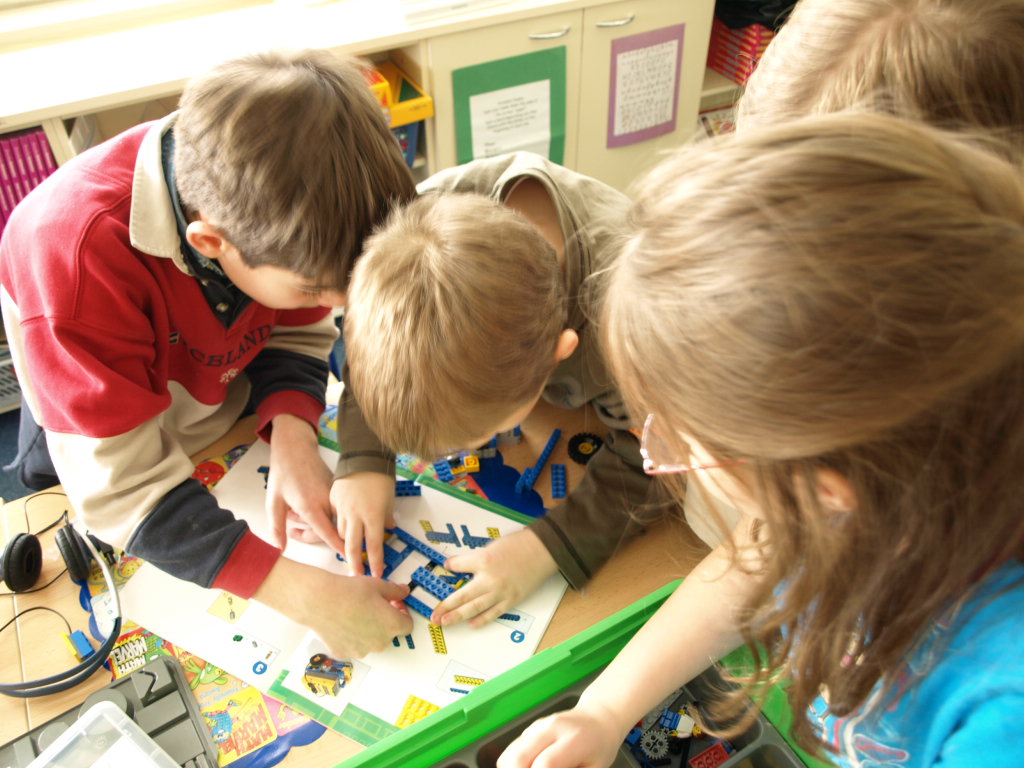
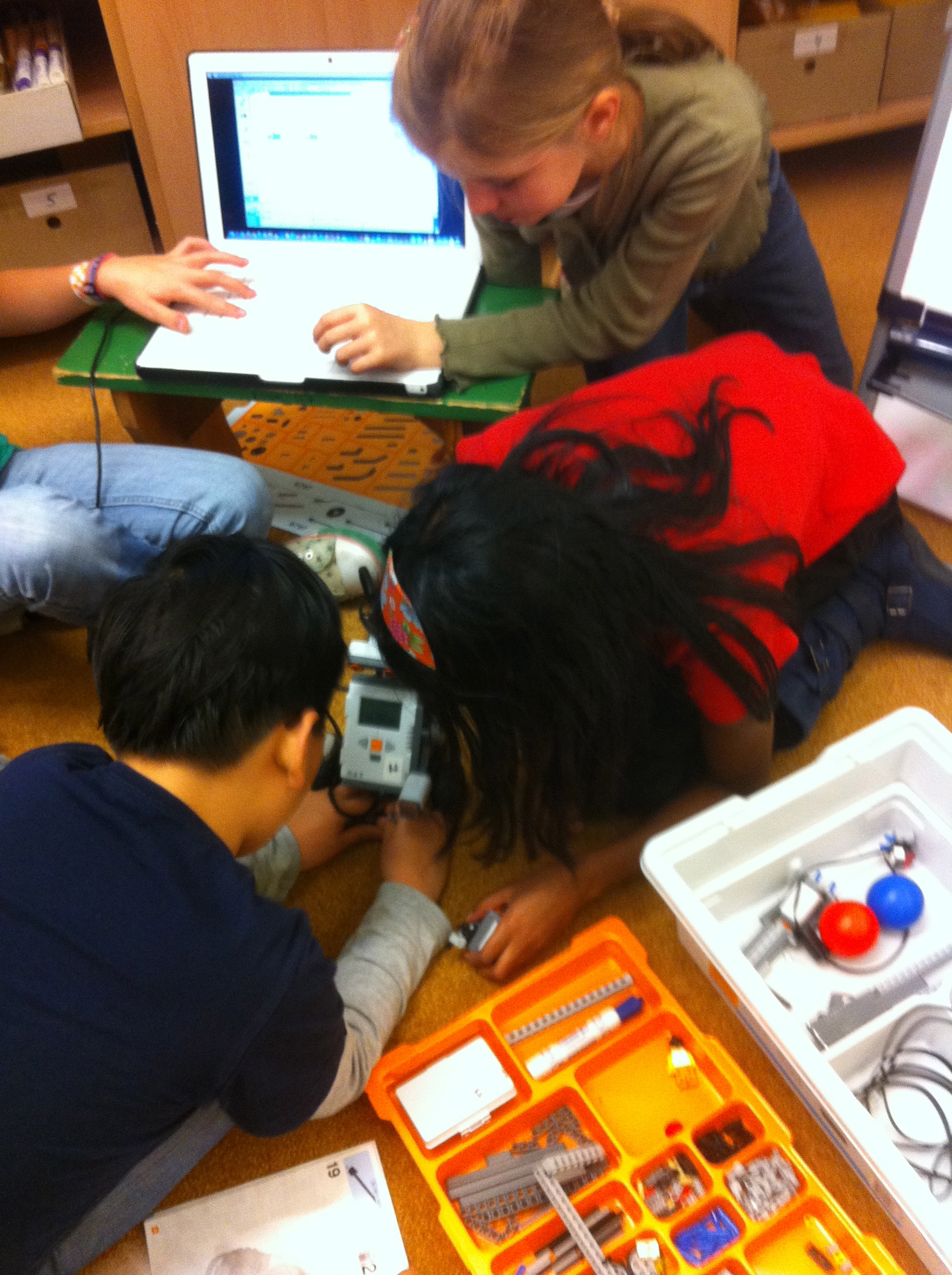
A group of students pictured above working with Lego Mindstorms, faced an issue with the version they had installed on their laptops. The Lego Mindstorms software was not fully compatible with the MacOS version running on the laptop.  Lego Mindstorms had not updated some of the drivers to work with more recent version of the Mac OS they where working with. The problem they faced was some functions required you to tap, click multiple times, sometimes it worked and sometime it did not. Their solution  just tap/clicked till it worked, and before long they understood how many taps/clicks they needed for the function to work. This they integrated  into their collective problem solving and moved on. They continued to come across glitches. They adapted each time a set of strategies to work around the failure with one goal in mind to have their robots do some movements and tricks. Even though things took longer, often requiring restarting the computer, or clicking non stop, it became part of their workflow and solution to a messy problem. The passion, tenacity, and collective energy had them, even thought failing quite a lot, over come the problems and learning a little more little by litte to program the Robots to move and do tricks. Their goal and measure of success.

A group of International School students taking part in the European Student Film Festival Challenge came to a roadblock. Partly to the fact that these 6 individuals had never worked together, some where from different schools, different countries and cultures. The dynamics in front of them was pretty much one problem after another, coupled with the pressure of being in a timed challenge. They gradually unpacked things slowly, each step faced with a level of failure, but giving them a better understanding of the other group members potential. The setting for their collaboration was around a set of chairs with a chess set in the middle, which often saw them fiddling with, as an outlet to their nervousness and stress. The only common ingredient they all brought to the group, was each was passionate about Film. Individually they knew they each had a set of skills that could contribute towards their challenge. Surrounded by the discomfort of hesitation, false starts, juggling opinions, different individual needs, unpacking the parameters of the challenge, translating it into something concrete they all could move forward with. 24 hours later below was the result.


Czechmate used with permission from Julien M.  A collaboration and joint production by Begum E., Ema E., Jerome B., Julien M., Lenny M., and Oliver Z winner of the European Student Film Festival Film Challenge Excellence Award.

We should stop and celebrate failure within our groups/organizations more often than we do. Make it part of every learning experience. Invite ourselves to focus on the unique learning which failure can bring to our reflections, ideas, and ability to overcome the messiness of problems we face and will face. If our respective communities spent more time taking apart the failures we experience, look at each moment, see what components are in play, give us opportunities to do things differently than before. This can be the celebration of our collective learning from which we build our successes.

John
http://beyonddigital.org

I did not know Steve Jobs, Dennis Ritchie, or Edgar M. Villchur

Tyne Cot Cemetery (Ypres)- Ieper Belgium

I did not know Steve Jobs, Dennis Ritchie or Edgar M. Villchur, or the 500,000 soldiers who died in Ypres (Ieper) Belgium in the trenches of  World War 1. Last week on holiday, reflecting on their respective work and passing away, then visiting the In Flanders Fields Museum and Tyne Cot Cemetery outside Ypres (Ieper) Belgium. I felt overwhelmed by the In Flanders Fields Museum and Tyne Cot Cemetery respective testimony. The shear numbers who died and  pointlessness of trench warfare, the leadership, story and narrative that lead to these deaths and suffering was mind boggling.

This visit marked me at many levels, and reminded me, that each of us are impacted by events, histories,relationships and connections, that give us a scaffold to build our own narrative and vision. To me Steve Jobs, Dennis Ritchie, Edgar M. Villchur, and the soldiers of Ypres (Ieper) Belgium put a mark in very different ways on my understanding of the world and contributed towards my own narrative.

Steve Jobs’ desktops, laptops, i devices, , and iTunes has always been part of my personal and professional media life, at work, home, … a fan, and appreciative user. Dennis Ritchie who brought to the digital world, we live and work in daily: C programming language and co-developed the Unix operating system. Edgar M. Villchur’s vision plays a big role in my adult life : the Loudspeaker. He invented an acoustic suspension woofer producing the loudspeaker as many of us have in our homes, car and ears:)

Each had a unique narrative tied to their ideas and vision. Their respective narratives transformed into concrete outcomes that changed the way we function in our world. The narrative built on a passion and a clear belief in the outcome where they wanted to go. Maybe not always clearly defined to others or all planned out in their own heads but this narrative drove the conversations, work,  time, creativity, thoughts, and collaboration that made their ideas a reality.

As for many of us who have a passion for what we do, our narrative and story is constructed through events relationships, collaborations and belief based on experiences. The key to the success of Steve Jobs, Dennis Ritchie or Edgar M. Villchur,  narratives was they each transformed it into some thing concrete that was operationalized to significantly impact people and change the way we do things.

This transition from idea to reality is the most complicated and challenging aspect of building ones own narrative and ensuring it becomes reality. Ideas can be generated, conceptualized, discussed, debated, and dreamed up.  The delicate process of making an organizational narrative engaging to others so they adopt it as part of their own narrative is in my opinion the true art of visioning.  The key is that there needs to be a strong buy in by all players associated or connected to the narrative even if translated or interpreted through a different lens. To often I witness rich and engaging visions, but so often the operationalization piece is missing. This is due to the  narrative being lost in the translation before it becomes others own narrative in any organization. Without people in an organization internalizing the visionaries narrative within their framework of understanding little will become concrete and have an impact on others . Once you have this common narrative throughout an organization the stage is set for the intricate collaborative mechanism of choreographing and operationalizing a shift that creates change with ever lasting impact. Each of these men did!  Do you have an i in one of your devices, using Unix and listening to it through a set of speakers………..What is your narrative?

John@beyonddigital.org

organizational shrapnel

This post is dedicated to Joshua R. and Andrew H., thank you for your conversations and mentorings…

…as with any end to a international school year there comes moments of reflection and looking back that generate ideas and new perspectives. This year has been a challenging one on many levels due to a host of odd circumstances and situations in my department and school that effected us all in the IT Department, and required the team to face up to serious challenges. We all pulled together, and hats of to the team for their outstanding capacity to deal with everything that came to us. This has had me thinking about something I like to call “organizational shrapnel” things that fly in your face unannounced from corners you would not expect things to come from. Sometimes I even refer to these as “drive by shootings” were suddenly you are confronted with a situation unexpected and most often you are not prepared to deal with, but react and deal with in the best of your own ability.

Organizational Shrapnel is a state which generates a lot of inefficiencies, frustrations, errors, in-competencies, and slowdowns in accomplishing tasks in an organization. It is the event, moment, action or process where people look around with some confusion and try to point fingers and there is no clear evidence or concrete event that you can associate to the inefficiencies, frustrations, errors, in-competencies, and slowdowns.

Why should this be an issue? I believe that organizational shrapnel and the level of it in an organization can make or break a good team, group or organization. I believe that when groups/organization engage in a task or project, for the objective to be met you need to be able to trust and know that the different players are all going to accomplish their respective tasks, and that the framework of resources supports accomplishing the task, project or action.

This process of teams collaborating and accomplishing a task together in any institution is complicated and quite complex, we all experience this and it is no surprise to most of us. I feel if organizations, and teams can better understand the causes of organizational shrapnel and address the road blocks this tends to set  the stage for a more effective and smooth collaboration of a groups within any organization.

So what are examples of organizational shrapnel? These are broad in scope, and come in all shapes and shades.

  • A team works together and defines group agreements, but a member continually does not abide by these.
  • A decision is made and agreed upon, but there is no clear implementation plan, or process for feedback and evaluation.
  • A process or procedure is implemented within the organization, some stakeholder decide to follow it, others decide to not use it and use an alternative in isolation of the rest of the organization.
  • A collaborative group works together, but all the actions and follow through are continually done by a few, and others play lip service to the work but are not participating actively and tend to block movement in the meeting setting
  • An event, or task is organized and one of the stakeholders makes an error but does not report it, or share this out so others can support in correcting this.
  • Not following through on things
  • Looking at a situation within one perspective, and expecting others to follow through

…and many more, generally the pattern is that organizational shrapnel are small things which fall through, not completed tasks/steps, ignored agreements, tasks done inadequately, or where there is a lack motivation, drive by the players involved in completing the collaboration or task.

The frustration if organizational shrapnel becomes a habit and people accommodate to it, it can quickly become part of the organization’s culture and norms. The reality is all organization have a level of this, and the challenge is what environments and understandings can be shared to decrease it’s presence in any group or organization.

Organization, groups and teams who have a high capacity to understand and concretely deal with their organizational shrapnel create an environment where there is a greater motivation by the stakeholders of the organization which results in a sharp increase in creative flow generating innovation in moving forward.

John@beyonddigital.org