
Some thoughts and reflections from a year of learning, sharing, and leading workshops, keynotes, and coaching for school leaders and educators, and, more importantly, teaching children ages 3 to 11. This year that thinking became a letter, written to September.
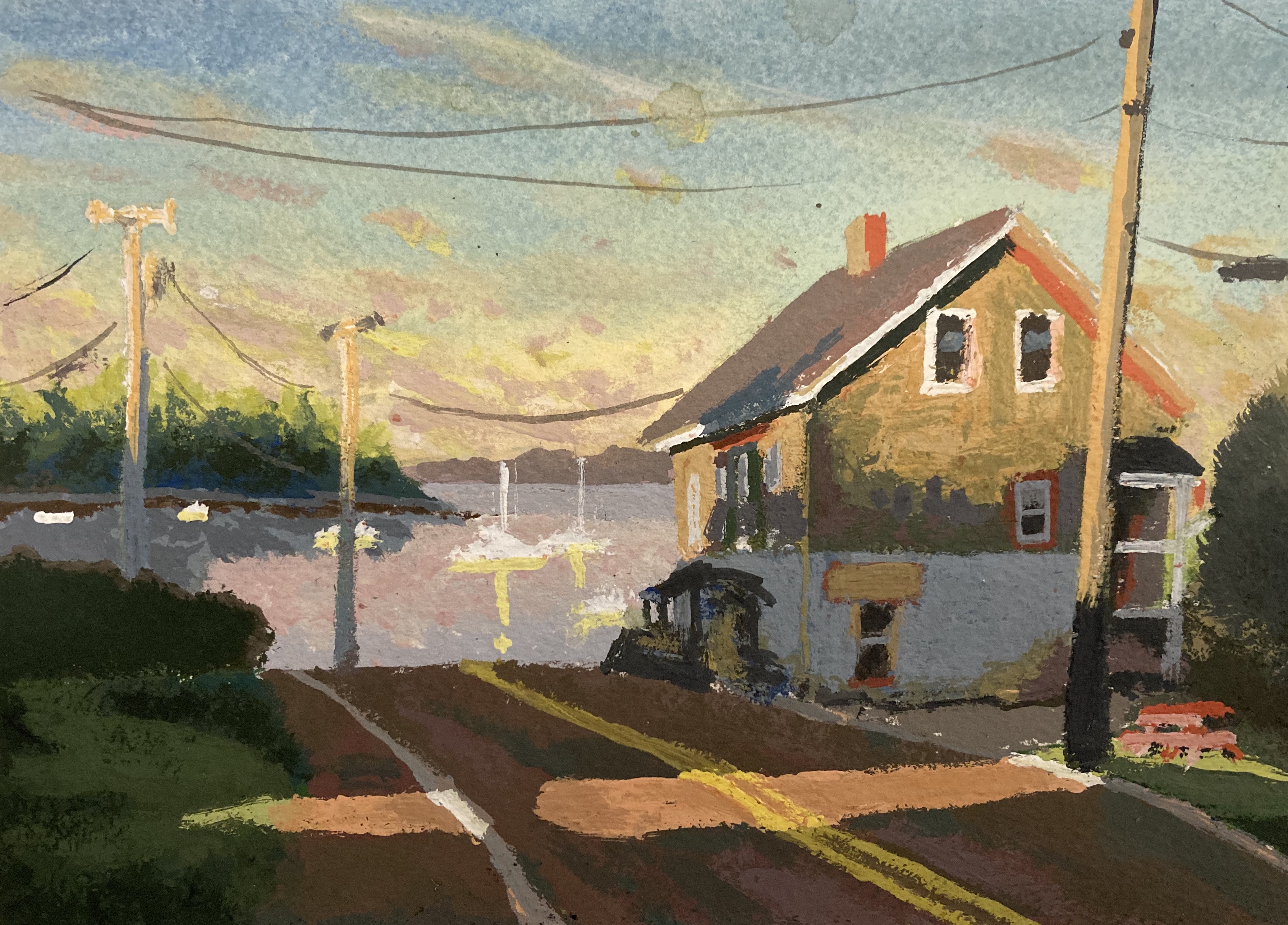
Morning light study by KiloBlimp
Dear September,
I was thinking of you as an opportunity to begin, even though it’s the fall and it seems like the end of a season. For many educators, September feels different after a summer of rest. You come back with hope, with excitement, ready for what’s ahead.
As I write to you in June, after a full year, I have some thoughts, and maybe some anxieties, about what you’re going to bring to me, to my world, to the work I do supporting educators in schools. How this accelerated change surrounds us, mainly shaped by geopolitics and technology. What can we expect? I’m both excited and apprehensive.
Two things really stuck out this past year. One, doing the podcast I co-host International Schools Podcast, a guest, Warren Apel, Director of Technology, mentioned this idea, “the AI tool you are using today will be the worst tool you will ever use.” Part of this change is AI moving from answering to doing. That resonated, because it connects to how fast things have changed. I think there have been three or four moments this year where suddenly I felt a jump, in capacity, capability, in just how powerful this is becoming.
And then, facilitating workshops, I noticed participants are often bold in the breakout rooms, really willing to reframe school, to challenge what the value-added benefit of a human is in a world more and more run by AI. Another guest on the International Schools Podcast, Adam Morris, Product Director: Integrations, Faria Education Group, shared the idea not engaging with AI is pedagogic malpractice. That got me thinking, part of what we’re doing wrong is thinking of AI as a tool, when actually it’s an ecosystem woven into everyday life, and keeps growing, often faster than we can keep up with.
And that pattern, bold ideas in the room, turns into caution once people return to their own context, I think it’s partly because we’re not aligned in our boldness, not all willing to start over, to think of the moment and the future rather than letting the past dictate. The hesitancy to be bold in a school setting has a lot to do with timetables, exams, the busyness, the organisational trappings, getting caught up in being human, in the feelings and emotions and seasons of how much capacity you actually have. What does it mean to change, not just enhancing what we already do, but really thinking from a blank slate. Whatever we did before, we’re not doing again, we’re thinking of something completely new.
I do this myself, in my own workshops and keynotes. I’m aware that if you provoke people, push them outside their comfort zone, there’s uncertainty, and uncertainty brings an emotion that can be defensive, a discomfort. Often the response is to push back, another is to ignore it, run from it. So I’m mindful of how important it is to stay relevant, and true with what people are actually dealing with, even though accelerated change often feels distant until it hits us personally or professionally.
But maybe we should be more uncomfortable, more often. Maybe if we got used to discomfort, we’d build greater resilience, greater capacity to adapt with agility. Not that people aren’t already adaptable, but the kind of adaptation this moment asks for, with AI ecosystems accelerating the way they are, is different. You take the hype with a pinch of salt, but there’s a sense that something is taking place, and it’s bigger than us at times.
This is why I want to get bored this summer. You know those rainy days as a child, nothing to do, sitting in your room a little annoyed, your parents telling you to keep busy, and then suddenly you start making something out of nothing. A toy off the shelf, a piece of paper, moving the furniture around to build a house, something imaginary. Just that capacity to sit there with nothing in your head and create anyway.
There’s no doubt the seamlessness of these AI tools is addictive. What’s easier than being able to quickly subcontract out our thinking and get something else to do it, maybe more efficiently, with greater depth than we are? This idea of cognitive offloading is something Tim Cook, who writes on cognitive privacy and AI in education, a guest on the International Schools Podcast describes well and shares in his writing, the difference between adults, who can lose a skill and still get it back, and children, who never built it and have nothing to get back to.
Think of what children have growing up around them, Alexa at home, watching parents talk to a chatbot, the sense that the answer is just there, that the process, the heavy lifting, doesn’t need to happen. Just the transaction, and the dependence on it. That might be fine for us adults, who’ve had practice with the grit of learning. But if we don’t protect that for children, if we don’t make sure they still engage with the struggle, they’re going to lose something they never had the chance to build. And for ourselves, we have to keep reminding ourselves, critical thinking, the heavy lifting, the resistance, the adaptability, these are essential. We have to be the guardians of that, however exhausting, however efficient the shortcuts on offer.
In my teaching context, I often observe this with the students I work with. They want the immediate answer, struggle to focus for long, avoid having to problem solve, and default to the teacher, for help or the answer. They want it now. And that need for instant answers comes at the cost of creativity, because if we can’t sit with something on our own, push through the difficulty, the effort of getting to a new idea, what are we losing? We need to teach this as a skill and a way of thinking to support a change in mindset against just wanting a quick answer and letting someone else do the thinking. We as educators need this too.
September. We want to change. But good grades, what parents and students expect, and schools still built for another time, all hold us back. How do we get comfortable with discomfort? How do we learn a new adaptability, completely different from our past?
And in the many conversations with school leaders, I notice we really want rules, a policy we can carve in stone and live by. We want artificial intelligence to be a set of tools we control, this one’s appropriate, this one isn’t. I understand why consistency, certainty, and rules matter. But are we willing to be flexible? The policy might need to shift every few months, even every few weeks. It’s really guidelines, not policy, knowing tomorrow it could change again. We need to model that with children too. Whatever tool we tie ourselves to today, ten more powerful ones are already coming, ones we don’t even know about yet. Our policy will already be behind.
This is a systemic change. It’s about a system, not a tool. The way we usually work isn’t built for this kind of accelerated change, systems that suddenly show up at home, in the car, online, everywhere around us. What can we do as leaders to keep remembering, the tool is not the focus. It’s the value-added proposition of us, of being human. How do we adapt and stay open to change, so that the value of being human is timeless whatever the latest AI tool release or upgrade ? Humans need to stay at the centre of this story, and we have to keep checking that what we think is right today might not hold tomorrow.
One small example of what that looks like in practice: I have a framework called CRITIC, built out of a lot of reading, a lot of other people’s work, nothing original really, just my own adaptation of what I’d learned. In one workshop, I gave it to a group of teachers as something to take and try between sessions. When we came back together, two of them shared what they’d done.
They’d used it with their own students, treating whatever the AI gave them not as the answer, but as something to question. What is it actually saying? What reasons does it give? What’s missing, a number, a source, an example. What other view could there be. What happens if we believed this and it was wrong. What would we actually go and check? And the teachers said their students started noticing the AI’s answer had a kind of curated voice to it, a perspective, even something like empathy that wasn’t quite real, and the only way to catch that was to slow down and really interrogate it, almost like being a detective.
That, I think, is the deviation worth having. Not using AI less, not using it more, being intentional, willing to plan and think deeply about how we put it in front of students, as a critical friend, a challenger, something cross-examined rather than copied. Because if we do that, it can only grow a student’s ability to think independently, instead of repeating back whatever was generated for them.
But I want to be honest about something that unsettled me more than I expected. I was working with a powerful AI tool for a short time in June. With it, you could give it complex tasks and it would generate artefacts, feedback, analysis, multiple engagements, as a critical friend or even as a challenger, and the quality of what it delivered was, for me, quite something. But then suddenly it got shut down, I won’t go into the details, by the time anyone reads this, something will likely have changed again. What I suddenly realised, and I’m guessing many others felt the same reading the articles afterwards, was that these systems we depend on are a bit like nectar. You taste it and realise how good it is, you want to use it, put it to work, and then you suddenly realise what happens when it is turned off. A government can order something this powerful to be shut down overnight, and the company has no real choice but to pull it from millions of users. And it becomes a bargaining chip. Maybe only a certain profile of people get to use it. Only certain companies. Only certain countries.
And suddenly the geopolitics of it, how technology companies and the power they’re generating through these AI systems, the infrastructure required, the impact on the environment, and then when these things become autonomous and powerful enough, how a government, or even an organisation, if they have the authority and the capacity, can shut everything down, and suddenly you’re left with nothing. It’s a bit like being an addict, and suddenly you don’t get to have it, and you go through the withdrawal. This made me think about how powerful these AI ecosystems, companies and technologies are. And how governments and organisations can really control our access to them, whenever they want
So maybe, September, what I’m really asking of you is for that renewal, the idea that yes, it’s the fall, it’s the end of a season, but I want to take that as a chance to think of it completely differently. Maybe September is the new spring. However uncertain things are, however much these systems will continue to reshape the world around us, I’m still excited by the fact that I’m human, that I have this capacity, if I give myself permission, if I plan for it, stay disciplined, and don’t reach for the shortcut, to go and get bored. Really bored. And then see what comes.
John
Thanks to Warren Apel, Adam Morris, and Timothy Cook for the conversations that shaped this letter. And thanks to all the educators, workshop participants, articles, and podcasts I learned from this year


You must be logged in to post a comment.