There is a needle in the haystack, Ground Control.

All of us are engaged daily in the process of looking for information on the Internet, or “searching“. Sometimes, we search for clarification, facts, confirmation, projects, solutions, while other times our searches help us broaden our views, come to terms with a concept, make a plan, find a definition, or cross check a fact. Watch yourself or a friend at your next social function. Someone is bound to pull out their portable digital device (phone, tablet and/or computer) before long to make sure something that was said is correct. They might look up an actor, a city, an album, a song, a title, or an author. This is now part of our daily digital diet: a quick hop onto our device and off into the Internet to “search” for information.

  • 51 million – Number of websites added during the year.
  • 1.2 trillion Number of searches on Google  in 2012.
  • 43,339,547 gigabytes are sent across all mobile phones globally everyday.
  • Humankind in 2007 successfully sent 1.9 zettabytes of information through broadcast technology such as televisions and GPS. That’s equivalent to every person in the world reading 174 newspapers every day.
  • There are 5 million tweets per day enough to fill New York Times for 19 years.
  • Humankind shared 65 exabytes of information through two-way telecommunications in 2007
    That’s the equivalent of every person in the world communicating the contents of six newspapers every day
  • 58 – Number of photos uploaded every second to Instagram.
  • 5 billion – How many times per day the +1 button on Google+ is used
  • 1.3 exabytes – Estimated global mobile data traffic per month in 2012.
  • Bloggers post 900,000 new articles everyday.
  • Over 210 billion emails are sent daily which is more than a whole year worth of letter mail in the USA.
  • Daily around 200 000 videos are uploaded on youtube which will require over 600 years to view them all.

(Source: Economist  The World 2013 and Internet 2012 in numbers by Tech Blog Pingdom and Science Daily: How Much Information Is There in the World? Feb. 11, 2011)

Information grows from Terabyte to Petabyte . As a human race, we cannot actually view, analyze, or keep track of all the information we generate without third party digital tools and softwares. We now defer to sophisticated algorithms and intelligent softwares to store, track, synthesis, analysis, aggregate, and deliver information in amounts we have the time and capacity to digest. And most of us today expect to have this information available non-stop, over multiple devices.

Information overload, information stress, information pollution and information anxiety are part of the narrative of the digital age. With the amount of information increasing at accelerated speeds, we have relinquished any control we once had over its exponential growth. What we need to do is develop strategies, skills and understanding on how to filter, sift, analyze and juggle information, so we feel some level of control.

As we embed ourselves in this vast information landscape and wish to remain critical thinkers, we need to be ready to retool ourselves:

  • Coming to terms with the “Filter Bubble : this is where information is processed and delivered through algorithms based on what our viewing and search habits are, thus filtering information to our perspectives and not providing alternative views and information. The balance of information is vital to building a broad understanding of different views. Nowadays however, through the “Filter Bubble, this balance is being diluted. We need to understand this and be able to counter it as critical thinkers.
  • Developing a strong searching expertise:  We need to understand the capacity of search engine tools, their variables, and limitations so we can refine and sift information in a manner which gives us manageable amounts of results.
  • Be able to Aggregate:  Learn how to leverage news aggregators, real time syndication, social media, micro blogging, and social bookmarking sites.  These tools can help in sorting different formats, cull large amounts of information and deliver it in digestible portions for us to develop new capacities.
  • Engage in Connectivism: A learning theory constructed on the idea we can learn with digital, social and cultural connections, and from this interchange build individual and/or collective capacity to gain knowledge and understanding. Through our social and professional connections create networks of expertise, knowledge, and understanding to support learning. Use the “cognitive surplus” we have available in our social and professional groups to increase our own knowledge so we can create, communicate, produce and share effectively as critical thinkers.
  • Learn, unlearn and relearn: We need to develop the strategies and methodologies that allow us to engage effectively in this process of “learning, unlearning and relearning” daily. In tandem, we need to ensure that everyone has the opportunity, support and resources to do this.

From this point forward, there is not going to be any less information – that is a fact. As the world moves into a state of constant change, and the pace accelerates, we have a responsibility to ourselves, our peers and our communities to make the process of learning, unlearning and relearning permanent. If we do not, we could potentially lose our ability to participate as critical thinkers and control the information landscape we live in.

John@ http://beyonddigital.org

There is a war going on in my internet!

IMG_2429Somehow late in the game I have suddenly realized in the background of my life there was a war going on in my Internet and still is most likely, and without much fuss or noise it  took place and I suspect is still going on. It is one of these new dimensions of war, it happens undercover, behind the scene with little fan fair and without much human interaction. So not being aware of it is somewhat understandable. According to some pundits this has been going on for a few years but recently a Security company http://www.kaspersky.com/ started noticing this virus called “Flame” and since has been trying to better understand its workings and complexity.  Flame’ Virus explained: How it works and who’s behind it  and Flame and Stuxnet cyber-attacks. What to me is interesting, is that potentially nation states can engage in a destructive war within the internet, damage, capture, manipulate and steal information and in return shut down, wipe out or paralyze computer systems deemed a threat, or the country with the machines deemed a threat. This is now fact, and in the last years different groups have been busy at work using this powerful technology. Is this in the headlines, part of our daily discourse, something night news talk shows are spending time on? No, not at all this is something that happens undercover behind the scenes with little information or we hear of it after the fact.

With the global information glut and overload we consume, engage and live off, we just cannot keep up or be in tune with the various events, stories, and key pieces of information that might frame a better understanding of everything that is taking place in our world.  Then there is the information that does not get shared, or buried deep away from the main stream traffic, headlines and captions. As humans we tend to engage with our digital devices, apps, web environments and new technologies in removed manner, less questioning or critical at an ethical and moral level of the role these have on us as humans. The sheer convenience of the digital devices, apps, web environments and new technologies we live, work, play and entertain ourselves with, dilutes often a critical engagement in understanding how these different tools are impacting us as individuals and a society. No time with our day to day business and the bombardment of new devices, apps and technologies daily being pushed out to us, prevents avenues for us to really stop, think, question and engage with this issue.

We are at the cusp of an age where there are more digital devices than humans on the planet: Mobile devices to outnumber people on planet this year.

New Technologies, digital devices, and web environments as they become more seamless, integrated, and part of our day to day fabric for us to function as humans. We are at many levels defaulting executive decisions to these devices/environments  independent of our input. I suspect most of us might feel that it is a small price to pay for the convenience of these digital devices, apps and technologies making the mundane decisions we need to engage with work, play, and living in a connected world. These two articles illustrate the wonders of some of these new technologies but at the same time test and confront our own morals and ethics.

Running repairs: An experiment on rats brings hope to the paralyzed
http://www.economist.com/node/21556209?frsc=dg%7Ca

A big step toward ‘designer babies’ – and big questions
http://www.csmonitor.com/Commentary/the-monitors-view/2012/0608/A-big-step-toward-designer-babies-and-big-questions

There has to be a cautionary tale if this convenience overrides our ability to stop and reflect, think, probe, discuss, and question the world of digital devices, web environments, and technologies we adopt.  If we are happy to sub contract our digital devices and new technologies to work, care, entertain, and support our day to day lives, how far do we give up the control for the convenience of it all? This article from the Economist highlights for me “Morals and the machine: As robots grow more autonomous, society needs to develop rules to manage them“, that we need to have this conversation as educators, organizations and a society in general, and be fully engaged with what is the potential impact to us all.

John @http://beyonddigital.org

No privacy, please.

We are in a world were our communication, information , search, entertainment, creation, and content are done with some form of digital device with access to the internet. This dynamic intricately tied to our personal and professional lives : privacy both online and offline is being transformed.  Some of this is within our control and some out of our control. This combination generates discomfort when people have time to sit back and reflect on this change we all are witnessing on the sidelines passively. Can we do anything about this? Do we need to?

There is nothing like the convenience to work and live with digital devices that provide you everything at your finger tips seamlessly 24/7. Google’s integration of mail, documents, sites, video, blogs, maps, online shopping, music storage etc…. is an example how the integration of a digital platform with one username and password provide users with powerful consumption and creation tools for free! Google is not alone, other examples: Apple iTunes, iCloud, and its growing selection of products via its own digital devices, Facebook and its growing menu of services and tools all available to you whenever you wish with any device that has an internet connection.

The pay-off is that the services and companies facilitating seamless connectivity and convenience 24/7 get unlimited access to all your online information. Our online information, habits and behaviors are available to them.  This is the hidden cost of using these environments, often without our specific consent or knowledge. Let us be honest, how many of us spent the time reading the information Google shared out once it changed its privacy philosophy with users of its suite of products. Does it matter? This is a matter of personal choice. Living without these services makes functioning in a digital world quite challenging.

The meaning of the word “privacy” has changed. The days of being anonymous, and having no digital footprint, are gone. We have adopted these conveniences in our eagerness to keep up with the changing world, and partly by the success of digital environment and device companies marketing. We have been convinced that we need these digital environments and devices to function in today’s world. The reality is that there are few alternatives.

What next? The dependency for 24/7 seamless connectivity is only increasing with the proliferation of digital environments and devices for communication, information gathering/sharing and content production. The algorithms digital companies are currently using to track, analyses, synthesis and control our personal online information will only get more sophisticated and intricate. Our own control of how much gets tracked and analyzed will diminish as the connectivity becomes more invisible.

The concept of privacy as we might have understood it in the past has changed. Our online lives are attached to an intricate digital trail on everything we do. This trail available to governments, companies and organizations controlling/managing our digital environments and devices. We as individuals need to re-frame what privacy means to us.

As an educator I am already witnessing some concrete evidence of students and adults coming to terms with this, as they manage their own online environments. There are students who are deleting their Facebook as they get ready to apply to Universities. They understand the timeline of events, and photos which often where started when they where in middle school are maybe not what they wish to showcase or allow folks to have access. With this a growing appreciation of having a clear division between your professional digital footprint and your personal footprint. Google (ing) your name on a regular basis, and trying to manage/control what is available to search engines by better managing your privacy settings. Developing a deeper understanding of what the different privacy controls mean, and how to best manage your online digital footprint with these controls.

We can no more expect to work in a world where privacy is something we control or have options to function under the radar. We live in a connected world, where everything we do, leaves a digital narrative. This digital narrative used, shared, and built upon by third parties often without our knowledge.

It is through an understanding of these new frameworks, tools and environments that we can to a certain level choreograph our own digital footprint. I believe that the literacy of online privacy needs to be part of our curriculum and learning for both adults and students. No privacy is the new privacy.

John@ http://beyonddigital.org

Where is the “off” switch?

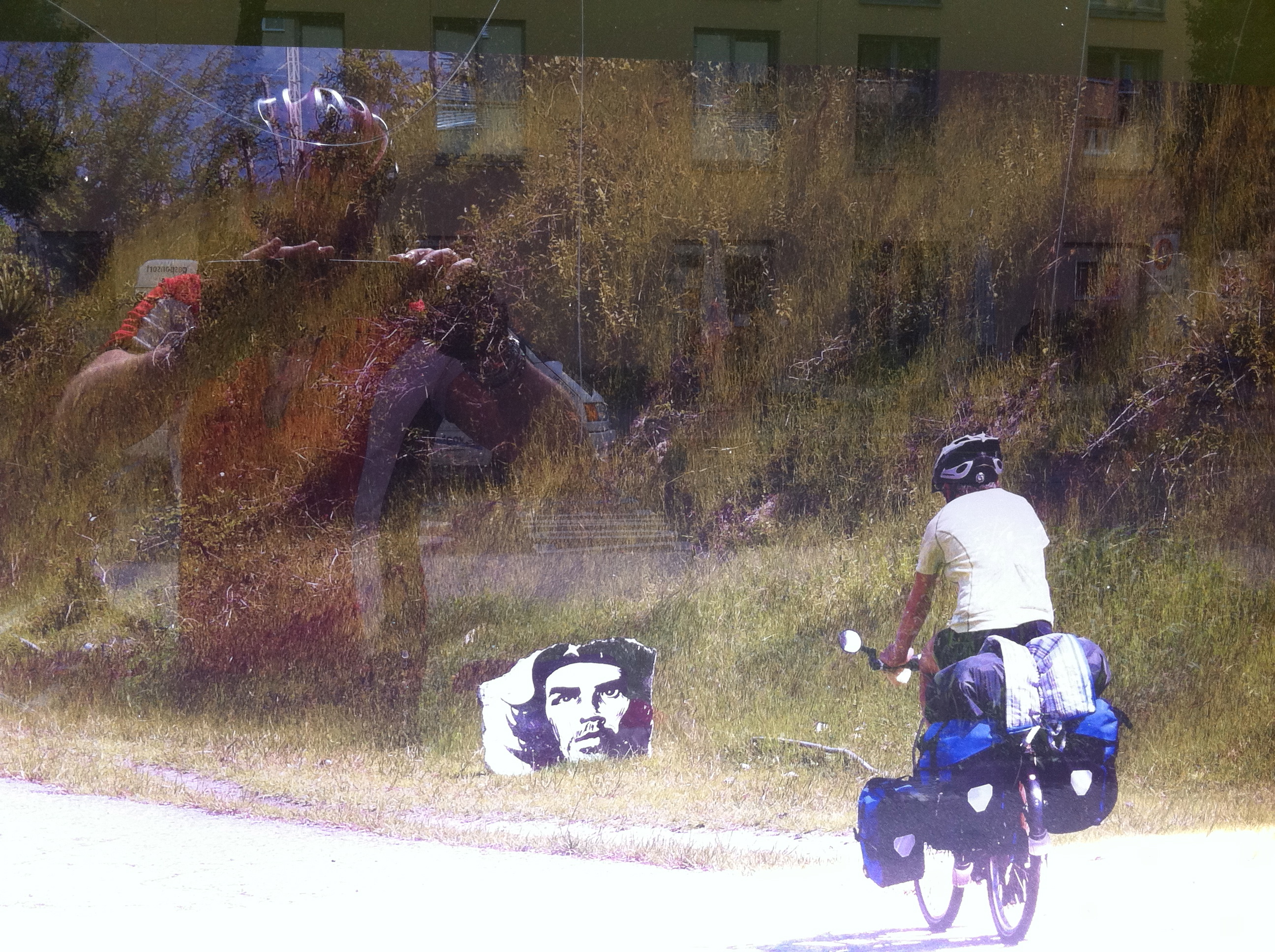
Can we really disconnect from devices, email, social networks, the internet and digital life in general? Being caught up in a cycling trip for me is the easiest way to disconnect from all the rings, tasks, needs, wants, musts and maybe’s we get caught up in our digital life. An element of isolation and the tempo provide a good way to unwind and coach myself to be okay with the disconnection. The daily cycling, in an isolated environment, provides often limited cell reception, rare internet and few digital devices. This experience on the bicycle gives me the opportunity to create head space and day dreaming hours to clear out the mind and fall into a different time span and a grounded feeling. You generate in your head space for nothing.

Yes it is okay, and it feels good. Today it is getting harder and harder to disconnect…or find space for nothing. As we integrate our digital devices and social medias into every aspect of our work and home life we have developed a dependence, which is becoming invisible to our lives.  As new generations adopt this digital world as part of their social fabric, and consciousness, a collective dependency on seamless connectivity is embedded to our day. This level of subconscious dependency creates a new social bargain for the way we connect, disconnect and live our lives online and offline.

For my generation and others prior to the explosion of the internet, we experienced an environment of  limited connectedness, tied to a land line, payphone, letters, fax, face to face, newsgroups, bulletin boards, and then email. Our privacy was shaped within a connection of a friend or two, or small circle of friends/acquaintances. The norms based on word of mouth, hearsay, rumors, reputations forged live in front of  friends/acquaintances or through mediums limited to a small groups of folks for viewing or to interact with. Often it became an issue of our word vs their word. There was no digital footprint and it was harder accessing a paper trail.  This experience has equipped my generation and others with a counter-balance and point of reference of another option to our current non stop connectivity and diminishing privacy.

Today with non stop connectivity and diminishing privacy there is a different reference point for a new generation. A world of online social circles with friends and acquaintances in the hundreds, images, videos, wall updates, tweets, online hangouts all available 24/7 to potential huge audience not only our perceived friends/acquaintances but search engines, companies, governments, and a digital footprint not in our control.

The perception and understanding of privacy and non stop connectivity has changed. For many of today’s online users, there is no point of reference or experience of not having a digital footprint, not being connected 24/7 or understanding privacy in the context of the pre-internet world. A social media openness is the norm of privacy today for a whole set of children and young adults.

This shift can be uncomfortable for some, but is here. This has happened in the background of our awareness to certain degree.  My generations concept of privacy, balance and connectivity is framed with a memory and life experiences without these. Today children and young adults are framing their understanding and experiences based on a new social bargain where connectivity is a non negotiable ingredient to socialization both professional and personal. Connectivity is a must: cell phones to keep Mom and Dad in touch with your whereabouts, educations demands for mobile technology as a mandatory learning platform, commerce, entertainment, goverment and information delivered only online.

As with any changes in life you gain things and you loose things  Privacy and connectivity have changed and will continue to evolve in ways which will be be viewed by some as a paradigm shift, others the norm and for others a necessary evolution of our digital life.

Today the off switch is no more available! Even while we sleep or disconnect for a moment, emails, images, wall postings, and our digital footprints are active, being viewed, shared, forwarded, cataloged, and leaving a permanent digital trail. As individuals and a society we will need to carve and find the spaces to disconnect on our own. This ability to disconnect, find balance, and space for nothing will need to become a learned skill and behavior. For many of our students, with no point of reference to a unconnected world, their is no previous learning or points of reference to build upon.

As a society what does it mean when our digital footprints are available to anyone online, anytime, with any type of devices 24/7? This conversation needs to becoming part of our educators fabric and curriculum in schools. Even if a new generation has not experienced a disconnected world, it is part of our collective historical heritage the many moments when philosophers, artists, musicians, and thinkers  sat with space for nothing so they could create marvels. It is fine by me that there is no more an off switch, but it is not okay to let our students and young adults not have a skill set to be able to disconnect and create a space for nothing. A balance in life is a key, everyone should be exposed to this learning and have the opportunity to be mentored on how to develop this capacity: space for nothing.

John@beyonddigital.org