Is It Ever Too Early to Learn?

“She is always there. She never says no. She always has a nice voice.”
A Year 3 student, when asked why she likes her home voice assistant

This moment in the classroom, with students sharing what they liked about their home voice assistants, highlighted for me why it’s never too early to start teaching digital and AI literacy in schools.

In many classrooms, conversations about AI can tend to happen more in middle or secondary school. Educators often feel the tools are too complex, or the ethical discussions are too advanced for younger learners. Over the past two years, I’ve had the privilege to lead and facilitate many workshops with international school leaders and educators, and in many cases, the conversations seem to focus on ages 12 and up. But in my experience working with students aged 3 -11, this is a misconception.

Children are already surrounded by the digital world long before we introduce it formally at school. They see their parents on their phones, talking to Alexa while cooking dinner, asking Siri for directions in the car, or using AI-powered chatbots on social apps. These situations are more common than we often realize, and are their first interactions with artificial intelligence. And they’re happening at home, often with little guidance and few conversations explaining what’s really going on.

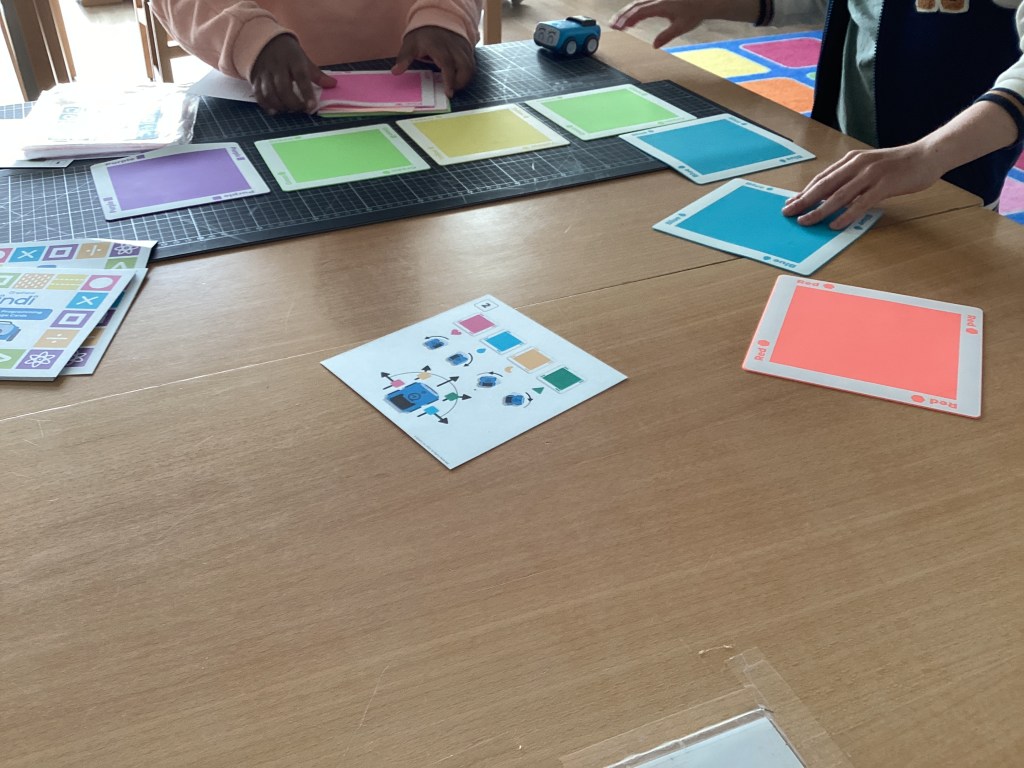
Even the  youngest students can begin to explore some of the key ideas behind AI. In early years classes, I start with pretend play and simple cause-and-effect activities using tools like the Sphero Indi robot. I use colored tiles to predict what the robot will do, opening conversations about instructions, sequences, and how machines “learn” from information they are given.

With students in Years 3, 4, and 5, I explore concepts like algorithms and personalization. Many are already using YouTube or even TikTok and can easily relate to how one video leads to another. I ask: Why do you think that video showed up next? Who decides what you see? These questions open up conversations about algorithmic predictions, bias, and the importance of pausing and asking questions.

I’m seeing more upper primary students, ages 10, and 11, using AI apps that simulate conversation or even friendship. Apps like My AI on Snapchat are often mentioned when we talk about what’s behind a chatbot. I create activities that help students reflect: Is this a real friendship? How is it different from talking to a friend at school?

Helping students understand that machines don’t have feelings, even if they sound like they do, is an important step in their learning. I explain that AI tools are run by algorithms, step-by-step instructions written by people. These tools might sound kind or caring, but they don’t think, feel, or care. Research shows that young children often believe voice assistants like Alexa or Siri can feel or understand. That’s why, in age-appropriate ways, I explain how AI systems are trained, how they collect data, and how they can sometimes get things wrong. I help students make the connection that, just like them, machines also make mistakes, but for very different reasons.

I then connect these ideas to hands-on experiences. Students code and create using tools like Indi Sphero, Bee-Bot, LEGO Spike Essential, and Ozobot. These activities help children see how giving clear steps to a robot is similar to how smart tools at home follow instructions, helping them understand that behind the “smart” behavior is a set of human-written rules, not real emotions.

I also explore:

  • Misinformation: We talk about what happens when someone shares a lie. What does it feel like? What’s the problem when this happens? Why do people lie? How does it make others feel?
  • Bias: We look at image searches on search engines and AI image generators. We ask: What do we notice when we search for “teacher” or “doctor”? Who’s missing? How might this be different from your own experience?
  • Media Literacy: Students create their own fake headlines or altered images, learning firsthand how easy it is to mislead others, and how important it is to ask questions.

Digital and AI literacy isn’t just about understanding how technology works. It’s about building habits of critical thinking, empathy, and responsibility.

In a Primary Years Programme setting, and the same applies in other curriculum contexts, we already emphasize critical thinking, empathy, and action. These values align well with conversations about AI ethics. When students understand why it’s important to check sources, think before they share, get more than one perspective, and reflect on how algorithms shape what they see, we start to provide them with a toolkit to navigate the digital world with care.

This is especially important as AI becomes more present in their daily lives, often in quiet, seamless ways. The child who turns to Alexa because it’s always “available” may not yet realize that real relationships are built on kindness between people, not just what’s easy. But for that kind of learning to develop, a teacher is essential.

Some of the learning I engage with:

  • EY, Y1, Y2: Explore pretend play, altered photos, or “real vs. not real” objects. Use simple language like “true” and “trick” to start conversations about misinformation.
  • Y3, Y4: Introduce recommendation systems through YouTube or Netflix patterns. Encourage questions like: Why does this keep showing up? Who decides what I see?
  • Y5, Y6: Dive into algorithms, AI-generated text or images, and ethical questions around chatbot use. Use inquiry units to explore bias, authorship, and media influence.

This is a shared responsibility that all educators need to support one another in. And as school leaders, we need to create the time, space, and understanding that respects that every learner, child or adult, connects with learning in a different way.

In a world where AI is becoming part of students’ daily experiences, our responsibility is to design purposeful activities, building the students’ capacity to ask helpful questions, notice things, connect ideas, and make careful choices

On a recent episode of the podcast I host, one guest, an AI EdTech entrepreneur, was candid: “Not teaching and engaging with AI literacy in schools is pedagogic malpractice.” A strong statement. I see it more as an invitation, a reminder of the opportunity we have to be present in this moment. Amongst all the demands teachers manage each day, we can still find meaningful ways to ensure primary school students build the knowledge, skills, and values to engage with a world that is only becoming more complex and nuanced.

I am grateful to my PLN for all the sharing, resources and ideas I get to learn from. A special shout out to Cora Yang and Dalton Flanagan, Tim Evans Heather Barnard, Tricia Friedman and Jeff Utecht who continually share generously resources and strategies targeted to Primary age students.

Resources Referenced

Exploring AI’s Impact on Education: Opportunities and Ethical Dilemmas

Periodically, I have the privilege of facilitating conversations with the #ISLECISLoft, hosted by Nancy Lhoest-Squicciarini. A topic at the forefront of discussions with educators and school leaders is the growing prominence of artificial intelligence (AI) tools and their impact on reshaping learning. The opportunities and challenges of this technology are complex and nuanced.

AI brings many questions to the table, particularly as we explore the value-added proposition of schools when such powerful tools are accessible 24/7 at home and in classrooms. Within this context, the issues of bias, racism, and the ethical dilemmas these tools raise challenge our beliefs and values.

A real pleasure to have this conversation with Ken Shelton and Dee Lanier, authors of The Promises and Perils of AI in Education: Ethics and Equity Have Entered The Chat . Enjoy !

Recalibration of Truth

Photo John Mikton

In our rapidly changing digital age, the idea of truth is undergoing a significant change. In the past, truth was often taken from shared experiences and clear agreements. Today, truth often is manipulated by social media, algorithmic biases, polarization, organizations, companies, and in more instances governments,  fueling the algorithms that influence what we see, hear, and believe.

I refer to this as a recalibration of truth. This new landscape requires us to navigate the complexities of deep fakes: video and voice, misinformation, and the algorithmically curated digital environments that condition our understanding of what is real and true.

Aldous Huxley’s “Brave New World” reminds us, ” Each one of us, of course, is now being trained, deliberately, not to act independently.”  Written in 1932, this quote resonates for me, in a world where we are tethered to our devices, influencing and amplifying our wishes and perceptions, often unconsciously. The world we live in has become a digital ecosystem that curates 24/7 our understanding of the world around us, guiding not just our hopes and dreams but also our understanding of truth.

Throughout history, the concept of truth has always been complex, with each era having its own unique ways of curating information. There was a time, not too long ago when agreements and truths were often established through a handshake or verbal agreement. Nowadays, our point of reference is formal contracts and notarized documents. This in many ways is a natural shift of our time in how we understand and evaluate truth. The digital age has only accelerated this shift, flooding us with a constant stream of feeds and push notifications. The overabundance of information and our ability to process it has led to what Maryanne Wolf, author of Reader Come Home: The Reading Brain in the Digital Age, calls ‘skim reading.’ The act of ‘skim reading” dilutes our attention span and reduces our capacity to fully engage with information, affecting our ability to pause, analyze, and read critically and deeply.

The recalibration of truth today involves more than just the weakening of the traditional concept of truth; it involves understanding truth’s new tools and architecture. The accelerated presence of artificial intelligence and the widespread influence of algorithmic curation challenge us to engage with information in entirely new ways. The emergence of synthetic media, such as deep fakes, further complicates our ability to trust what we see, hear, and feel, causing us to question the reliability of our senses.

Schools and educators play a critical role in addressing this recalibration of truth. The abundance of information available to us and our students is seamless and frictionless, yet its accuracy is often questionable, highlighting the vital importance of teaching digital and information literacy. These skills are and will continue to be, essential for evaluating information, cross-referencing sources, and understanding the mechanics and algorithms of the digital content we interact with.

As we navigate this new landscape, we need to be open to reevaluating our priorities, focusing on the development of critical thinking, ethics, and empathy. It’s about being willing to break away from the past and being comfortable to explore new resources, professional learning, and dispositions to navigate the challenges brought about by a recalibrated notion of truth. This underlines the importance of developing learning pathways focused on digital and information literacy, ensuring that our students have the skills and critical thinking agility to live in a world where truths are continually recalibrated.

I believe that as educators and schools, we have a responsibility to ensure our students are not merely passive consumers of edutainment but rather critical thinkers skilled at navigating the complexities of this recalibrated truth in the digital age

“But I don’t want comfort. I want God, I want poetry, I want real danger, I want freedom, I want goodness. I want sin.”  Aldous Huxley’s “Brave New World”

Sources and Resources to further explore: 

“Brave New World by Aldous Huxley.” Goodreads, https://www.goodreads.com/book/show/5129.Brave_New_World

Wolf, Maryanne. “Reader, Come Home – HarperCollins.” HarperCollins Publishers, https://www.harpercollins.com/products/reader-come-home-maryanne-wolf?variant=32128334594082

Reading behavior in the digital environment: Changes in reading behavior over the past ten years: https://litmedmod.ca/sites/default/files/pdf/liu_2005_lecture_numerique_competences_comportements.pdf

Updates ‹ AI + Ethics Curriculum for Middle School — MIT Media Lab
https://www.media.mit.edu/projects/ai-ethics-for-middle-school/updates 

Carlsson, Ulla. “Understanding Media and Information Literacy (MIL) in the Digital Age.” UNESCO, https://en.unesco.org/sites/default/files/gmw2019_understanding_mil_ulla_carlsson.pdf

How deep fakes may shape the future
https://theglassroom.org/en/misinformation-edition/exhibits/how-deepfake-may-shape-the-future

FAKE or REAL? Misinformation Edition
https://fake-or-real.theglassroom.org/#/ 

John Spencer: Rethinking Information Literacy in an Age of AI. https://spencerauthor.com/ai-infoliteracy/.

AI Digital Literacy: Strategies for Educators in the Age of Artificial Intelligence https://blog.profjim.com/ai-digital-literacy-citizenship-best-practices/ 

“AI in Education: 18 Months Later – Learning, Ethics, and Opportunities”

I had the privileged to facilitate this webinar for The Educational Collaborative for International Schools: ECIS and #ISLECISLoft with Nancy Lhoest-Squicciarini titled “AI in Education: 18 Months Later – Learning, Ethics, and Opportunities”. The guest where Kelly Schuster-Paredes co-host of the Teaching Python podcast- educator and Ken Shelton, presenter, educator and author. Two people who I have immense respect for and who bring a broad depth of knowledge and experience to this topic. Their respective insights generated a rich platform for the breakout room conversations between participants attending the webinar.

The webinar highlighted the significant impact of AI and Large Language Models (LLMs) on teaching approaches, creating opportunities for personalized learning, tailored feedback, and improved workflows for educators. These AI tools creating opportunities to amplify student engagement while also bringing about challenges, such as integrating innovative with traditional teaching methods, ensuring equal access, and re-evaluating assessment practices, to name a few.

Both guests emphasized the importance of addressing ethical concerns like bias, plagiarism, and privacy. More schools are realizing the importance of establishing guidelines for responsible AI use to mitigate biases, address academic integrity, and safeguard the privacy of both students and educators.

Our guest underscored the vital role schools leaders need to take on to ensure transparent communication about the role of AI in education and the critical importance for staff to have professional development in digital and media literacy. Creating professional development that equips educators to effectively integrate the learning opportunities that these tools can bring to the classroom, has to be a non negotiable. Schools need to design inclusive environments where the advantages of AI-enhanced learning are transparent and accessible to the entire school community, including students, educators, and parents.

A special thank you to Kelly Schuster-Paredes and Ken Shelton for these insights!

Integrating AI with the IB learner profile

I was asked to share some reflections on the topic of Artificial Intelligence for the IB Community Blog which appeared October 16, 2023 in assessment, Classroom culture

Bois-Bogy Switizerland Photo John Mikton

The accelerated adoption of artificial intelligence, generative AI, and large language models and their widespread implementation across platforms, has grabbed our attention. Reactions to the developments of AI have been diverse, from excitement to disbelief. While some see AI and its tools as an opportunity, others view it as a potential threat to the traditional education system. A mix of interest, worry, and hope seems to fill many of the conversations in schools.

In this context, the question schools should be asking is: “What is the added value of school in a world where AI becomes prominent and accessible to all 24/7?”

A unique aspect of the IB learner profile is that, in many ways, the above question is addressed by the learner profile’s attributes.

These contain dispositions and approaches that support agility, reflection, and curiosity. In turn this creates important connections for learners to develop the skills, knowledge, and values to navigate the accelerated adoption of AI and the unpredictability around its growth.

Challenges and opportunities of AI

AI, generative AI and large language models are challenging many of the approaches of teaching and learning. With these developments come opportunities for access to information, real-world problem-solving, creativity, time-saving tools, and interdisciplinary learning.
At the same time, questions arise about ethics, bias, misinformation, manipulation, loss of originality, ownership, and attribution.
If many of the AI algorithms independently make complex decisions without people knowing how they arrived at those decisions, this lack of transparency makes it difficult to understand and address potential biases or errors. The concerns around AI’s lack of transparency increases the challenges these tools bring to a school setting.

Developing future-ready students with the IB learner profile

IB World Schools and educators over the years have developed an immense amount of expertise and created learning experiences to support students and guide the teaching and learning with the 10 IB learner profile attributes:

  • knowledgeable
  • thinkers
  • inquirers
  • communicators
  • principled
  • open-minded
  • caring
  • risk-taking
  • balanced
  • reflective

Linking the IB Learner profiles with AI offers educators an opportunity to integrate and use AI tools with an open mind. This open-mindedness doesn’t mean we shouldn’t be cautious, thoughtful, and reflective. Instead, it allows us to adopt potential opportunities while being mindful of the implications.
Exploring the potential of AI, generative AI and large language models with the IB learner profile attributes provides many learning opportunities. The ways in which the IB learner profile attributes of knowledgeable and thinkers can support the responsible and effective adoption of AI are alluded to above. Below I provide a short commentary on how educators can embrace the remaining attributes as they help students navigate the complex world of AI.

Inquirers

As inquirers, educators can explore the complexities of AI, modeling evaluation to highlight the importance of self-directed learning. As educators collaborate in creating activities with colleagues using AI tools, this can help nurture critical thinking and transdisciplinary connections between different subjects.

Communicators

By integrating AI driven scenarios, discussion prompts, real world case studies and role playing exercises, educators can support the growth of their students’ communication skills.

These AI enhanced activities not only grab the students’ attention but also provide them with practical experiences that reflect real life situations, giving them an opportunity to develop a deeper understanding of how to navigate different communications contexts and work in collaborative settings.

By facilitating these approaches, educators mentor their students with important current skills to manage a digitally driven world while creating an environment where learning remains relevant and authentic.

Principled

Educators can facilitate activities to help students understand the significance of integrity, biases and racism through the use of AI tools to delve into matters of ethics, diversity, equity and fairness.

One example would be to analyze text and images from different voices in media outlets to uncover hidden biases. The students use the AI tools to see how hidden biases might be used in the local, national or international media. This activity gives students an opportunity to develop an understanding of the importance of media literacy skills and being critical thinkers of media in their local, national and international context.

Open-minded

With an open-minded approach, educators can build activities that guide students to use AI tools to explore different perspectives and voices. This could involve using AI-generated content to analyze different articles from newspapers and magazines on current events, exposing them to different viewpoints or historical events from different perspectives and cultural lenses. Students are then provided with opportunities to interact with a variety of viewpoints and experiences, enhancing their critical thinking skills.

Caring

As educators, we can model the use of AI tools to emphasize the importance of caring, empathy, compassion, and respect. By leveraging AI tools, activities can be created with simulations and case studies that explore social issues and their impact on local and global communities.

For example, an educator introduces an AI simulation based on real world case studies linked to a social issue connected to the unit or lesson they are focusing on. Through these simulations, supported by teacher generated questions, prompts or activities, students are exposed to the challenges, tensions and complexities of the social issue. This process gives them the experience to read, listen, and watch how individuals and local communities from diverse backgrounds solve this social issue in the lesson.

Risk-taking

Engaging in the learning process, interacting, trying out, and exploring the use of AI tools as educators is an effective way to model risk-taking. Students experiencing this with activities guided by educators will develop confidence when navigating the uncertainties of AI tools.

Balanced

Recognizing the importance of balance and well-being, educators can mentor and help students explore different ways to understand their social, physical, and emotional well-being. This is very important as the use of AI-generated platforms, tools, and experiences become more prominent and are capturing our attention constantly throughout the day.

Reflective

In conclusion, as reflective practitioners, it is essential for school leaders to deliberately carve out the necessary space, allocate time, and provide purposeful professional development to support educators in this journey of AI cohabitation. This ensures that each of us can mentor, model, and guide students of all ages through experiences, activities, and learning pathways. This deliberate integration of AI tools in the learning process is a vital step in cohabiting with AI as equal partners.

John@Beyonddigital.org

Adaptability Quotient (AQ): Navigating “Predictable unpredictability,” 

There is no doubt that a growing, shared realization exists, however challenging it might be at times, that we are transitioning to an era of “Predictable unpredictability,” as quoted in The Economist.  2023 came with a whirlwind of changes, at a pace and magnitude that feels somewhat overwhelming. The sobering truths of climate change have become too frequent a reality for many. The rapid integration and prevalence of artificial intelligence in our lives comes with a mix of fear and excitement. In addition the ongoing geopolitics conflicts we witness have the realities of war on many peoples doorsteps.

Each of these factors affects us uniquely within our respective contexts, each with its distinctive complexities. These accelerated changes are reshaping the realities we have grown accustomed to using as reference points for our own understanding of the world around us. With these changes come new questions and awareness that at times seem daunting. 

Photo John Mikton Bois du Nant Switzeralnd

International Schools in general possess the ability to insulate themselves from a certain degree to the changes surrounding them—I refer to this as a “walled garden.” This process  is purposeful and occurs gradually and cautiously, with the intention of providing a caring and age-appropriate set of learning experiences and pathways. The objective and design are centered around supporting students in navigating the multitude of changes from the world they live in both at home and school in a safe and nurturing environment. International Schools curate these learning journeys, choreographing learning pathways that progressively develop, and create connections aligned with a curriculum and educational principles. This process requires patience, is delicate, intricate, and nuanced. 

We all agree in principle as educators, and believe that the capacity to adapt to different situations and problems is vital for managing and navigating life’s challenges. Understanding this, it’s important for us to reflect on how we react when confronted with such rapid changes, especially when we lack control or have minimal influence over the timing or consequences. The growing necessity to be in a constant flux of adaptability is challenging and at times exhausting. We are in a new narrative where we have to readjust our established understandings. Change disrupts the routines and habits we find comfort in—routines which provide us with stability, continuity, and familiarity. All important for our sense of purpose. 

If “Predictable unpredictability,” creates a break from our routines and becomes the new normal, the capacity to adapt will only be amplified as a critical mindset for International Schools to flourish by. This is where the concept of Adaptability Quotient (AQ)  (also often referred to as adaptability intelligence) – becomes important for International Schools and educators to harness .  

Robert J. Sternberg,  psychology professor at Cornell University, defines adaptive intelligence as  “the intelligence one needs to adapt to current problems and to anticipate future problems of real-world environments.” Educ. Sci. 2021, 11(12), 823; https://doi.org/10.3390/educsci11120823

The mindsets associated with AQ revolve on identifying what is relevant, and being comfortable forgetting past knowledge, adjusting to change in real time and being comfortable challenging habits and beliefs. With this an agility to adapt at short notice, always learning and listening with empathy to the different viewpoints of others. 

When International Schools engage with AQ, a challenge lies in the perception of an underlying culture of resistance to change. Change is often perceived as a threat to current and past methods and habits, destabilizing the status quo and eroding the sense of continuity and comfort. 

Changing how schools work, by adjusting and redesigning a curriculum to be flexible and agile to go along with AQ’s ideas, is a big step and a hurdle as we have limited points of reference to address many of the issues and complexities the world is facing mid and long term. The process of these changes require trust and empathy from all involved . This means schools need to design professional development that embraces “unlearning and relearning” and accepts that many of the things we learned and got used to are not always so helpful, even though they brought  a sense of stability and continuity. 

Engaging with the AQ requires an agility to balance new approaches with current approaches and workload. Ensuring we facilitate an iterative process in all school  strategic planning. Finding time to pause – reflect and to internalize the balance between developing new skills and maintaining current skills. 

When one thinks of the many mission statements, and learning principles highlighted by International Schools – such as flexibility, curiosity, innovator, resilience, and being a risk-taker – the notion of engaging with the Adaptability Quotient (AQ) makes sense. The shift is to embrace the idea of not teaching to the past, and accepting “predictable unpredictability” as our point of reference.

This academic year let us invite ourselves to:

“Become a student of change, it is the only thing that will remain constant.” Anthony J.D Angelo Founder of Collegiate Empowerment  & Author

John@beyonddigital.org

Anthony J.D Angelo Founder of Collegiate Empowerment  & Author 

Works referenced

“The new normal is already here. Get used to it.” The Economist, 18 December 2021, https://www.economist.com/leaders/2021/12/18/the-new-normal-is-already-here-get-used-to-it

Sternberg, Robert J. “Adaptive Intelligence: Its Nature and Implications for Education.” MDPI, https://www.mdpi.com/2227-7102/11/12/823.

Saucier, Tracy. “Adaptability Quotient in Schools: AQ Is the New IQ.” Summerfield Waldorf Schools, 14 April 2022, https://summerfieldwaldorf.org/adaptability-quotient-in-International International Schoolss/. 

“Five Brain Leadership – Dr. Carlos Davidovich MD. EMCC.” Coaching y Neuromanagement, https://www.carlosdavidovich.com/en/five-leaders-eng/.

O’Brien, Brendan. “Leadership and Adaptability Quotient (AQ): Moving from EQ to AQ.” Creative Thinking Institute, https://creativethinkinginstitute.com/blog/leadership-and-adaptability-quotient-aq-moving-from-eq-to-aq/. 

Cybersecurity for International Schools

Cybersecurity is a multifaceted and complex issue, particularly in today’s world where a significant portion of our time, information, and lives are tied to digital devices, both for personal and professional purposes. It is increasingly crucial to possess a basic understanding and knowledge of securing one’s devices and managing digital security. For schools, the stakes are particularly high, and developing a solid cybersecurity plan is a critical aspect of managing the risks associated with digital devices in this day and age.

Recently, Dan Taylor, the host of the #internationalschoolpodcast, and I, the co-host, had an opportunity to discuss cybersecurity in schools, with a particular emphasis on international schools. Both of us have a keen interest in this subject, and Dan has been actively supporting international schools with Google Education Workspace’s robust security tools and processes. He has a genuine passion for this topic and has been doing a lot of work in this area. Meanwhile, I have facilitated workshops for parents, created videos and educator sessions, and worked with groups that provide one-on-one support and workshops to seniors focused on navigating digital ecosystems and devices.

In our discussion, Dan prepared an excellent slide presentation for the ECIS Leadership Conference, which he used to facilitate workshops for school leaders. We took the opportunity to share our perspectives and experiences, offering tips and strategies for school leaders to consider. Podcast version also available here

Beyond ChatGPT: Automation in Education

Over the last weeks ChatGPT and Natural Language Models of Artificial Intelligence have created a real buzz for many in the technology industry and general media. For schools the arrival of these have generated important reflections and introspection on the role of AI, Chatbots and Natural Language Models in schools and the classroom. ChatGPT bringing on important moments to think about the role #AI in a classroom- schools. How does this refocus and challenge educators pedagogy, which can often in schools be focused on teaching content -knowledge with assessments designed around tests and exams.

We as educators and schools need to invite ourselves to ask what then is the value added proposition of learning in a classroom and school in the age of #AI #ChatGPT3. How do schools position themselves for a future with #AI. We all need to create the space, time, and support community voices to engage with this creative tension. To find the time and space, and hear these voices, will only allow us to be better prepared for such cohabitation.

I had the privileged to participate in a conversation on this topic facilitated by Camillo Montenegro Beyond ChatGPT: Automation in Education with fellow educators Tim Evans, and James Steinhoff. The recording for reference

Further resources to consider

AI in Education collaborative site with a lot of resources, lesson ideas, guides and information to support educators
https://sites.google.com/ecolint.ch/aiineducation?pli=1

Podcast with 3 International School IT Directors discussing its implications.
https://www.theinternationalschoolspodcast.com/e/88-greg-warren-and-wolfgang-with-dan-and-john-look-at-chatgpt3-in-education/

a conversation with Glaucia Rosas @EduTec Alliance

Glaucia Rosas co-founder and Director of the https://edutecalliance.com/ invited me to sit down and share some reflections on her podcast about Educational Technology, Online Learning and juggling General Data Protection in a School setting.

If we forget to look out of the window.

Photo by John M
A window out

Every year has its moments, and 2016 was no exception. Various significant shifts occurred, including changes in the political landscape in the United States, United Kingdom, and other countries around the globe. And the horrors of war, civil strife, terrorism and an underlying global tension have been constantly fed into our digital lives from the comfort of our screens.

As we consume the aggregated algorithmic social network feeds, each customized to ensure we get what we want to digest, we are choreographed into a more divisive world.

Information is power. This year, the pollsters, news agencies, and pundits got caught out with two big votes, and so many predictions seemed off.

Our landscape of information has entered a level of Orwellian curation, and what is news, fact, or reality seems dictated by emotion and perspectives constructed from our own curated news feeds. They are rarely factual. “Post Truth” – Oxford English Dictionary Names ‘Post-Truth’ Word of the Year by Jon Blistein is the word that defines these moments and a shift to a new narrative.

For many of us, this Orwellian curation has us struggling to distinguish fact from fiction. The level of sophistication of not only the algorithms but how these are manipulated to shift thinking is the new power. In schools, we are being told by various studies that our students capacity for media and information literacy is weak. (Students Have ‘Dismaying’ Inability To Tell Fake News From Real, Study Finds by Camila Domonoske ). When you consider we as adults struggle with this landscape, it is no surprise that our students struggle too.

In a world of algorithms where the sophisticated digital curation of social media, news, blogs, and video feeds can be manipulated to match an individual’s perspective, the challenges we face as educators are immense. This manipulation, shared in this sobering article “ Google, democracy and the truth about internet search by Carole Cadwalladr“, highlights the complexity of being truly media literate.  The prevalence of third party curation in social media feeds during elections highlighted in this article “Macedonia’s fake news industry sets sights on Europe by: Andrew Byrne” emphasis the challenges we all face in understanding what is “real” news.

To be complacent is short-sighted in a school setting.  There is a tendency with school professional development to not explicitly address the digital reality that engulfs our lives as an essential part of our professional learning. Information and Media literacy are what frame our own democratic values: choice, perspective, empathy, resilience, and critical thinking. If we as educators are going to assign students critical thinking tasks and ask them to engage with media and information while juggling screen time in a complex digital landscape, we cannot be passive bystanders.

As school leaders, we need to re-frame our engagement with the role of digital life in professional development. Together, we need to understand the complexity and impact of algorithmic information flows on our devices.

We also need dedicated spaces for this professional learning. We must learn how to mentor information flows, authenticate media, source perspectives, and understand the pedagogic impact of a curated news. We must approach this with patience and empathy, and allow everyone to build an understanding of the digital flows we live by, tapping into the talent of our librarians and digital coaches as guides. We must take advantage of the frameworks available to us (e.g: #1 or #2) and use them ourselves, as a point of reference for a pedagogic consensus on how to mentor our school community.

The paradigm shift asks us to look at Digital Intelligence as a core intelligence. As defined by http://www.projectdq.org: “- the sum of social, emotional, and cognitive abilities essential to digital life.” and shared out in the World Economic Forum  article: “8 digital life skills all children need – and a plan for teaching them“.

Digital Intelligence needs to be woven into the curriculum. We do this on a daily basis with all other aspects of the curriculum. Let us do it with Digital Intelligence. Re-structure the focus and content to explicitly encompass screen-time management, privacy management, cyber security management, digital footprints, and digital identity; use these to make authentic connections based on our experiences. Then, reflect on our digital habits, likes, tensions, questions and understandings to create activities to share. In this process, we should hope to find comfort in being honest with our own vulnerabilities.  We can then use this life-learning to support our students’ understanding of digital intelligence.

Being explicit about implementing Digital Intelligence in faculty professional learning ensures this is an essential part of our educators professional growth.  Working together, as adults learners, we need to harness the complexity of the choreographed digital world. By ensuring this is in our professional learning landscape, we are then empowered to share our digital intelligence to students. It is the only way to counter an Orwellian curation of information in a “post truth” world.

a wonderful resource by Joyce Valenza : Truth, truthiness, triangulation: A news literacy toolkit for a “post-truth” world

John @ beyonddigital.org