
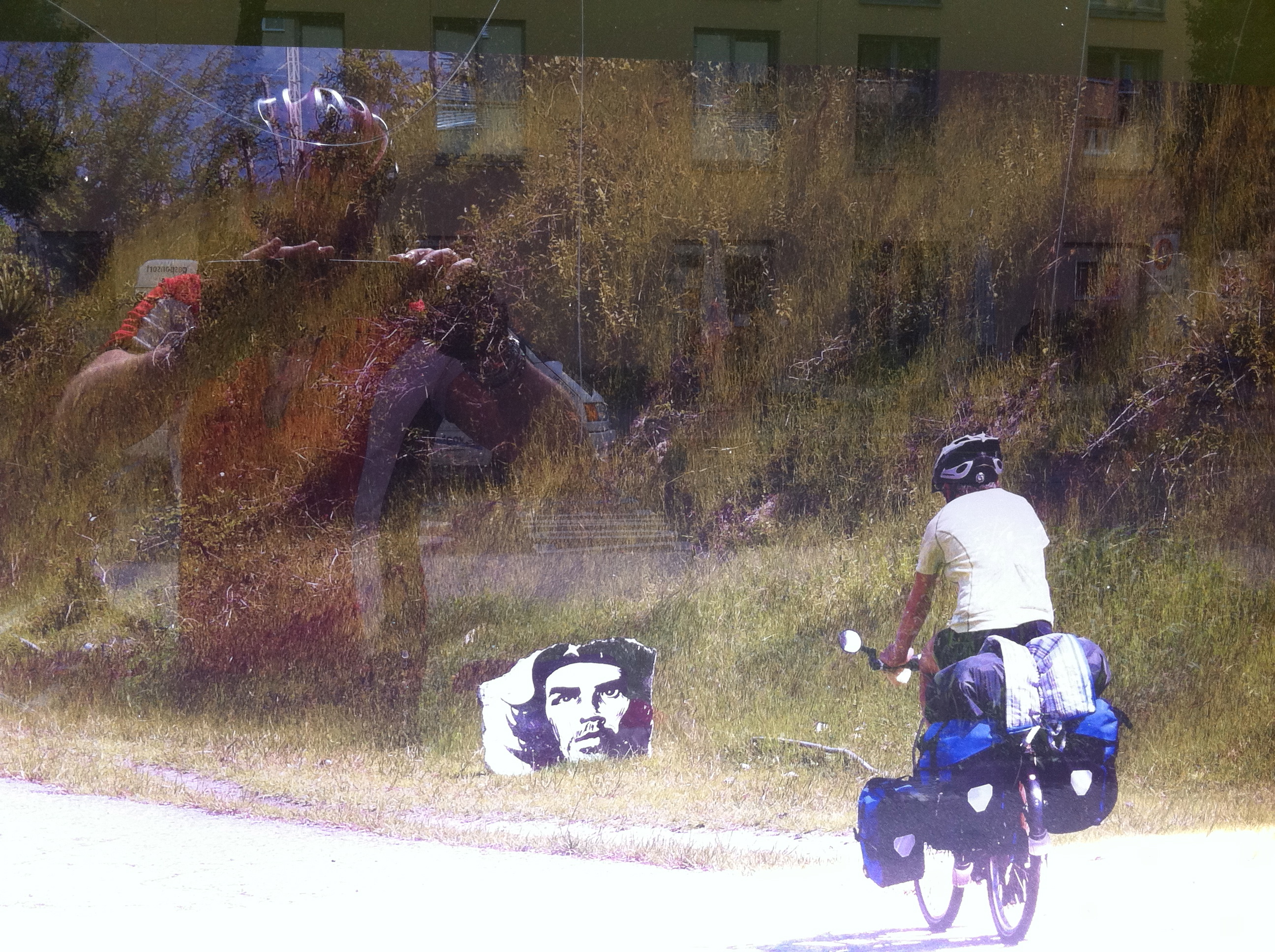
 Can we really disconnect from devices, email, social networks, the internet and digital life in general? Being caught up in a cycling trip for me is the easiest way to disconnect from all the rings, tasks, needs, wants, musts and maybe’s we get caught up in our digital life. An element of isolation and the tempo provide a good way to unwind and coach myself to be okay with the disconnection. The daily cycling, in an isolated environment, provides often limited cell reception, rare internet and few digital devices. This experience on the bicycle gives me the opportunity to create head space and day dreaming hours to clear out the mind and fall into a different time span and a grounded feeling. You generate in your head space for nothing.
 Yes it is okay, and it feels good. Today it is getting harder and harder to disconnect…or find space for nothing. As we integrate our digital devices and social medias into every aspect of our work and home life we have developed a dependence, which is becoming invisible to our lives. As new generations adopt this digital world as part of their social fabric, and consciousness, a collective dependency on seamless connectivity is embedded to our day. This level of subconscious dependency creates a new social bargain for the way we connect, disconnect and live our lives online and offline.
For my generation and others prior to the explosion of the internet, we experienced an environment of limited connectedness, tied to a land line, payphone, letters, fax, face to face, newsgroups, bulletin boards, and then email. Our privacy was shaped within a connection of a friend or two, or small circle of friends/acquaintances. The norms based on word of mouth, hearsay, rumors, reputations forged live in front of friends/acquaintances or through mediums limited to a small groups of folks for viewing or to interact with. Often it became an issue of our word vs their word. There was no digital footprint and it was harder accessing a paper trail. This experience has equipped my generation and others with a counter-balance and point of reference of another option to our current non stop connectivity and diminishing privacy. 
Today with non stop connectivity and diminishing privacy there is a different reference point for a new generation. A world of online social circles with friends and acquaintances in the hundreds, images, videos, wall updates, tweets, online hangouts all available 24/7 to potential huge audience not only our perceived friends/acquaintances but search engines, companies, governments, and a digital footprint not in our control.
The perception and understanding of privacy and non stop connectivity has changed. For many of today’s online users, there is no point of reference or experience of not having a digital footprint, not being connected 24/7 or understanding privacy in the context of the pre-internet world. A social media openness is the norm of privacy today for a whole set of children and young adults.
This shift can be uncomfortable for some, but is here. This has happened in the background of our awareness to certain degree. My generations concept of privacy, balance and connectivity is framed with a memory and life experiences without these. Today children and young adults are framing their understanding and experiences based on a new social bargain where connectivity is a non negotiable ingredient to socialization both professional and personal. Connectivity is a must: cell phones to keep Mom and Dad in touch with your whereabouts, educations demands for mobile technology as a mandatory learning platform, commerce, entertainment, goverment and information delivered only online.
As with any changes in life you gain things and you loose things Privacy and connectivity have changed and will continue to evolve in ways which will be be viewed by some as a paradigm shift, others the norm and for others a necessary evolution of our digital life.
Today the off switch is no more available! Even while we sleep or disconnect for a moment, emails, images, wall postings, and our digital footprints are active, being viewed, shared, forwarded, cataloged, and leaving a permanent digital trail. As individuals and a society we will need to carve and find the spaces to disconnect on our own. This ability to disconnect, find balance, and space for nothing will need to become a learned skill and behavior. For many of our students, with no point of reference to a unconnected world, their is no previous learning or points of reference to build upon.
As a society what does it mean when our digital footprints are available to anyone online, anytime, with any type of devices 24/7? This conversation needs to becoming part of our educators fabric and curriculum in schools. Even if a new generation has not experienced a disconnected world, it is part of our collective historical heritage the many moments when philosophers, artists, musicians, and thinkers sat with space for nothing so they could create marvels. It is fine by me that there is no more an off switch, but it is not okay to let our students and young adults not have a skill set to be able to disconnect and create a space for nothing. A balance in life is a key, everyone should be exposed to this learning and have the opportunity to be mentored on how to develop this capacity: space for nothing.
John@beyonddigital.org

 Beyond Digital
You must be logged in to post a comment.