Is It Ever Too Early to Learn?

“She is always there. She never says no. She always has a nice voice.”
A Year 3 student, when asked why she likes her home voice assistant

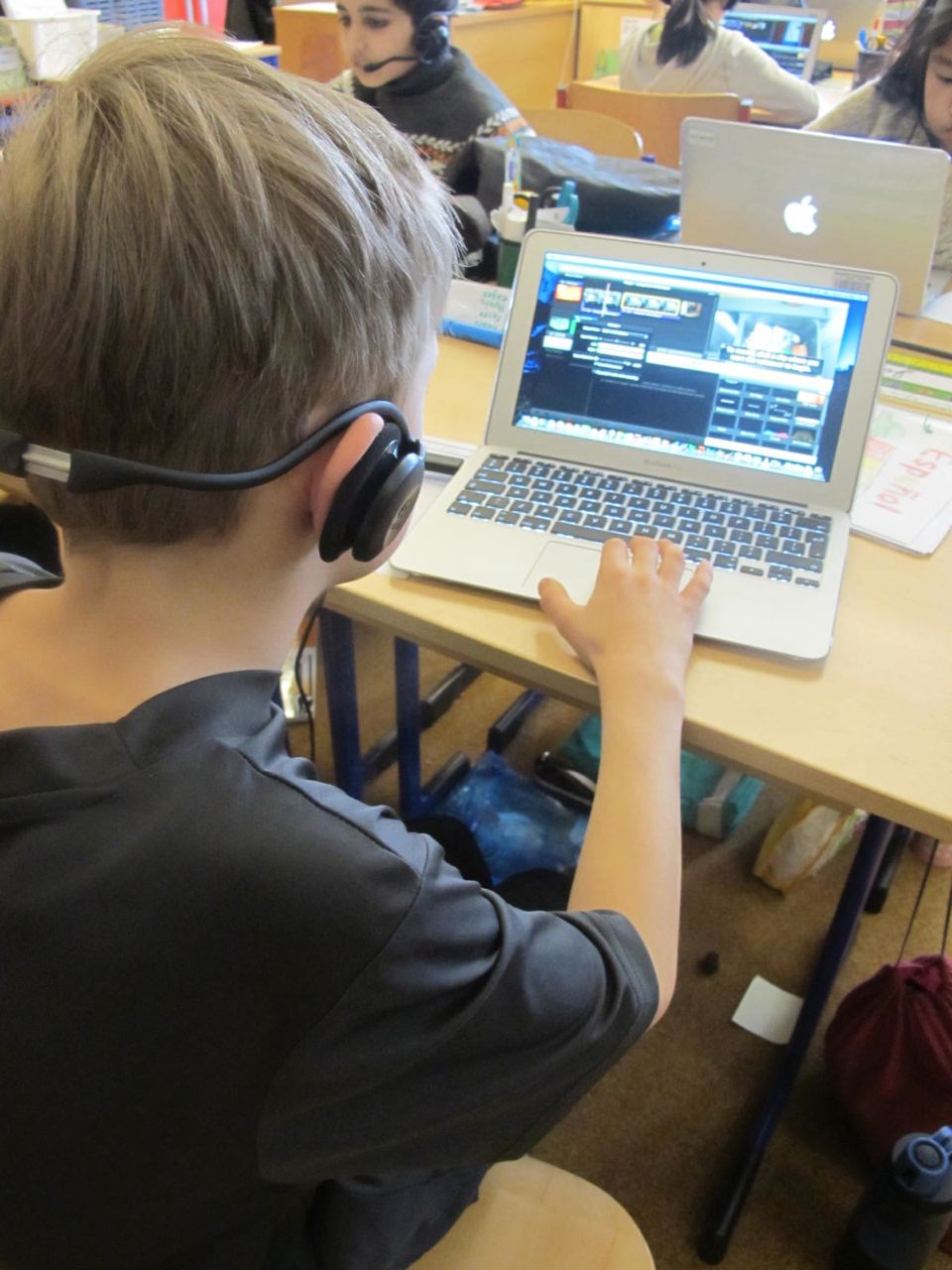
This moment in the classroom, with students sharing what they liked about their home voice assistants, highlighted for me why it’s never too early to start teaching digital and AI literacy in schools.

In many classrooms, conversations about AI can tend to happen more in middle or secondary school. Educators often feel the tools are too complex, or the ethical discussions are too advanced for younger learners. Over the past two years, I’ve had the privilege to lead and facilitate many workshops with international school leaders and educators, and in many cases, the conversations seem to focus on ages 12 and up. But in my experience working with students aged 3 -11, this is a misconception.

Children are already surrounded by the digital world long before we introduce it formally at school. They see their parents on their phones, talking to Alexa while cooking dinner, asking Siri for directions in the car, or using AI-powered chatbots on social apps. These situations are more common than we often realize, and are their first interactions with artificial intelligence. And they’re happening at home, often with little guidance and few conversations explaining what’s really going on.

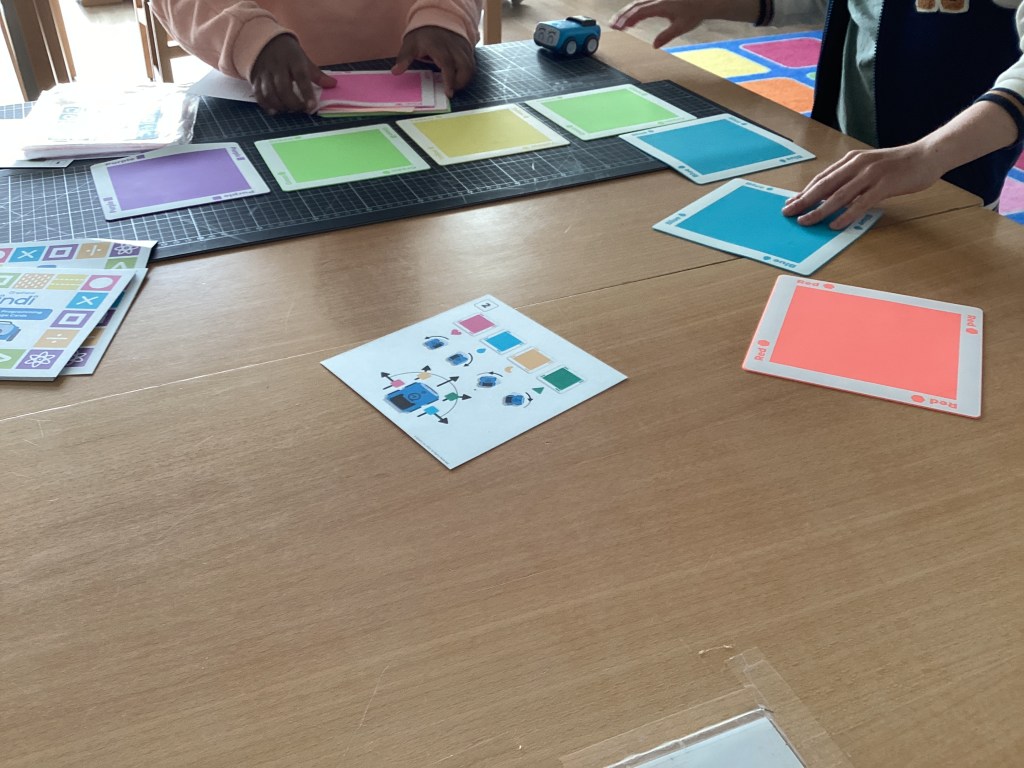
Even the  youngest students can begin to explore some of the key ideas behind AI. In early years classes, I start with pretend play and simple cause-and-effect activities using tools like the Sphero Indi robot. I use colored tiles to predict what the robot will do, opening conversations about instructions, sequences, and how machines “learn” from information they are given.

With students in Years 3, 4, and 5, I explore concepts like algorithms and personalization. Many are already using YouTube or even TikTok and can easily relate to how one video leads to another. I ask: Why do you think that video showed up next? Who decides what you see? These questions open up conversations about algorithmic predictions, bias, and the importance of pausing and asking questions.

I’m seeing more upper primary students, ages 10, and 11, using AI apps that simulate conversation or even friendship. Apps like My AI on Snapchat are often mentioned when we talk about what’s behind a chatbot. I create activities that help students reflect: Is this a real friendship? How is it different from talking to a friend at school?

Helping students understand that machines don’t have feelings, even if they sound like they do, is an important step in their learning. I explain that AI tools are run by algorithms, step-by-step instructions written by people. These tools might sound kind or caring, but they don’t think, feel, or care. Research shows that young children often believe voice assistants like Alexa or Siri can feel or understand. That’s why, in age-appropriate ways, I explain how AI systems are trained, how they collect data, and how they can sometimes get things wrong. I help students make the connection that, just like them, machines also make mistakes, but for very different reasons.

I then connect these ideas to hands-on experiences. Students code and create using tools like Indi Sphero, Bee-Bot, LEGO Spike Essential, and Ozobot. These activities help children see how giving clear steps to a robot is similar to how smart tools at home follow instructions, helping them understand that behind the “smart” behavior is a set of human-written rules, not real emotions.

I also explore:

  • Misinformation: We talk about what happens when someone shares a lie. What does it feel like? What’s the problem when this happens? Why do people lie? How does it make others feel?
  • Bias: We look at image searches on search engines and AI image generators. We ask: What do we notice when we search for “teacher” or “doctor”? Who’s missing? How might this be different from your own experience?
  • Media Literacy: Students create their own fake headlines or altered images, learning firsthand how easy it is to mislead others, and how important it is to ask questions.

Digital and AI literacy isn’t just about understanding how technology works. It’s about building habits of critical thinking, empathy, and responsibility.

In a Primary Years Programme setting, and the same applies in other curriculum contexts, we already emphasize critical thinking, empathy, and action. These values align well with conversations about AI ethics. When students understand why it’s important to check sources, think before they share, get more than one perspective, and reflect on how algorithms shape what they see, we start to provide them with a toolkit to navigate the digital world with care.

This is especially important as AI becomes more present in their daily lives, often in quiet, seamless ways. The child who turns to Alexa because it’s always “available” may not yet realize that real relationships are built on kindness between people, not just what’s easy. But for that kind of learning to develop, a teacher is essential.

Some of the learning I engage with:

  • EY, Y1, Y2: Explore pretend play, altered photos, or “real vs. not real” objects. Use simple language like “true” and “trick” to start conversations about misinformation.
  • Y3, Y4: Introduce recommendation systems through YouTube or Netflix patterns. Encourage questions like: Why does this keep showing up? Who decides what I see?
  • Y5, Y6: Dive into algorithms, AI-generated text or images, and ethical questions around chatbot use. Use inquiry units to explore bias, authorship, and media influence.

This is a shared responsibility that all educators need to support one another in. And as school leaders, we need to create the time, space, and understanding that respects that every learner, child or adult, connects with learning in a different way.

In a world where AI is becoming part of students’ daily experiences, our responsibility is to design purposeful activities, building the students’ capacity to ask helpful questions, notice things, connect ideas, and make careful choices

On a recent episode of the podcast I host, one guest, an AI EdTech entrepreneur, was candid: “Not teaching and engaging with AI literacy in schools is pedagogic malpractice.” A strong statement. I see it more as an invitation, a reminder of the opportunity we have to be present in this moment. Amongst all the demands teachers manage each day, we can still find meaningful ways to ensure primary school students build the knowledge, skills, and values to engage with a world that is only becoming more complex and nuanced.

I am grateful to my PLN for all the sharing, resources and ideas I get to learn from. A special shout out to Cora Yang and Dalton Flanagan, Tim Evans Heather Barnard, Tricia Friedman and Jeff Utecht who continually share generously resources and strategies targeted to Primary age students.

Resources Referenced

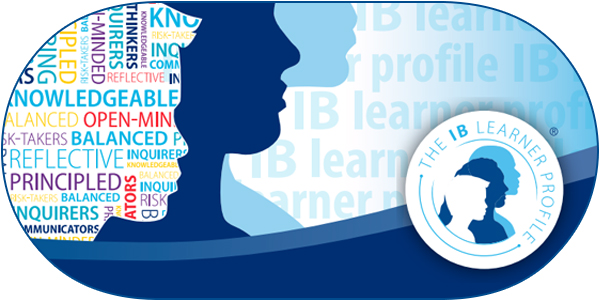
Integrating AI with the IB learner profile

I was asked to share some reflections on the topic of Artificial Intelligence for the IB Community Blog which appeared October 16, 2023 in assessment, Classroom culture

Bois-Bogy Switizerland Photo John Mikton

The accelerated adoption of artificial intelligence, generative AI, and large language models and their widespread implementation across platforms, has grabbed our attention. Reactions to the developments of AI have been diverse, from excitement to disbelief. While some see AI and its tools as an opportunity, others view it as a potential threat to the traditional education system. A mix of interest, worry, and hope seems to fill many of the conversations in schools.

In this context, the question schools should be asking is: “What is the added value of school in a world where AI becomes prominent and accessible to all 24/7?”

A unique aspect of the IB learner profile is that, in many ways, the above question is addressed by the learner profile’s attributes.

These contain dispositions and approaches that support agility, reflection, and curiosity. In turn this creates important connections for learners to develop the skills, knowledge, and values to navigate the accelerated adoption of AI and the unpredictability around its growth.

Challenges and opportunities of AI

AI, generative AI and large language models are challenging many of the approaches of teaching and learning. With these developments come opportunities for access to information, real-world problem-solving, creativity, time-saving tools, and interdisciplinary learning.
At the same time, questions arise about ethics, bias, misinformation, manipulation, loss of originality, ownership, and attribution.
If many of the AI algorithms independently make complex decisions without people knowing how they arrived at those decisions, this lack of transparency makes it difficult to understand and address potential biases or errors. The concerns around AI’s lack of transparency increases the challenges these tools bring to a school setting.

Developing future-ready students with the IB learner profile

IB World Schools and educators over the years have developed an immense amount of expertise and created learning experiences to support students and guide the teaching and learning with the 10 IB learner profile attributes:

  • knowledgeable
  • thinkers
  • inquirers
  • communicators
  • principled
  • open-minded
  • caring
  • risk-taking
  • balanced
  • reflective

Linking the IB Learner profiles with AI offers educators an opportunity to integrate and use AI tools with an open mind. This open-mindedness doesn’t mean we shouldn’t be cautious, thoughtful, and reflective. Instead, it allows us to adopt potential opportunities while being mindful of the implications.
Exploring the potential of AI, generative AI and large language models with the IB learner profile attributes provides many learning opportunities. The ways in which the IB learner profile attributes of knowledgeable and thinkers can support the responsible and effective adoption of AI are alluded to above. Below I provide a short commentary on how educators can embrace the remaining attributes as they help students navigate the complex world of AI.

Inquirers

As inquirers, educators can explore the complexities of AI, modeling evaluation to highlight the importance of self-directed learning. As educators collaborate in creating activities with colleagues using AI tools, this can help nurture critical thinking and transdisciplinary connections between different subjects.

Communicators

By integrating AI driven scenarios, discussion prompts, real world case studies and role playing exercises, educators can support the growth of their students’ communication skills.

These AI enhanced activities not only grab the students’ attention but also provide them with practical experiences that reflect real life situations, giving them an opportunity to develop a deeper understanding of how to navigate different communications contexts and work in collaborative settings.

By facilitating these approaches, educators mentor their students with important current skills to manage a digitally driven world while creating an environment where learning remains relevant and authentic.

Principled

Educators can facilitate activities to help students understand the significance of integrity, biases and racism through the use of AI tools to delve into matters of ethics, diversity, equity and fairness.

One example would be to analyze text and images from different voices in media outlets to uncover hidden biases. The students use the AI tools to see how hidden biases might be used in the local, national or international media. This activity gives students an opportunity to develop an understanding of the importance of media literacy skills and being critical thinkers of media in their local, national and international context.

Open-minded

With an open-minded approach, educators can build activities that guide students to use AI tools to explore different perspectives and voices. This could involve using AI-generated content to analyze different articles from newspapers and magazines on current events, exposing them to different viewpoints or historical events from different perspectives and cultural lenses. Students are then provided with opportunities to interact with a variety of viewpoints and experiences, enhancing their critical thinking skills.

Caring

As educators, we can model the use of AI tools to emphasize the importance of caring, empathy, compassion, and respect. By leveraging AI tools, activities can be created with simulations and case studies that explore social issues and their impact on local and global communities.

For example, an educator introduces an AI simulation based on real world case studies linked to a social issue connected to the unit or lesson they are focusing on. Through these simulations, supported by teacher generated questions, prompts or activities, students are exposed to the challenges, tensions and complexities of the social issue. This process gives them the experience to read, listen, and watch how individuals and local communities from diverse backgrounds solve this social issue in the lesson.

Risk-taking

Engaging in the learning process, interacting, trying out, and exploring the use of AI tools as educators is an effective way to model risk-taking. Students experiencing this with activities guided by educators will develop confidence when navigating the uncertainties of AI tools.

Balanced

Recognizing the importance of balance and well-being, educators can mentor and help students explore different ways to understand their social, physical, and emotional well-being. This is very important as the use of AI-generated platforms, tools, and experiences become more prominent and are capturing our attention constantly throughout the day.

Reflective

In conclusion, as reflective practitioners, it is essential for school leaders to deliberately carve out the necessary space, allocate time, and provide purposeful professional development to support educators in this journey of AI cohabitation. This ensures that each of us can mentor, model, and guide students of all ages through experiences, activities, and learning pathways. This deliberate integration of AI tools in the learning process is a vital step in cohabiting with AI as equal partners.

John@Beyonddigital.org

Leading Technological Change- a collaboration with Adam Morris

Over the years working in different international schools as an IT Director, Director eLearning, Head of Education and Media Technology and Deputy Principal I have had the opportunity to lead, design and collaborate with Leadership Teams and IT Teams the implementation and adoption of digital ecosystems and environments. These experiences have been an important point of reference in my own learning and understanding on the complexities, challenges and opportunities of leading technology change in a international school setting.

I had the privilege to be able to collaborate and co-write this eGuide with Adam Morris who is Schools Technology & Integrations Director @ FariaOne Group. A special thank you goes out to the Managebac team who provided us with support and guidance throughout the process. As the group worked and collaborated together on the eGuide Adam and I had the opportunity to each reference our own professional experiences working, coaching and supporting schools around the world with leading technology change.

The guide is a a point of reference to support conversations, reflections and how to engage with technology change with a whole school approach. It is there to provide provocations, points of reference on change and the workflows and dispositions to consider as one engages in a technology change process with a whole school approach https://guide.fariaedu.com/leading-technology-

change/

A summer reflection: Harnessing Digital Literacy

With the unprecedented experience of COVID19 that we all have juggled over the last months, and the complexities we all are living with today, our days have been intense. As part of the Pearl of Wisdom protocol of the Principal Training Center, I, as a trainer at the PTC reflected on my own experience as an education leader working and facilitating with digital literacy and fluency in an international school setting and navigating the dynamics of the COVID19 pandemic. A 20 minute share out.

Is there a new kid in town?

leanringIn todays international learning landscape the role of e-Learning -On-line learning is providing more and more opportunities for International Schools to leverage a greater capacity to provide a differentiated venue for learning to support their respective learning communities.

The growth of this learning medium in education and industry is significant, the number reflect this “ 5.6 million students took at least one on-line course in the Fall. of 2010 based on research by the Sloan Consortium” and according to US News Online Education report “65.5 percent of all chief academic officers reporting that on-line education is critical to the long-term strategy of an institution in 2011.”

Many international schools have embraced blended learning in an effort to provide resources, information, lessons, assignments and discussions outside of the traditional classroom, to enhance and support the opportunities for students to interact with the curriculum. This blended approach often facilitated through Moodle, Blackboard, Haiku and other Learning Management Systems.

In certain areas of the world these Learning Management Systems have played a critical role in supporting International Schools to deliver their curriculum and classes when the school has had to close due to environmental issues and political instability in the host country. There are many cases of this happening over the years, and this has provided essential continuity of learning, communication and support  to their respective learning communities. These experiences by different international schools have given these venues greater importance and air time by schools. There is the World Virtual School Project  consortium, of the 8 International School regions that over the years has been a key player in building capacity of collaboration and implementation of Learning Management Systems to support international schools around these 8 regions. There is also the Virtual High School and http://www.k12.com/ two of the many growing offerings available to schools to supplement and tap into this growing area. The IB has http://www.pamojaeducation.com/ a full IB authorized on-line learning platform which many schools are adopting to supplement their own face to face course offerings and giving smaller schools the flexibility to offer a wider scope of topics to their communities.

Today it is almost an non negotiable for International Schools not to have some presence and resource to support on-line or blended learning. The flexibility, and opportunities to extend the learning experience outside of the school walls, and ability to support students that are sick, absent, or out for personal reasons, allows learning to continue beyond the school walls has become a key ingredient to a school’s culture.

On-line learning is here to stay, and in its various forms  blended learning or fully On-line learning comes in two flavours: Synchronous is live, the learner and course facilitator (teacher) interact live in real time, in a virtual classroom setting, in many ways a simulation of a real classroom live on-line, through a video feed, or a video conferencing environment such as Adobe Connect.  Asynchronous is not live, but  allows the learner to work at their own pace within a time-line and not at the same time as other participants or the course facilitator (teacher) often with little live interaction.

Many Universities adopting on-line learning called MOOCs (Massive open on-line course) have been getting a lot of attention in the media. Today more and more universities are adopted these eleanring platforms to deliver a variety of courses (Massive open on-line course MOOC) options some of these are free and others are fee paying. The MOOC model  is set up to facilitate learning at a big scale in an open access format. This is a growing area in higher education, and something which long term will also impact International Schools. This model is already being used with a variety high schools ( an example: http://ohs.stanford.edu/) which are now offering an on-line high school in different venues and is becoming a rapidly growing market.

In industry On-line Learning has also been adopted and more and more companies and organizations are using this medium to support their workers for training and professional development purposes. The advantages of this medium for these companies and organizations are cost saving and the ability to replace in person training with on-line training.

A couple facts to help frame this growing industry;

  • There were an estimated 1,816,400 enrollments in distance-education courses in K-12 school districts in  the USA 2009 – 2010, almost all of which were online courses. 74% of these enrollments were in high schools. (Queen, B., and Lewis, L. (2011). Distance Education Courses for Public Elementary and Secondary School Students: 2009-10 (NCES 2012-009). U.S. Department of Education, National Center for Education Statistics. http://nces.ed.gov/pubs2012/2012008.pdf)

In the context of these dynamics, and the huge growth, and use of on-line learning ecosystems worldwide, for International Schools this has become an area which cannot be ignored. There is already an on-line international school in Switzerland at the International School of Bern  The conveniences of these on-line ecosystems which can include schedule flexibility, ease of access, student’s having the option to control their learning,  multimedia tools, potential for differentiated learning, and the costs savings are all factors to be considered.

For International Schools on-line learning is and going to continue to become an important part of our learning ecosystem. As this industry grows and continues to gain capacity, both locally and globally, to provide a robust engaging education, International Schools will need to provide this resource to their community. As educational institutions part of the 21 century learning landscape it is something we need to harness, understand and be able to deliver to our own communities of learners. If we do not, someone else will!

John@ http://beyonddigital.org

break on through

In my experience there is an odd side to international schools when it comes to the issue of making sure to teach the virtues of freedom of expression, studying great leaders, thinkers, philosophers, mathematical theories and ensure our students get a balance in the way we approach learning.  We believe generally that an open door philosophy towards different opinions, perspective and views is important. I would say we are quite passionate about this, and feel it is a critical element of many of our school’s missions.  The goal to ensure that our students get exposed to as many different perspectives as possible allowing them to construct their own knowledge. That is nice and of course something most parents and educators would find difficult to argue against. Then comes Web 2.0 Social Networking and/or some other technology and the general first reaction and approach is BLOCK IT! Now many will argue that social networking or blocking certain technologies is not the equivalent of teaching the virtues of freedom of expression. I disagree. Okay in my situation at my current school, we block facebook, twitter and others on our wireless network, a decision by the collective leadership team. On the two labs and one library lab we do not block it on the machine connected to our LAN network, the rational is that there generally is always someone there to supervise. This situation is flawed in my mind. In some ways I am to blame as IT Director for not pushing or developing a strong enough argument with my fellow administrators to have the conversation to unpack what we are doing, and exploring the pedagogic value of such blocking. Always easier to reflect in hindsight.

What happens then is when students sneak through our firewall via proxies, or have their own independent connection to the internet through a USB modem from the local cell phone company that they plug into their laptop, the blocking becomes useless. The times a teacher catches someone then the issue is brought up, and we the IT department have to again explain that however much we block the chance is that some student will find a hole. This is the flaw, we are focusing on the blocking and the events where students get around it and not on the more important issue what, how, why and when are they using this. We avoid the  opportunity to leverage this tool to engage both student and teacher into a conversation on the pros and cons of using this, and how and what might be responsible use of such tools in a school setting. This whole dialogue and dynamics is completely swept under the carpet.

Most educators would argue I assume that the issue of Facebook (Social Networks) as a teachable moment has no place in the classroom, and blocking it is good, as this allows us then to focus on the important task of teaching the lesson at hand. I challenge this perception and view. There are about 500 million plus folks on this planet involved on a regular basis in social networks in different shapes and forms. Attached to this is a huge industry developing to take advantage of this new form of communication. With this dynamic there are big economic opportunities for individuals, companies, organizations and institutions to generate incomes. This is something that will continue to develop and the reality is it will become more and more part of our own social communication fabric both on a personal and institutional level. Some would say it has already happened.

So……I think with this shift there is now a critical role for educators to start exploring how to integrate social networks into school curriculum.  We have a responsibility to share, educate and develop an understanding of the intricacies and options of using such communication mediums in our day to day lives. If Grade 2-3 students are setting up Facebook profile you cannot expect them to clearly understand the privacy setting tools on their own, you cannot expect them to read the fine print of an agreement. It has come to the point where instead of blocking this, and letting them work things out on their own undercover, we as educational institutions need to develop a robust set of learner outcomes for our students on the dynamics of social networks. It needs to be not the responsibility of some IT department technician or counselor but part of  the day to day fabric of each teachers tool kit: sharing, exploring, facilitating, and mentoring our students how to be responsible users of social networks. We need to let them explore these mediums with a critical mind unblocked, as we would expect them for the ~French Revolution, Plate-tectonics, a perspective on Macbeth or the Israeli- Palestinian situation.

The world changed yesterday! Today we need to engage ourselves in a clear understanding that social networks, youtube, chat, texting, virtual worlds, and the current digital landscape are now an integral part of our day to day fabric both socially and professionally. With this there are a whole host of issues, learning, understanding and perspectives that we need to equip our students with to be able to survive effectively with balance and as critical learners.  In today’s world, we as educators,  have an important ethical responsibility to take charge of this, and engage throughout our day within our own lessons what this all means, and how to develop a critical understanding of how best to use these: when, where, and appropriately….. if we do not, basically we are ignoring today’s world that we all live in. I would find it hard to believe that any of us would want this as part of our own educator’s philosophy.