Recalibration of Truth

Photo John Mikton

In our rapidly changing digital age, the idea of truth is undergoing a significant change. In the past, truth was often taken from shared experiences and clear agreements. Today, truth often is manipulated by social media, algorithmic biases, polarization, organizations, companies, and in more instances governments,  fueling the algorithms that influence what we see, hear, and believe.

I refer to this as a recalibration of truth. This new landscape requires us to navigate the complexities of deep fakes: video and voice, misinformation, and the algorithmically curated digital environments that condition our understanding of what is real and true.

Aldous Huxley’s “Brave New World” reminds us, ” Each one of us, of course, is now being trained, deliberately, not to act independently.”  Written in 1932, this quote resonates for me, in a world where we are tethered to our devices, influencing and amplifying our wishes and perceptions, often unconsciously. The world we live in has become a digital ecosystem that curates 24/7 our understanding of the world around us, guiding not just our hopes and dreams but also our understanding of truth.

Throughout history, the concept of truth has always been complex, with each era having its own unique ways of curating information. There was a time, not too long ago when agreements and truths were often established through a handshake or verbal agreement. Nowadays, our point of reference is formal contracts and notarized documents. This in many ways is a natural shift of our time in how we understand and evaluate truth. The digital age has only accelerated this shift, flooding us with a constant stream of feeds and push notifications. The overabundance of information and our ability to process it has led to what Maryanne Wolf, author of Reader Come Home: The Reading Brain in the Digital Age, calls ‘skim reading.’ The act of ‘skim reading” dilutes our attention span and reduces our capacity to fully engage with information, affecting our ability to pause, analyze, and read critically and deeply.

The recalibration of truth today involves more than just the weakening of the traditional concept of truth; it involves understanding truth’s new tools and architecture. The accelerated presence of artificial intelligence and the widespread influence of algorithmic curation challenge us to engage with information in entirely new ways. The emergence of synthetic media, such as deep fakes, further complicates our ability to trust what we see, hear, and feel, causing us to question the reliability of our senses.

Schools and educators play a critical role in addressing this recalibration of truth. The abundance of information available to us and our students is seamless and frictionless, yet its accuracy is often questionable, highlighting the vital importance of teaching digital and information literacy. These skills are and will continue to be, essential for evaluating information, cross-referencing sources, and understanding the mechanics and algorithms of the digital content we interact with.

As we navigate this new landscape, we need to be open to reevaluating our priorities, focusing on the development of critical thinking, ethics, and empathy. It’s about being willing to break away from the past and being comfortable to explore new resources, professional learning, and dispositions to navigate the challenges brought about by a recalibrated notion of truth. This underlines the importance of developing learning pathways focused on digital and information literacy, ensuring that our students have the skills and critical thinking agility to live in a world where truths are continually recalibrated.

I believe that as educators and schools, we have a responsibility to ensure our students are not merely passive consumers of edutainment but rather critical thinkers skilled at navigating the complexities of this recalibrated truth in the digital age

“But I don’t want comfort. I want God, I want poetry, I want real danger, I want freedom, I want goodness. I want sin.”  Aldous Huxley’s “Brave New World”

Sources and Resources to further explore: 

“Brave New World by Aldous Huxley.” Goodreads, https://www.goodreads.com/book/show/5129.Brave_New_World

Wolf, Maryanne. “Reader, Come Home – HarperCollins.” HarperCollins Publishers, https://www.harpercollins.com/products/reader-come-home-maryanne-wolf?variant=32128334594082

Reading behavior in the digital environment: Changes in reading behavior over the past ten years: https://litmedmod.ca/sites/default/files/pdf/liu_2005_lecture_numerique_competences_comportements.pdf

Updates ‹ AI + Ethics Curriculum for Middle School — MIT Media Lab
https://www.media.mit.edu/projects/ai-ethics-for-middle-school/updates 

Carlsson, Ulla. “Understanding Media and Information Literacy (MIL) in the Digital Age.” UNESCO, https://en.unesco.org/sites/default/files/gmw2019_understanding_mil_ulla_carlsson.pdf

How deep fakes may shape the future
https://theglassroom.org/en/misinformation-edition/exhibits/how-deepfake-may-shape-the-future

FAKE or REAL? Misinformation Edition
https://fake-or-real.theglassroom.org/#/ 

John Spencer: Rethinking Information Literacy in an Age of AI. https://spencerauthor.com/ai-infoliteracy/.

AI Digital Literacy: Strategies for Educators in the Age of Artificial Intelligence https://blog.profjim.com/ai-digital-literacy-citizenship-best-practices/ 

Conversations with Humans

3 years ago Carlos Davidovich and I got together in anticipation of participating in a webinar with #ISLECISLoft hosted and facilitated by Nancy Lhoest-Squicciarini on “Uncertainty in the time of the COVID19 ” and recorded this conversation.
A few weeks ago someone who listened to the conversation of three years ago from the #ISLECISLoft asked if we where going to get together and do a follow up? Inspired by this question and nudge Carlos and I decided to connect again and re-explore some of the themes of our previous conversation in the context of 3 years after COVID 19.

Carlos’s latest book: https://www.carlosdavidovich.com/en/five-leaders-eng/
Learn more about the ECIS ISL Loft: https://ecis.isadtf.org/loft/

Adaptability Quotient (AQ): Navigating “Predictable unpredictability,” 

There is no doubt that a growing, shared realization exists, however challenging it might be at times, that we are transitioning to an era of “Predictable unpredictability,” as quoted in The Economist.  2023 came with a whirlwind of changes, at a pace and magnitude that feels somewhat overwhelming. The sobering truths of climate change have become too frequent a reality for many. The rapid integration and prevalence of artificial intelligence in our lives comes with a mix of fear and excitement. In addition the ongoing geopolitics conflicts we witness have the realities of war on many peoples doorsteps.

Each of these factors affects us uniquely within our respective contexts, each with its distinctive complexities. These accelerated changes are reshaping the realities we have grown accustomed to using as reference points for our own understanding of the world around us. With these changes come new questions and awareness that at times seem daunting. 

Photo John Mikton Bois du Nant Switzeralnd

International Schools in general possess the ability to insulate themselves from a certain degree to the changes surrounding them—I refer to this as a “walled garden.” This process  is purposeful and occurs gradually and cautiously, with the intention of providing a caring and age-appropriate set of learning experiences and pathways. The objective and design are centered around supporting students in navigating the multitude of changes from the world they live in both at home and school in a safe and nurturing environment. International Schools curate these learning journeys, choreographing learning pathways that progressively develop, and create connections aligned with a curriculum and educational principles. This process requires patience, is delicate, intricate, and nuanced. 

We all agree in principle as educators, and believe that the capacity to adapt to different situations and problems is vital for managing and navigating life’s challenges. Understanding this, it’s important for us to reflect on how we react when confronted with such rapid changes, especially when we lack control or have minimal influence over the timing or consequences. The growing necessity to be in a constant flux of adaptability is challenging and at times exhausting. We are in a new narrative where we have to readjust our established understandings. Change disrupts the routines and habits we find comfort in—routines which provide us with stability, continuity, and familiarity. All important for our sense of purpose. 

If “Predictable unpredictability,” creates a break from our routines and becomes the new normal, the capacity to adapt will only be amplified as a critical mindset for International Schools to flourish by. This is where the concept of Adaptability Quotient (AQ)  (also often referred to as adaptability intelligence) – becomes important for International Schools and educators to harness .  

Robert J. Sternberg,  psychology professor at Cornell University, defines adaptive intelligence as  “the intelligence one needs to adapt to current problems and to anticipate future problems of real-world environments.” Educ. Sci. 2021, 11(12), 823; https://doi.org/10.3390/educsci11120823

The mindsets associated with AQ revolve on identifying what is relevant, and being comfortable forgetting past knowledge, adjusting to change in real time and being comfortable challenging habits and beliefs. With this an agility to adapt at short notice, always learning and listening with empathy to the different viewpoints of others. 

When International Schools engage with AQ, a challenge lies in the perception of an underlying culture of resistance to change. Change is often perceived as a threat to current and past methods and habits, destabilizing the status quo and eroding the sense of continuity and comfort. 

Changing how schools work, by adjusting and redesigning a curriculum to be flexible and agile to go along with AQ’s ideas, is a big step and a hurdle as we have limited points of reference to address many of the issues and complexities the world is facing mid and long term. The process of these changes require trust and empathy from all involved . This means schools need to design professional development that embraces “unlearning and relearning” and accepts that many of the things we learned and got used to are not always so helpful, even though they brought  a sense of stability and continuity. 

Engaging with the AQ requires an agility to balance new approaches with current approaches and workload. Ensuring we facilitate an iterative process in all school  strategic planning. Finding time to pause – reflect and to internalize the balance between developing new skills and maintaining current skills. 

When one thinks of the many mission statements, and learning principles highlighted by International Schools – such as flexibility, curiosity, innovator, resilience, and being a risk-taker – the notion of engaging with the Adaptability Quotient (AQ) makes sense. The shift is to embrace the idea of not teaching to the past, and accepting “predictable unpredictability” as our point of reference.

This academic year let us invite ourselves to:

“Become a student of change, it is the only thing that will remain constant.” Anthony J.D Angelo Founder of Collegiate Empowerment  & Author

John@beyonddigital.org

Anthony J.D Angelo Founder of Collegiate Empowerment  & Author 

Works referenced

“The new normal is already here. Get used to it.” The Economist, 18 December 2021, https://www.economist.com/leaders/2021/12/18/the-new-normal-is-already-here-get-used-to-it

Sternberg, Robert J. “Adaptive Intelligence: Its Nature and Implications for Education.” MDPI, https://www.mdpi.com/2227-7102/11/12/823.

Saucier, Tracy. “Adaptability Quotient in Schools: AQ Is the New IQ.” Summerfield Waldorf Schools, 14 April 2022, https://summerfieldwaldorf.org/adaptability-quotient-in-International International Schoolss/. 

“Five Brain Leadership – Dr. Carlos Davidovich MD. EMCC.” Coaching y Neuromanagement, https://www.carlosdavidovich.com/en/five-leaders-eng/.

O’Brien, Brendan. “Leadership and Adaptability Quotient (AQ): Moving from EQ to AQ.” Creative Thinking Institute, https://creativethinkinginstitute.com/blog/leadership-and-adaptability-quotient-aq-moving-from-eq-to-aq/. 

Beyond ChatGPT: Automation in Education

Over the last weeks ChatGPT and Natural Language Models of Artificial Intelligence have created a real buzz for many in the technology industry and general media. For schools the arrival of these have generated important reflections and introspection on the role of AI, Chatbots and Natural Language Models in schools and the classroom. ChatGPT bringing on important moments to think about the role #AI in a classroom- schools. How does this refocus and challenge educators pedagogy, which can often in schools be focused on teaching content -knowledge with assessments designed around tests and exams.

We as educators and schools need to invite ourselves to ask what then is the value added proposition of learning in a classroom and school in the age of #AI #ChatGPT3. How do schools position themselves for a future with #AI. We all need to create the space, time, and support community voices to engage with this creative tension. To find the time and space, and hear these voices, will only allow us to be better prepared for such cohabitation.

I had the privileged to participate in a conversation on this topic facilitated by Camillo Montenegro Beyond ChatGPT: Automation in Education with fellow educators Tim Evans, and James Steinhoff. The recording for reference

Further resources to consider

AI in Education collaborative site with a lot of resources, lesson ideas, guides and information to support educators
https://sites.google.com/ecolint.ch/aiineducation?pli=1

Podcast with 3 International School IT Directors discussing its implications.
https://www.theinternationalschoolspodcast.com/e/88-greg-warren-and-wolfgang-with-dan-and-john-look-at-chatgpt3-in-education/

a conversation with Glaucia Rosas @EduTec Alliance

Glaucia Rosas co-founder and Director of the https://edutecalliance.com/ invited me to sit down and share some reflections on her podcast about Educational Technology, Online Learning and juggling General Data Protection in a School setting.

a conversation “Well-being in the time of COVID.”

Well-being has been an important part of our respective experience living and juggling the uncertainty of managing the Global Pandemic COVID19. The pandemic has for many created new stresses as part of the day, that are ambiguous, at times volatile with uncertainty. Carlos Davidovich and I explore the creative challenges of living during the COVID pandemic and how we each manage the challenges of the pandemic differently. Carlos shares his expertise on Neuro-management on known understandings of how the brain works and how we might consider understanding Well-being in this context. This recording is with video as we both prepare for a live session April 1, 2021 to support colleague and friend Nancy Lhoest-Squicciarini who hosts monthly the International School of Luxembourg Virtual Learning Lofts (#ISLLoft) which I have the privileged to co-facilitate with Nancy sometimes.

Dr. Carlos Davidovich Executive & Performance Coach – Neuromanagement Expert – Speaker


Beyond Screens: Managing the Screen Time Dilemma

I am here sharing from a series by the IT Library Department colleagues called Digital Life a series for parents. This a concept managed and hosted by colleague Nancy and the Communications team. This session we explore and focus on screen time and some of the dilemmas we all juggle both parents, student and staff. All credit, resources, and inspiration goes to https://tacticaltech.org/#/ and https://datadetoxkit.org/en/home who over the last couple years have been an outstanding resource, and guide for a lot of the work I get to facilitate with colleagues at school. In this session I share what are the different types of screen times and some ideas on exploring strategies to consider.

2018

Photo John Mikton
Waiting seagulls, Nyon, Vaud, Switzerland.

As the first days of 2018 arrive, any reflections on last year seem to contain an uncomfortable rawness because of the events continuously populating our devices – the immediacy, brutality and complexity of a world fueled by- FakeNews?”, each one of us trying to construct a context in the “Filter Bubble” choreographed by algorithms from which we build a sense of the world we live in.

As International School educators, we straddle between the walled garden of “school” and the outside “world”.  The reality is that we are surrounded by constant change and ambiguity. But there is a gap between the accelerated rate of change and our capacity to adapt to it. For some, the gap is wide. For others, the gap stays the same, and for a few, the gap is narrowing. How we interpret and engage with the gap and our own capacity to keep up influences many of our feelings and emotions. These in turn fuel the perceptions, opinions and behaviors with which we express ourselves.

International Schools have to juggle the fine line between ensuring students and parents are pleased and ensuring that they feel safe, challenged and cared for. In the unique world of International Schools, a percentage of parents come from a comfortable socio- economic environment. Often times, their education is a contributing factor to their current positions. This education provided the opportunities for their successes and their economic prosperity.  Living with this becomes a strong marker in what International School parents believe their children should get from an education and an International School.  This pedagogic reference point in many cases 25+ years old. The world was a very very different place then. However we try as schools to innovate, change and adapt, we do this with a level of caution and reservation. At the end of the day, the invisible mandate between parents and international schools, is “provide my child with stability, continuity, what I remember from my school days and more certainty then I have in my life today“.

As educators, we fall into a similar narrative. We have a desire for of stability, continuity, and more certainty than in the outside world we interact with. We do innovate and change in our schools, but the presence of the invisible mandate between our parents and schools influences the level by which we break the status quo.

Today the level of stability, continuity, and certainty that we were once used to has eroded. Uncertainty, ambiguity and volatility are an unavoidable part of the day. The complexity of this change permeates into everyone’s lives, and often not by choice.

2018, is an opportunity to embrace the world’s uncertainty, ambiguity and volatility, not as something eroding our past and challenging our present, but as an opportunity to re-frame the possibilities in front of us as a unique and rich learning journey. We have a responsibility to take this on in our roles as mentors, facilitators and educators. We bring a wisdom, resilience and care that has served us well and can continue to serve us today. Many of our students will one day be International School parents or educators who look back at their education as a point of reference for their own success. The measures will be different.  We live in a world where uncertainty, ambiguity and volatility are part of our lives.  We should not depend on reference points from our past to give us stability, continuity and certainty. The gap for many will still get bigger and more uncomfortable. But hopefully, in 2018, we can work to bridge that gap as well.

John @beyonddigital.org

Puppets on a string

CC0 License: https://www.pexels.com/photo/bag-electronics-girl-hands-359757/

 The post is inspired by a L2talk I did at the Learning2 Europe conference in Warsaw.

“every storyteller has a bias – and so does every platform”-  Andrew Postman  “My Dad Predicted Trump in 1985 – It’s Not Orwell, He Warned, It’s Brave New World.” The Guardian. Guardian News and Media, 02 Feb. 2017

I am an addict. Are you too? Don’t you hate it when you can’t find your phone, and a friend has to call it.  Maybe the first thing you did this morning was check your phone and the last thing you did today was check your phone.  Think of it, we walk and text, and even drive and text. Have you had this happen,  you are in a social situation and you go the bathroom  to check an update. You are standing on a street corner and suddenly realize you are on your phone swiping at it, unconsciously. Then there is the feeling you get when you post a picture on a social media feed. The “likes” start coming in. It feels good, really good,  and then you check back and back. You post an update and there no “likes”.  You start wondering to yourself what is going on?

(CC BY 2.0) Photo taken by Angus MacAskill “Rat” https://www.flickr.com/photos/19951543@N00/3908678004/

I am sure you’ve heard about B.J Skinner’s rat experiment. The first rat had a lever in its cage, and every time it hit the lever food would come out. The second rat in the same set-up, hit the lever and nothing came out, no food. The third rat, same set-up, when it hit the lever a little food came out, then nothing, and then a lot, and then nothing again. The third rat developed an addiction. It quickly realized as long as it hit the lever it had a chance of getting some food.  This is called the principal of variable rewards. That feel good feeling, the dopamine rush. Behavior design as explained in this article (Scientist who make our apps addictive by Ian Leslie 1843 Economist October.November 2016) is a critical part of every app development. Tech companies employ behavior economist, psychologist, and psychiatrists in the creation, design and curation of our apps ecosystems to ensure we keep coming back.

So many of our interactions with devices are subconscious.  In Eric Pickersgill thought provoking photos series “Removed” (do spend some time on the link) he highlights the idea of being alone together as Sherry Turkle so aptly describes in her book Alone Together. We are often physically together with another person in a space sometimes even intimately but our mind’s burrowed in a phone.

As adults, we are quick t0 point the finger at kids for not being able to manage their screen-time. Think of this, the first time an infant will interact with a digital device is watching a parent using one. What does it feel like for a child in a pram looking up at their parent to only see a blank expression immersed in their smartphone.  The dinner table conversation interrupted by parents checking work emails. Mary Aiken in her book “ The Cyber Effect” states we are asking the wrong question.  Mary Aiken writes “We should not be asking at what age is it appropriate to give a digital device to an infant, but be asking the question when is it appropriate for an adult to interact with a digital device in front of an infant.”

A good example of behavior design is Snapchat and the new feature “streaks“.  The idea of streaks if you have a dialogue with a friend over 24 hours and you continue this over days, a flame emoji shows up.  In tandem a number counting your interactions keeps tally. Should one of you stop posting, an hour glass shows up giving you a heads up that the streak will disappear if you do not stay on. For adolescent’s social media relationships can be a gauge of their social capital.  Streaks adds a layer of complexity to the interactions.

I am not against digital devices. I have been working in Education Technology as a coach, coordinator, IT Director and Director of eLearning for over 20 years. I love the seamless and frictionless experience of our digital environments.

By Jim McDougall from Glasgow, Scotland (Puppets on a String Uploaded by Snowmanradio) [CC BY 2.0], via Wikimedia Commons
It is a fact that our online data  (health apps, social media, travel, online games, GPS, shopping, search etc…) is collected, analyzed, and then sold to third parties,  or curated to give us a personalized online experiences with a clear goal to manipulate our behaviors. We as educators have an ethical responsibility to be skeptical of behavior design’s narrative. Let us challenge our learning communities to question the complexity and consequences of behavior design in our lives. Stuffing a digital citizenship lesson for 15 minutes during a Friday morning advisory is not enough. We need to make this narrative an integral part of the living curriculum.

Do we want to end up being puppets pulled by the strings of choreographed digital ecosystems which we do not control?

I think it is important to understand schools are most likely the last place where children interact with digital devices with balance and pedagogic purpose. We cannot take this for granted.

If we ignore behavior design we will loose something. Free will. I and you do not want to lose this.

John @ http://beyonddigital.org

=

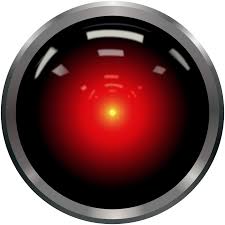
Hal, is in the house.

Harvest
Fall Harvest Photo jmikton

A colleague of mine and her Kindergartners were busy exploring where an egg comes from. “Was it born like a baby? Does it grow on its own? Where do they come from? Different perspectives and ideas were shared enthusiastically. The children discussed and challenged each other with their theories. At the end of the activity, one child turned to her partner and said, “when I get home, I’ll ask Siri for the answer.” A routine response in our classrooms? Or an important moment to understand that artificial intelligence (AI)  has embedded itself in our day to day lives? For a generation of children who have been raised on iPads and Siri,  AI – with a name and voice like a human – is as ubiquitous as any other technology.

AI is a tool that learns, anticipates and predicts. It provides us with instantaneous information or completes routine tasks remotely. The Amazon Echo and Google Home, two new devices that have recently gained traction, have begun to enter the home as personal assistants. The Echo and Home are two of many voice-activated AI assistants that tap into vast artificial intelligence networks. They aggregate information based on our digital footprints and predict our habits based on a learning algorithm that engages continuously with the data we share on our digital devices.

A shift has occurred in our relationship with AI and the impact is profound. It is the seamless adaptation of AI into our lives – a frictionless experience that is slowly making us dependent on this predictive technology. This new relationship meets our unique taste and needs, and only gets better the more it knows about us. Over time, this is changing the way our brain functions when interacting in the digital world. This short video by AcademicEarth.org -“ Cognitive Offloading,” is a reminder of the neurological changes AI is having on our learning.  We collectively feel more and more comfortable subcontracting out tasks to AI. The term ” let me google this” is an example.

For educators, this shift is showing up in our classrooms informally and in some instances invisibly.  Artificial intelligences are important elements of the devices which exist in our school tool kits. These include mobile devices, apps, browsers, search engines, smartwatches, and more. Writer and professor Jason Ohler asks an important question in his article “Bio-Hacked Students On the Outer Edge of Digital Citizenship”. How should we, as educators, shift the curation of a scholastic experience when students come to the classroom with embedded or wearable artificial intelligences? This alters the value of the commodity of knowledge in the classroom and highlights a potentially new hierarchy where AI supplements a user’s expertise. Suddenly, we have 24/7 access to predictive and anticipatory information which has the potential to disrupt the independent learning experience of a typical classroom. In his article “Artificial intelligence is the next giant leap in education“, Alex Wood reflects on the role AI could play in education.

 <https://upload.wikimedia.org/wikipedia/commons/thumb/f/f6/HAL9000.svg/2000px-HAL9000.svg.png>
source: <https://upload.wikimedia.org/wikipedia/commons/thumb/f/f6/HAL9000.svg/2000px-HAL9000.svg.png&gt;

Coming to terms with these exponential changes takes time to digest. As educators, we need to understand that engagement and critical thinking are vital components of education, especially as AI shifts the classroom narrative. The ethical issues which surround these exponential changes are here now. The complacency that schools engage with in the discourse of what it means to be in a world dominated by AI is a tension we cannot ignore.

What will a world look like when companies can remotely delete pictures and videos which do not fit a predefined perspective fueled by an AI?  Danny Yadron questions this in his article “Apple gets patent for remotely disabling iPhone cameras.” What will a world look like when you scan a person’s image on the street and instantly receive their aggregated digital profile? In Shawn Walker”s  “Face recognition app taking Russia by storm may bring end to public anonymity  ” he shares the dynamics of the “FindFace” application, reminding us of the reality at our doorstep.

As educators, we have a unique opportunity to design curriculums around the narrative of artificial intelligence. We need to be encouraging our students to not only be good digital citizens but proactive digital leaders who understand the complexity of a world fueled by artificial AI. Schools should promote the skills and inquiry mindsets which provide students with the capacity to harness the power and opportunities of AI and not become complacent with the technology. Ultimately, we want our students to be active leaders and architects of AI’s continued growth. As educators, we have a responsibility to ensure our students have a working understanding of how to navigate a complex and changing world fueled by artificial intelligence for the good of future generations.

John@beyonddigital.org